Blog

  • The 4% Rule is Overly Simplistic

    Time to replace the 4% rule

    Conventional wisdom suggests that you withdraw on average 4% adjusted for inflation. Now comes a paper co-authored by William Sharpe, the winner of the 1990 Nobel Prize in Economics, challenging the conventional wisdom.

    According to Sharpe, who is also the founder of Financial Engines, the typical 4% rule recommends that a retiree annually spend a fixed, real amount equal to 4% of his initial wealth, and rebalance the remainder of his money in a 60%-40% mix of stocks and bonds throughout a 30-year retirement period.

    What’s more, he shows the price paid for funding what he calls “unspent surpluses and the overpayments made to purchase its spending policy.” According to Sharpe, a typical rule allocates 10%-20% of a retiree’s initial wealth to surpluses and an additional 2%-4% to overpayments.

    The only problem with what academia knows to be right and what’s practical in the field — even by Sharpe’s own admission — is this: “Many practical issues remain to be addressed before advisers can hope to create individualized retirement financial plans that maximize expected utility for investors with diverse circumstances, other sources of income, and preferences,” Sharpe wrote in his paper.

    Meanwhile, Stephen P. Utkus, a principal with the Vanguard Center for Retirement Research, agrees that the 4% rule is flawed. But he also notes, as did Sharpe, that there’s no practical mechanism to replace it with and that further research is required.

    I think this is exactly right. The proper personal financial actions in this case are not easy. The 4% rule is far from perfect but it does give a general idea that is a decent quick snapshot. But you can’t rely on such a quick, overly simplified method. At the same time there are simple ideas that do work, such as saving money for retirement is necessary. The majority of people continue to fail to take the most basis steps to save money each year for retirement.

    Related: Spending Guidelines in RetirementHow Much Will I Need to Save for Retirement?Bogle on the Retirement Crisis

  • Famous Stock Traders: Nicolas Darvas

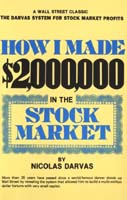
    Book cover to How I made $2 million in the Stock Market

    For the most part my investment philosophy is based on fundamental long term investing strategies. But I do also occasionally speculate with a portion of my portfolio. It is risky (and honestly most people will lose money trying so it is unwise for most, if not all, to try) but can bring great returns for the successful speculator/trader. My methods are significantly influenced by Nicolas Darvas who wrote the classic investment book – How I Made $2,000,000 in the Stock Market (which I am re-reading now). In it he provides an honest and open look at his experience from his naive start to his eventual success. He lays out, in great detail, exactly what he did and how foolish some of his actions were. Then he explains how he came to find success by focusing on the price and volume action of stocks and a pseudo fundamental component (more of a story that could presage future fundamental success than actual fundamental strength). While honing his investment strategy, in the 1950’s, he traveled the world working as a world class ballroom dancer and placed order via cable.

    Darvas’ method was a forerunner of the many technical analysis schemes used today. He is extensively referenced by William O’Neil (of Investor’s Business Daily fame) and other leading technicians. An extremely simplified overview of Darvas’ method: determine “boxes” (trading ranges) for a stock and buy on the breakout, to the upside, of the topmost box. He used a rest period of several days to set the top of the box and then determine the bottom of the box after that top was set. He used very close trailing stop loss orders to minimize losses. He sought to make large gains (let his winners run) and cut losses quickly.

    Nicholas Darvas’ ideas and books included a disdain for wall street insiders, analysts and rumors. The CAN SLIM (William O’Neil and Investor’s Business Daily) investing style owes a great deal to Darvas’ ideas on investing.

    I have created a new twitter account [removed] for to comment and follow others trading ideas. I would suggest only experience and successful investors even consider trading with a small portion of their portfolio. For most it is a losing proposition.

    More on Darvas’ investing ideas and other leading investors. Books by Nicolas Darvas: Wall Street: The Other Las VegasYou Can Still Make It in the Market (republished after a long period when it was not available) – Darvas System for Over the Counter Profits

  • Private Foreign Banking Deposits by Country

    According to a new report on Privately Held, Non-Resident Deposits in Secrecy Jurisdictions the United States is the country with the largest amount of private, non-resident, deposits. Cayman Islands takes second, upholding its commonly held reputation as a tax haven often used to avoid paying taxes own by wealthy people. Switzerland comes in 9th.

    The countries with the most private, foreign deposits in billion of $US.

    Country June 2008 June 2009
    1 United States $2,899 $2,183
    2 Cayman Islands $1,515 $1,550
    3 United Kingdom $1,796 $1,534
    4 Luxembourg 588 435
    5 Germany 494 426
    6 Jersey 544 393
    7 Netherlands 413 316
    8 Ireland 273 276
    9 Switzerland 289 274
    10 Hong Kong 325 268

    Since 2001 deposits in the Cayman Islands have more than tripled, while those in the UK have close to tripled and in the USA they have a bit more than doubled.

    • Total Current total deposits by non-residents in offshore centers and secrecy jurisdictions are just under US$10 trillion;
    • The United States, the United Kingdom, and the Cayman Islands top the list of jurisdictions, with the United States out in front with more than US$2 trillion in non-resident, privately held deposits in the most recent quarter for which data are available (June 2009);
    • Contrary to expectations of perceived favorability for deposits, Asia accounts for only 6 percent of worldwide offshore deposits, although Hong Kong is the tenth most popular secrecy jurisdiction by deposits in this report;
    • The rate of growth of offshore deposits in secrecy jurisdictions has expanded at an average of 9 percent per annum since the early 1990s, significantly outpacing the rise of world wealth in the last decade. The gap between these two growth rates may be attributed to increases in illicit financial flows from developing countries and tax evasion by residents of developed countries.

    The report is an interesting read and provides some background on the banking practices often used in concert with wealthy people avoiding paying taxes. As you may we recall we noted that rich USA tax evaders tried to sue to hide their illegal activities from the Department of Justice. As far as I know those rich thieves have not been put in jail. I guess stealing tens and hundreds of thousands of dollars from the United States of America, by rich people, is not seen as important (either that or brides work to make sure the way rich people steal isn’t punished) say compared to some teenager stealing from a store.

    Related: Government Debt Globally as Percentage of GDP 1990-2008USA, China and Japan Lead Manufacturing Output in 2008Oil Consumption by Country in 2007

    (more…)

  • Google Posts Good Earning But Not Good Enough for Many

    Google posted very good earnings yesterday but not good enough for many. The earnings, and a 5% fall in Google’s stock price, were good enough for me to add a few more shares to my long term investment in the company. Earnings per share grew from $4.49, $1.42 billion total, in the 1st quarter of 2009 to $6.06, $1.96 billion (38% increase in profits and 35% on a earnings per share basis). On a non-GAAP basis earning per share grew from $5.16 to $6.76. Revenue increased from $5.51 billion to $6.78 billion and the operating margin increased from 34.2% to 36.7%.

    Chris Bulkey has a good article on TheSteet.com, Google Tax Rate Inflates EPS, though I disagree with his conclusion.

    Google (GOOG) reported revenue of $6.78 billion and pro forma earnings of $6.76 a per share for the first quarter, but when stock-based compensation is included net income gets pulled down to $6.06 a share in GAAP terms. Elevated interest income, a lenient tax rate, and decelerating cash flow were primary points of contention.

    Recall that Google records gains from marketable securities with interest income. This gives management flexibility to boost income by timing investment sales. Normalizing this line item with the year-ago period shaves 3 cents a share from the bottom line. The effective tax rate came in below the prior year with essentially no change in revenue from international customers (53% vs. 52% in the first quarter of 2009). It is therefore likely that deliberate utilization of deferred tax assets was responsible for the easy comparison. Attempts to ascertain specific amounts deferred were unsuccessful; we’ll have to wait for the 10-Q.

    Cash flow decelerated to $2.58 billion from $2.73 billion sequentially. On a year-over-year basis, cash generated from operations increased 15% — respectable in absolute terms, but loosely correlated with net income, up 38% from last year.

    We reiterate a “sell” rating and $544 price objective; Our target multiple moves to 21 times revised 2010 EPS estimate from 23 times.

    Obviously I bought more, so I don’t agree with the conclusion, but his points are sensible and worth considering.

    Related: Great Google Earnings (April 2007)Buy Google (Feb 2008)Is Google Overpriced? (July 2007)Stop Picking Stocks?

    Google profit up 38%, helped by ads by John Letzing
    (more…)

  • Taxes – Slightly or Steeply Progressive?

    The Wall Street Journal wrote “Their Fair Share” in July of 2008 claiming that the rich are paying their fair share of taxes.

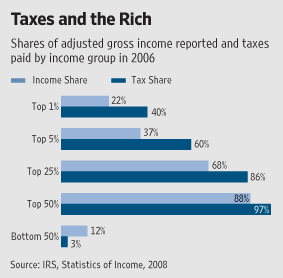
    The nearby chart shows that the top 1% of taxpayers, those who earn above $388,806, paid 40% of all income taxes in 2006, the highest share in at least 40 years. The top 10% in income, those earning more than $108,904, paid 71%. Barack Obama says he’s going to cut taxes for those at the bottom, but that’s also going to be a challenge because Americans with an income below the median paid a record low 2.9% of all income taxes, while the top 50% paid 97.1%. Perhaps he thinks half the country should pay all the taxes to support the other half.

    Wow. The Wall Street Journal against a tax cut? Well I guess if it is a tax on the poor they don’t support cutting those taxes. I think it may well make sense to reduce the social security and medicare taxes on the working poor (including the company share). Of all the taxes we have this is the one I would reduce, if I reduced any (given the huge amount of government debt any reduction may well be unwise). But reducing income taxes for those under the median income doesn’t seem like something worth doing to me.

    The top 1% earned 22% of all reported income. But they also paid a share of taxes not far from double their share of income. In other words, the tax code is already steeply progressive.

    chart of taxes by income distribution

    They seem to ignore that income inequality has drastically increased. When you have a system that puts a huge percentage of the cash in a few people’s pockets of course those people end up paying a lot of cash per person. One affect of massive wealth concentration is that the limited people all the money is flowing to naturally will pay an increasing portion of taxes.

    It is fine to argue that the rich pay too much tax, if you want. I don’t agree. I think Warren Buffett explains the issue much more clearly and truthfully when he says he, and all his fellow, billionaires (and those attempting to join the club) pay a lower percent of taxes on income than their secretaries do. He offers $1 million to any of them that prove that isn’t true.

    And I guess you can say that the top 22% of the income paying the top 40% of the taxes is “steeply progressive.” I wouldn’t call that steep, but… It is nice the graphic is at least decently honest. Saying just “top 1% of taxpayers, those who earn above $388,806, paid 40% of all income ” is fairly misleading. It is much more honest (I believe) to say that “the top 1% (that made 22% of the income) paid…” Those with the top 22% of income paid 40% of the taxes, the next 15% payed 20%, the next 31% paid 26% the next 20% 11% and the final 12% paid 3%. That is progressive. From my perspective it could be more progressive but I can see others saying it it progressive enough.

    If 22% to 40% is “steeply” progressive what is 1% to 22%? The income distribution seems to be what? very hugely massively almost asymptotently progressive? The to 1% of people, by income, take 22% of the income, the next 4% take the next 15% of the total income, the next 20% take 31%, the next 25% take 30% and the bottom 50% take 12%. This level of income inequality is much more a source of concern than any concern someone should have about a slightly progressive tax result.

    Related: House Votes to Restore Partial Estate Tax on the Very Richest: Over $7 MillionIRS Tax dataRich Americans Sue to Keep Evidence of Their Tax Evasion From the Justice Department
    (more…)

  • China Economy Grows 11.9% in 1st Quarter

    China’s GDP increased 11.9% in 1st quarter of 2010, from last year. China is now the 2nd largest economy (overtaking Japan in the last year). More cars will be bought this year in China than any other country (they overtook the USA in 2009). The 4th quarter of 2009 saw an increase of 10.7% above 2008. Real estate appreciation continues and the government reported housing prices in 70 major cities rose 11.7% in March compared to 2009. I believe it would be wise for China to take stronger action to deflate a bubble. Raise rates. Cut back on infrastructure spending. Raise the value of the Yuan.

    March’s China consumer price index was 2.4% higher than a year earlier, while the producer price index was up 5.9%.

    China’s economy feels the heat by Robert M Cutler

    Property prices rose at a record pace in March, up almost 12% from a year earlier, according to the National Bureau of Statistics on Wednesday. This represents a considerable short-term acceleration after housing prices in 70 major cities rose only 1.5% in 2009, according to official data.

    The government has held its overnight interest rate steady at 5.31% since January 2009.

    The government has already moved to slow the real estate market through higher mortgage rates and required down payments and the re-introduction of sales taxes.

    The ministry of housing and urban-rural development has said it intends to crack down on price speculation in the property market and curb attempts to hoard land. Measures being considered include requiring a down payment of 40% on second residences

    Related: China GDP up 8.7% in 2009China Forecasts 9.6% GDP Growth, Close to Becoming 2nd Largest EconomyCapitalism in China

  • Consumer Debt Needs to Decline Much More

    Economic data don’t point to boom times just yet

    American households are trying to reduce debt to stabilize finances. But they are doing so slowly, with total household debt at 94 percent of gross domestic product in the fourth quarter down just slightly from 96 percent when the recession began in late 2007.

    By contrast, that ratio of household debt to economic output was 70 percent in 2000. To get back to that level, Americans would need to pay down $3.4 trillion in debt

    And it isn’t like the 2000 level was one of great consumer discipline. The economy needs to improve in several ways to be approaching a state that could be called a healthy economy. The 2 biggest, in my mind are 1) decreasing debt (consumer and government) and 2) increasing jobs. My next most important would probably be increasing the number of “good” jobs. Many other data points are important, such as: decreasing income inequality; increasing the age at retirement (because of all the systemic problems caused by extremely long retirements financed not by savings but taxes on existing workers); low inflation (luckily that is continuing to look good); value added economic activity (real GDP); decrease in the cost of the health care system as a % of GDP; decrease in financial leverage; economic strength worldwide (economic weakness of Japan, Europe… can severely hamper economic success in the USA). I do not see a bubble hyped economy as a healthy economy – even if lots of measures look good.

    Related: Americans are Drowning in DebtDollar Decline Due to Government Debt or Total Debt?Financial Illiteracy Credit TrapConsumer Debt Down Over $100 Billion So Far in 2009 (Nov 2009)

  • Curious Cat Investing and Economics Carnival #8

    The Curious Cat Investing and Economics Carnival highlight recent interesting personal finance, investing and economics blog posts.

    • The money made by Microsoft, Apple and Google, 1985 until today – “In terms of profit Apple was ahead of Microsoft in the 1980s, but was then passed and left behind. This chart actually reveals that Apple’s upswing the last few years is the first time the company’s profits have really taken off in a big way. Another interesting observation is how closely the profits of Apple and Google match, even though Apple’s revenues are significantly higher.”
    • Real Estate and Consumer Loan Delinquency Rates 1998-2009 by John Hunter – “That last half of 2009 saw residential real estate delinquencies increased 143 basis points to 10.14% and commercial real estate delinquencies increase 98 basis points to 8.81%. Consumer loan delinquencies decreased with credit card delinquencies down 18 basis points to 6.4% and other consumer loan delinquencies down 19 basis points to 3.49%.”
    • The Principle That Can Make You Rich or Keep You Broke by David Weliver – “Unfortunately, inertia can also keep us at rest; the same principle that helps us achieve positive goals can make it increasingly difficult to escape bad habits.” (John: Very true, see my post on habits).
    • Why do we work so much? – “The countries that consistently rank as having the world’s “happiest people” also tend to work fewer hours than people in the U.S… Most corporate ladders are designed to reward employees with money instead of time. Assuming we only want money to use as a tool for happiness, this makes no sense.”
    • How Does Apple Become a $300 Billion Company? by Eric Bleeker – “The more Apple can look like the Microsoft of the mobile world, the more it will be worth. Commanding a market with even half the dominance Microsoft did with operating systems is a once-in-a-generation opportunity, but I’m not so sure the mobile world is built in a way that’ll allow that.”
    • Top Fed Official Wants To Break Up Megabanks, Stop The Fed From Guaranteeing Wall Street’s Profits by Shahien Nasiripour – “I don’t think we have any business guaranteeing Wall Street spreads,” Hoenig said. “We need to recognize that and address it by removing these guaranteed extremely low rates. I think it’s extremely important that we do that, and not create the conditions for speculative activity and a new crisis down the road.”
    • Evaluating Microfinance by Michael Frank – “I decided to use a variation on the “waiting list-control group” method regularly used in medical studies. My evaluation design requires a call for loan applicants in the most similar nearby community that does not have a similar microfinance program already present.”
    • (more…)

  • Avoiding the Vicious Cycle of Credit Problems

    Credit problems create a vicious cycle. Credit card interest rates are increased, fees are onerous and even applying for jobs is negatively affected (many employers look at credit reports as one factor in the hiring process), insurance companies look at them too and can offer higher rates. Employers and insurers have the belief that bad credit is an indication of other risks they don’t want to take on. Once into the cycle there are challenges to deal with. I must admit I think it is silly to look at credit for most jobs. But a significant number of organizations do so that is an issue someone that gets themselves in this trouble has to deal with.

    I think the best way to deal with this problem is to build a virtuous cycle of savings instead. We tend to focus on how to cope with a bad situation instead of how to take sensible actions to avoid getting in the bad situation. In general we spend far too much money and take on too much debt – we live beyond our means and fail to save. Then we have a perfectly predictable temporary hit to our financial situation and a vicious cycle begins.

    If we just acted more responsibly when times were good we would have plenty of room to absorb a temporary financial hit without the negative cycle starting. The time to best manage this cycle is before you find yourself in it. Avoiding it is far better than trying to get out of it.

    Build up an emergency fund. Don’t borrow using credit cards – or any form of consumer debt (borrowing for education, a car or a house, I think, are ok). Save up your money until you can afford what you want to purchase. Don’t buy stuff just to buy stuff.

    Re: The Vicious Circle of Poor Credit

    Related: Real Free Credit ReportIn the USA 43% Have Less Than $10,000 in Retirement SavingsFinancial Planning Made Easy

  • Will The Savings Rate Fall Back Again

    Welcome to the False Recovery by Eric Janszen

    Because of the way the government measures household savings, the increase doesn’t signify more money in people’s wallets; instead, it suggests that consumers are paying off their mounting debt during a period of reduced borrowing. That’s no harbinger of growth.

    Companies planning for sudden and relatively near-term growth should reshape their strategies to make the best of economic flatness.

    He makes a decent point for companies, but the he flips back and forth between the need to save more (because we are buried in debt) and the need to spend more (because we need to grow the economy right now). And while I wouldn’t stake my life on it I wouldn’t be surprised that we have a strong economic rebound (it is also perfectly conceivable we have a next to no growth or even fall into a recession). But it seems to me the return to bubble thinking and spending beyond our means is making a strong comeback.

    The money is not going under mattresses or into bank accounts, from where it will emerge one day to jump-start the economy. It’s actually subsidizing the previous boom, which was built on debt and the presumption that assets would always cover that debt.

    Another ok, point but we have hardly paying off anything of the previous living beyond our means. It would take decades at this rate.

    Banks can loosen lending policies to allow people to borrow and spend again—but for that to solve anything, consumers must be extremely judicious in how they take on and use their debt. It’s more likely that consumer debt levels will rise again as individuals stretch themselves to afford what they want. Alas, this will drive the reported savings rate back down. By the end of 2010, I expect it to dip below 3%. Then, any drop in asset values will set off the debt trap. We’ll again see a rising savings rate and tightened lending, followed by loosened lending and a declining savings rate. The recovery will become a series of starts and stops: promising progress, periods of retreat.

    So the problem is the saving are not actually resulting in increased ability to spend (first point above) – which is bad he says, because it means their won’t be more spending (because people won’t have the ability to spend). Then he says when banks lend the consumers money they will spend and the saving rate will go down (which is bad – though he doesn’t seem to really want more savings (because that means business won’t get increased sales).

    The conventional wisdom likes to point out the long term problem of low savings rate but then quickly point out we need more spending or the economy will slow. Yes, when you have an economy that is living beyond its means if you want to address the long term consequences of that it means you have to live within your means. It isn’t tricky. We need to save more. If that means the economy is slower compared to when we lived beyond our means that is what it takes. The alternative is just to live beyond your means for longer and dig yourself deeper into debt.
    (more…)