Tag: Africa

  • China’s Investments in Africa

    The stories you most frequently hear about China in Africa are

    1. resource extraction (oil, metals, etc.)
    2. infrastructure loans from China (with Chinese labor and Chinese companies doing the work, often to aid resource extraction)
    3. farming exports to China

    While those are happening an excellent report from McKinsey (Dance of the Lions and Dragons) provides an in depth look at a much more entrepreneurial state of affairs. While there are big government backed efforts (including those with Chinese state owned company participation) there are many small companies making entrepreneurial investments led by Chinese entrepreneurs seeing a opening to build successful companies.

    Chinese firms’ decisiveness is indicative of the relationship between the comparative advantages of Chinese entrepreneurs and the opportunities in African markets. To some, the high returns earned by Chinese firms are symptomatic of a market failure: too little competition in African markets. But in sectors such as manufacturing, there are too few African firms with the capital, technology, and skills to invest successfully and too few Western firms with the risk appetite to do so in Africa. Thus the opportunities are reaped by Chinese entrepreneurs who have the skills, capital, and willingness to live in and put their money in unpredictable developing-country settings.

    What makes the decisiveness of Chinese investors all the more impressive is that they are mostly using their own money. Two-thirds of the private firms we surveyed, and over half of all firms in our sample, reported that their investments were self-financed through retained earnings or savings, or funded through personal loans. Only 13 percent of investment funds came from financing schemes linked to the Chinese government, and less than 20 percent came from Chinese or African commercial bank loans

    I believe investments in Africa will provide great investment returns in the next 20 years. There are many challenges but the opportunity is much greater than most people realize. The potential returns are quite high due to the lack of capital and interest being shown in African opportunities.
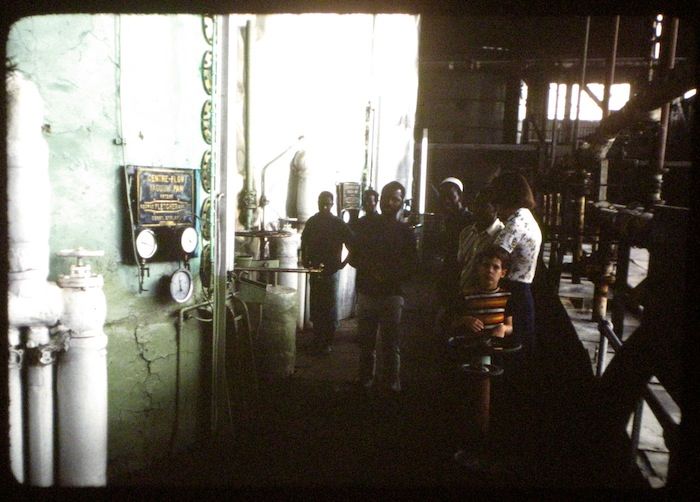
    Factory, Nigeria
    Factory in Nigeria (I think) that my family toured.

    Likely huge companies, such as Google, Tencent, Facebook, Toyota and Alibaba will do very well. But there are many opportunities. That Africa is made up of 54 different countries creates challenges for investors and companies seeking to grow (but also creates variation and opportunities). It will be interesting to see how big the role Chinese entrepreneurs play in the next 20 years in Africa.

    The report is an excellent detailed look at Chinese investment in Africa. It is a long and worthwhile read.

    Related: Kiva Loans Give Entrepreneurs a Chance to SucceedDrone Deliveries to Hospitals in RwandaUsing Capitalism in Mali to Create Better LivesPromoting Innovation in Sierra Leone

  • Kiva Zip Is Ending Direct Loans to People in Kenya

    My comments on a post by Kiva about their decision to end the Kiva Zip (direct to people loans – no intermediary financial institution) program in Kenya.

    Thanks for your efforts and the explanation. I am very happy Kiva is trying new ideas (like Kiva Zip). I also think it is important to evaluate those efforts and when they don’t work as well as desired attempt to improve but if things still lag pull the plug. I was happy to have made several Kiva Zip loans to Kenya (and elsewhere).

    I do think it is very important to retain an infrastructure for those people you got to try the new effort with, as I believe Kiva will. This has to be part of any innovation efforts – a budget to include unwinding the effort in a way that is in keeping with Kiva’s mission to help people. I strongly believe in efforts to avoid abandoning those who worked with you in general, but for those taking loans from Kiva it is much more important than normal.

    Keep up the good work. And keep challenging Kiva to get better and not get complacent when things are not going as well as they should. I am happy to continue to lend to Kiva but I also am concerned that the focus on making a difference and making people’s lives better can be lost in the desire to grow.

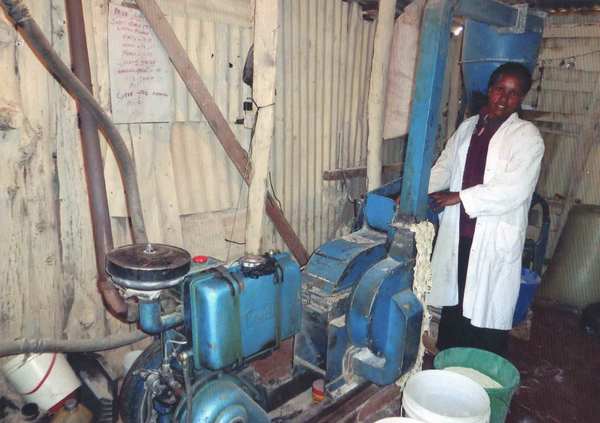
    photo of posho mill machine
    I made a loan via Kiva zip for Hilda to buy a posho mill machine. The loan was repaid in full.

    The Curious Cats group on Kiva has made over $27,000 in loans to entrepreneurs around the world (the way Kiva works the groups, they don’t include Kiva Zip loans). You can join us. I believe in the model of micro-finance (Investing in the Poorest of the Poor [this one is grants instead of loans]), though I also believe we need more data on real experience of borrowers. Kiva Zip gives loans directly to people with a 0% interest rate. Normal Kiva loans have financial institutions (some of which are charities but they still have expenses) make the loans and Kiva lenders provide capital (at 0%) but the borrowers have to pay interest (the idea is they pay lower interest since the financial institution has a 0% cost of capital).

    Related: Kiva Loans to Entrepreneurs in Columbia, India and KenyaKiva Loans Give Entrepreneurs a Chance to Succeed (2011)Using Capitalism to Create Better Lives in Mali (2009)

  • Kiva Loans Give Entrepreneurs a Chance to Succeed

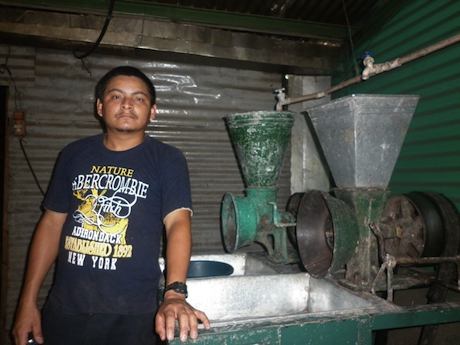
    photo of Manuel De Jesus in front of his milling equipment
    Manuel De Jesus, miller and farmer in El Salvador, will use his loan to buy parts for this milling euipment.

    There is a great deal focus recently on the “99%” (via occupy wall street and the like). The truth is these are mainly about the 5% or 10% (those rich, but not quite as rich as the richest 1% – and much further from the richest than they were a few decades ago). As I have written before, most of those in the USA (also Europe, Japan…) are rich (though this is changing, a greater percentage of the USA is not rich, looking globally, than maybe any point since the 1930s).

    We get confused because many near us are even richer and think that means the rest of us are very poor. But those in the USA are often in the 5% or 10% – not the 30% or 60% or 90% they seem to think they are. $50,000 in annual income puts you in the top 1% globally. $25,000 puts you in the top 10%.

    I agree with the desire to reduce the political and market corruption, as I have written for years.

    For the 99% (or the 90% anyway), I really think the best things are government policies that reduce corruption and increase market forces. Letting actually capitalism work instead of political and corporate cronyism failing to let markets work as they should. Also giving education and the chance to build a better life for yourself are important. Thankfully many countries have been doing very well on this front: Singapore, Korea, Brazil, Ghana, China… That doesn’t mean there are not huge issues to still address for most of the 90%, there are.

    Microfinance in general, and Kiva in particular, are one great way to help. Again it isn’t perfect. And those getting the loans are not given an easy life. They are given a chance to try and build there business to improve there economic condition. This isn’t a certain success. And I do worry that taking on too high an interest rate, or loan amount, can leave people worse off than before. But when looking at the system of microfinance I really like the opportunity it gives people, who haven’t been given many.

    Those getting loans have to make smart personal finance and business decisions. If they do well they can greatly improve their financial situation. I made several more loans today, using money repaid by previous borrowers. I try to find loans where I am able to help fund a investment that will improve capacity (but that isn’t always possible) – a new machine that makes them more efficient for example. I also try to avoid loans where the interest rate is over 30% (which might seem very high, but rates below 20% are very rare given the economics of these loans – they are very costly to service). What Kiva does is provide the funds people like me lend as interest free loans to the partner banks. The idea is that this allows partner banks to provide more capital for loans (obviously) and at a lower rate because the bank isn’t having to pay interest on the funds.

    My loans today went to: Mali, Honduras, Senegal, Ecuador, Togo, Philippines and in the photo above El Salvador. The Curious Cat Kivans group has now lent $12,925 in 320 loans. We now have 11 members, join up and help give people an opportunity to improve their economic condition.

    Related: More Kiva Entrepreneur Loans: Kenya, Honduras, Armenia…Using Capitalism in Mali to Create Better LivesFunding Entrepreneurs in Nicaragua, Ghana, Viet Nam, Togo and Tanzania

  • Oil Production by Country 1999-2009

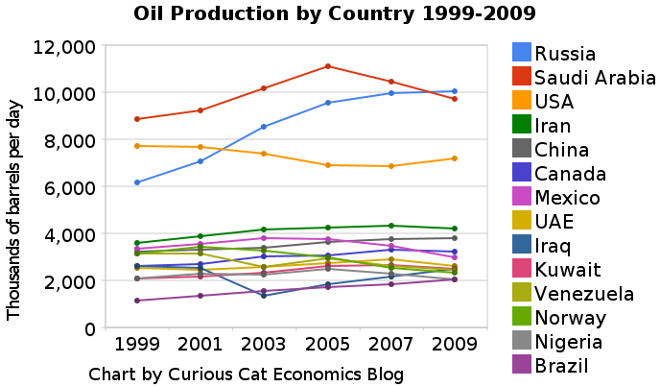
    The chart shows the oil production over the last decade by the top oil producing countries. Production totals include crude oil, shale oil, oil sands and NGLs (the liquid content of natural gas where this is recovered separately). Excludes liquid fuels from other sources such as biomass and coal derivatives.

    chart showing oil production by top producing countries (1999-2009)The chart shows the leading oil producing countries from 1999-2009. The chart created by Curious Cat Investing and Economics Blog may be used with attribution.

    ___________________
    The chart show 3 clear leaders in production Russia, Saudi Arabia and the USA (with the USA firmly in 3rd place). Those 3 were responsible for approximately a third of the total oil production in 2009. Russia greatly increased production. During the last decade world production increased from 72 million barrels a day to 80 million barrels a day. Russia accounted for 51% of the increase, close to 4 million barrels a day.

    The next 11 countries are pretty closely grouped, with slightly increasing production over the period as a group. Brazil, the last country with over 2 million barrels of production a day in 2009, has the largest percentage increase in the period, producing 79% more in 2009 than they did in 1999. Russia increase production 62% over the period. The other countries ranged from a 23% increase (Canada) to a 25% decrease (Norway). The USA increased production 7% and China increased production 18%. World production increased 11%.

    Last year I posted a chart showing oil consumption by the top oil consuming countries over the last 2 decades; showing all countries using over 2 million barrels of oil a day. The USA consumed 18.7 million barrels a day in 2009. Only China was also over 5 million barrels, using 8.2 million in 2009. Japan was next at 4.4 million.
    (more…)

  • More Kiva Entrepreneur Loans: Kenya, Honduras, Armenia…

    I made several more Kiva loans to entrepreneur in Kenya, Lebanon, Nicaragua, Kenya, Honduras and Armenia (brining my total loans to 251). It really is great to see real people using capitalism to improve their lives. And being able to help by lending some money is wonderful. When looking for loans I give preference to loans that improve productivity and increasing capacity of the entrepreneur. If they use the proceeds of the loan to increase their capacity to produce they can pay off the loan and find themselves much better off.

    photo of Douglas Osusu and posho grinding millsDouglas Osusu, Kisii, Kenya, in front of his posho mill (used for grinding maize into flour).

    A nice example of this is the loan to Douglas Osusu (pictured). He has requested this loan of 80,000 KES to purchase a dairy cow and a posho mill. This loan also has a portfolio yield (Kiva’s equivalent of an annual percentage rate) of 19%. 19% is very loan for loans on Kiva (remember there are significant costs to servicing micro-loans) – I like the rate to be under 30% but sometimes accept rates up to 40% (or even higher occasionally). I also give great preference to low rates, as the lower the rate the better for the entrepreneur. The 3rd factor I consider is the history of the field partner bank (default rate, delinquency rate and currency exchange loss rate). In this case the field partner is new and carries risk because of that. Still in this case I really like the loan and I like that this lender is charging low rates so I want to take the risk and see how they can do. The amount I lend is based on the combination of these factors – I lend more when I have several reasons to really like the loan.

    Join other readers by making loans and joining the Curious Cats Lending Team: 8 members, 213 loans totaling $8,775. Comment with the link to your Kiva page and I will add a link on Curious Cat Kivans.

    My current default rate is 1.39% and the delinquency rate is 8.49% (see chart of USA general delinquency rates). The delinquency rate is exaggerated due to technical details (some difficulties in reporting in various countries and such things). Agricultural loans often become delinquent on Kiva but still are paid in full (in my experience). While the defaulted loan rate is 1.39% if you look at the percent of dollars lost I have a rate of 1.2% (this is nearly all due to a bank that failed over a year ago to which I had 2 loans where I lost $87.50 of $100 – there are also 2 other losses for under $5). I add to my total loan amount a couple times a year but also I get to keep relending as money is paid back.

    Some of my favorite ways to help reduce extreme poverty are Trickle Up, Kiva and using Global Giving to find small organizations.

    Related: 100th Entrepreneur LoanMore Kiva Entrepreneur Loans: Kenya, El Salvador (June 2010)Kiva Opens to USA Entrepreneur LoansMicroFinance Currency Risk – Kiva Fellows Blog: Nepalese Entrepreneur Success

  • More Kiva Entrepreneur Loans: Kenya, El Salvador…

    I made 6 more loans to entrepreneurs through Kiva today, including the 2 mentioned below. I have now made 227 loans through Kiva.

    photo of Christopher Kibubi Wahinya

    Christopher Kibubi Wahinya (in photo), Nairobi, Kenya, buys old computers, which he repairs and sells to the local people. He has been in this kind of business for the last four years and he says that the business is profitable. He is using his loan of Kes 50,000 to purchase old computers, repair them and sell to the local people. He plans to grow his business by moving to the ground floor of a busy building where he will stock all computer accessories and later own a computer showroom.

    Carlos Alberto Pereira Granados is 43 years old and resides in the town of Cojutepeque, El Salvador. He has a workshop where he repairs sewing machines and sells all types of related parts. His business is located at the municipal market. Carlos Alberto works Monday through Sunday repairing the machines of his customers. He is requesting a loan so that he can buy sewing machines wholesale as well as parts such as bobbins, belts, hooks, and other items so that he has everything required to perform his work and attract more customers.

    Kiva is a great way to support entrepreneurs. I try to focus on loans I think will benefit the borrower and grow the economy (not always easy). One of the things I try to watch is the “portfolio yield” (which is similar to Annual Percentage Rate) – the lower the better. Some banking Kiva partners are charities or partially funded by charities and therefore can 1) fund some of the administrative expenses of the bank and 2) are focused on helping the customers not making a profit. I would rather have my money used where it most helps entrapranuers so the lower the rate the better.

    I encourage you to join me: let me know if you contribute to Kiva and I will add your Kiva page to our list of Curious Cat Kivans. Also join the Curious Cats Kiva Lending Team (the team has now lent over $7,500).

    Related: Micro-credit Research100th Entrepreneur LoanMicroFinance Currency Risk

  • Mark Mobius on Emerging Markets

    Mark Mobius is an investment manager with Franklin-Templeton that I have invested with for over a decade (through the Templeton Emerging Markets Trust and Templeton Dragon Fund – they are closed end funds). I believe in Templeton’s emerging market investment team and Mark Mobius and believe his thoughts are worth paying attention to. He recently wrote an overview on Emerging Markets:

    Year-to-date, however, emerging markets were still up 51%. While Eastern European and Latin American markets continued to record positive returns, Asian markets, as represented by the MSCI AC Asia ex Japan index lost 3%.

    In Mexico, GDP contracted 10% y-o-y in the second quarter of 2009 as a result of the global economic crisis and swine flu outbreak. In comparison, GDP fell 8% in the first quarter of the year. Declines in the manufacturing, construction and retail sectors had negatively impacted GDP during the period.

    Since 1995, portfolio inflows into emerging markets have totaled more than US$123 billion. A significant amount, considering it includes the US$49 billion in net outflows in 2008 as a result of the global financial crisis. The recovery in emerging markets and hunt for attractive investment opportunities, however, saw these funds return just as quickly with inflows totaling more than US$44 billion in the first seven months of 2009, nearly 90% of the outflows registered all of last year.

    Emerging markets account for more than 80% of the world’s population. With economic growth accelerating and population growth decelerating, per capita income is one the rise. In our view, markets such as China, India and Brazil stand at the front of the class.

    As of end-August 2009, the benchmark MSCI Emerging Markets index had a P/E of 16 times, cheaper than the MSCI World index which was trading at a P/E of 21 times.

    (more…)

  • Capitalism from the Ground Up

    Peet’s Coffee: In Africa, Brewing Good Works by Steve Hamm

    But over the past year, Moayyad has taken on a new type of challenge. Peet’s has joined an effort to develop a vibrant coffee industry in sub-Saharan Africa. The Coffee Initiative, as it’s called, is run by TechnoServe, a nonprofit, and funded by the Bill & Melinda Gates Foundation. The goal: to double the income of poor coffee farmers in Kenya, Rwanda, Tanzania, and Uganda by linking their products with coffee lovers in the developed world.

    Because of bad roads and delays at border crossings, it took 12 days for a truck with a container full of green coffee beans to travel 1,000 miles to the Kenyan port of Mombasa. The sea journey from Mombasa took nearly two months. Worse, when the shipment arrived in Oakland, Calif., in late February, a portion of the coffee was slightly damaged.

    Moayyad traveled to Rwanda to cement relationships with farmer groups and gather stories about the farmers for use in marketing. With a videographer tagging along, she navigated molar-crunching roads in a four-wheel-drive pickup to remote villages and farms perched on hillsides high above Rwanda’s Lake Kivu. On the roadsides, children greeted the passing truck with an excited cry of “Abazungu [white people]!” Moayyad plans to post a journal of her travels on Peet’s Web site, aimed at the company’s most loyal customers, called Peetniks.

    A good effort. Real world issues confront you when you take steps to build the capacity for capitalism to help people live better lives. We need more such efforts to help capitalists make better lives for themselves around the world.

    Related: Bill Gates: Capitalism in the 21st CenturyInternational Development Fair, The Human FactorHelping Capitalism Create a Better WorldFrontline Explores Kiva in Uganda

  • 100th Entrepreneur Loan

    photo of Cesar Augusto Santamaría Escotophoto of Cesar Augusto Santamaría Escoto in his welding workshop, Chinandega, Nicaragua.

    I made my 100th contribution to a micro-loan through Kiva last week. Participating with Kiva is a great antidote to reading about the unethical “leaders” taking huge sums to run their companies into the ground (or even just taking obscene sums to maintain their company). The opportunity to give real capitalists an chance at a better life is wonderful.

    Kiva allows you to lend money to entrepreneur (in increments of $25). The most you get back is the amount you loaned, and if the entrepreneur, does not pay back the loan then you take a loss. This is something you do if you believe if giving people an opportunity to make a better life for themselves through hard work and intelligent economic choices.

    I encourage you to join me: let me know if you contribute to Kiva and I will add your Kiva page to our list of Curious Cat Kivans. Also join the Curious Cats Kiva Lending Team.

    My loans have been made to in 32 countries including: Ghana, Cambodia, Uganda, Viet Nam, Peru, Ukraine, Mongolia, Ecuador and Tajikistan. Kiva provides sector (but I think this data is a not that accurate – it depends on the Kiva partners that are not that accurate on identifying the sectors (it seems to me). A large number of the loans are in retail, clothing and food. I like making loans that will improve productivity (manufacturing, providing productivity enhancing services…) but can’t find as many of those as I would like (8% of my loans are in manufacturing, 11% agriculture, retail 18%, 23% food, 25% services (very questionable – these are normally really retail or food, it seems to me).

    Some examples of the entrepreneurs I have lent to: welding workshop (Nicaragua), expanding generator services business with computer services (Cambodia), food production (Ghana), manufacturing nylon (Nigeria), internet cafe (Lebanon), electronics repair (Benin), new engine for mill (Togo), weaving (Indonesia) and a food market (Mexico).

    Related: Financial ThanksgivingMicroFinance Currency RiskCreating a World Without PovertyProvide a Helping Hand

    21 of my loans have been paid back in full. 3 have defaulted. Those figure give a distorted picture though (I believe). There was a problem with a Kiva partner (they partner with micro-finance banks around the world) MIFEX, in Ecuador. Kiva discovered that MIFEX (i) improperly inflated the loan amounts it posted for entrepreneurs on the Kiva website and (ii) kept the excess amount of the posted loan to fund its own operational expenses. Kiva does not expect any further payments on these loans. I had 2, so I think those 2 give a fair impression. The 3rd default is from Kenya. That loan was to a business selling bicycle parts. In 2008, in Kenya, the prevailing political crisis deteriorated and businesses have either been destroyed or closed in fear of looters. Technically the loan did default, however, I was paid $71.50 out of $75 loan (so the defaulted amount was very small.
    (more…)

  • Using Capitalism in Mali to Create Better Lives

    Don’t let the talking heads on TV convince you that capitalism is about corrupt businessmen that think they are entitled to loot companies. That is about the powerful accepting money from their golfing buddies to share the loot among themselves. Capitalism is about places like Trickle Up, micro-finance, appropriate technology and entrepreneurs making better lives for themselves and their families. Donate to Trickle Up (I do).

    Related: High School Student Provide Clean Water SolutionCreating a World Without PovertyMicrofinancing EntrepreneursIgnorance of Capitalism