Tag: credit rating

  • Improvements to Credit Collection Requirements Have Had a Positive Impact

    Abuse of the credit system by 3rd party collection agencies (and credit reporting agencies) in the USA has been a long term problem.

    An attempt to partially address some of the abuses was a change in the required reporting practices that impacted collections accounts specifically, known as the National Consumer Assistance Plan (NCAP), which rolled into effect during the second half of 2017. The plan has many components, including: (1) a requirement for more frequent, detailed, and accurate reporting of collections accounts, including reflecting when those accounts have been paid; (2) a prohibition against reporting debts that did not arise from an agreement to pay, or from, medical collections less than 180 days old; (3) the removal of collections accounts that did not arise from a contract or agreement to pay; and (4) permission to report any account only when there is sufficient information to link the account with an individual’s credit files (requiring a name, address, and some other personally identifying information such as a Social Security number or date of birth).
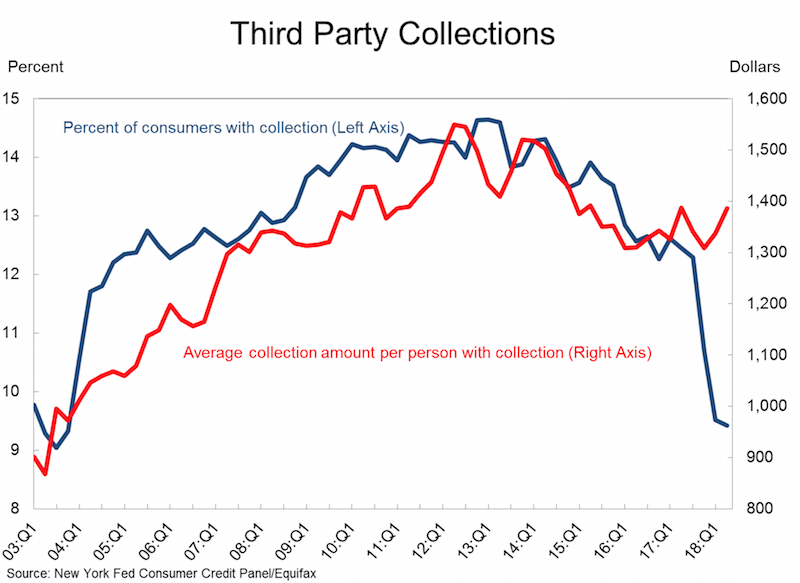
    chart showing the increase in 3rd party collections in the USA over the years and a sharp decrease after the steps to curb abuses

    All in all, the changes in credit reporting prompted by the National Consumer Assistance Plan have resulted in an $11 billion reduction in the collections accounts balances being reported on credit reports. A total of 8 million people had collections accounts completely removed from their credit report. However, collections accounts do indeed align with other negative events and the cleanup of collections accounts had the largest impact on the borrowers with the lowest scores.

    These borrowers will certainly benefit in the long run from the cleanup of their credit reports, since higher scores are associated with better access to credit, to the job market, and even to the rental housing market. But the immediate impact of the removal of collections will be muted for most of those affected (other items are also impacting their current credit score).

    In the longer-term there may be a rebound in collections account reporting because creditors will likely begin collecting the newly required personally identifying information as they adjust to this reporting change.

    This was a small good step in protecting consumers from the bad behavior of credit reporting companies and their customers. But much more must be done to protect us from having our financial lives negatively impacted by bad practices of the credit reporting companies.

    Related: Cleaning Up CollectionsAvoiding the Vicious Cycle of Credit ProblemsTruly Free Credit ReportUSA Household Debt Jumps to Record $13.15 Trillion

  • Using Credit Appropriately is Important for a Successful Financial Life

    Credit is the ability to buy now and pay later. It takes credit to get an auto loan, a mortgage and other types of financing. Your credit score says a lot about your credit habits. This is a three-digit number ranging from 300 to 850, and it tells creditors how likely you are to pay your bills. The higher your credit score, the better your chances of getting approved for financing and the lower your interest rate will be.

    Credit has many benefits. Most people can’t pay cash for homes, college education or new cars. Without loans, buying a house or car would be impossible for many. And since it takes credit to build credit, many people apply for their first credit card in college to establish a credit history. A credit card also provides emergency funds when we’re short on cash.

    Although we use credit regularly as consumers, there are dangers associated with credit. We can avoid some of these problems with responsible use. But unfortunately, credit management education isn’t taught in high school, and many adults don’t learn about credit management until after they’ve made mistakes.

    Potential Dangers of Credit
    Credit puts a lot of things within our financial reach, so it’s easy to get in over our heads. We might not have enough in savings to purchase an electronic device or take a vacation, but with one quick application, we can get approved for financing and take advantage of life’s pleasures. There’s nothing wrong with getting a loan. But some people can’t stop using credit and they get into serious debt.

    Too much debt has a significant negative impact on your personal finances. Paying off that debt will reduce your available disposable income to build an emergency fund (if you haven’t done so already) or save for retirement a house or other large purchases.

    Of course, debt isn’t the only thing to be concerned with. Getting credit also means you’re vulnerable to identity theft. This is one of the fastest growing crimes in the U.S. And while some people think it can’t happen to them, no one is invincible.

    Keeping Your Credit Report Accurate
    Identity theft involves someone stealing your personal information and purchasing items in your name or opening new accounts in your name. It can drive down your credit score and take several months or years to fix. Identity theft often goes unnoticed because some people never monitor their personal credit reports or file credit disputes

    You might wonder, what is a credit dispute? As a consumer, you have the right to check your credit history and receive one free credit report from each of the bureaus annually. You are entitled to ask questions about anything included within your credit reports. 

    (more…)

  • Protecting Your Privacy and Security

    Provide easy, new access to credit facilitates sales. For that reason businesses want such easy access maintained. They don’t want people unable to buy just because they don’t have the money.

    Financial institutions make a great deal of money providing easy access to credit. They don’t want to slow it down. While they do want to reduce fraud, they are perfectly happy to allow a fair amount of fraud while they can still make a lot of money.

    What this means is the financial system has less incentive to eliminate identity theft than the people that have to clean up after it happens to them. There should be better ways to make identity theft much more difficult.

    At a lessor level it should also be more difficult to steal one credit card (which also creates a big hassle for us, in trying to clean things up after fraud occurs). I suggested a way to make credit cards more secure and useful. When Apple Pay was announced I learned they are doing basically what I suggested.

    Apple Pay doesn’t share information that can be used to steal your credit card. Apple Pay gives the retailer a 1 time use code for that purchase. It can’t be used, even if someone steals it to use your credit card for more purchases. I also believe Apple Pay doesn’t share other details with the retailer, though maybe I am wrong – I think it is just like you giving them cash (they don’t have your name, address, phone number, etc.).

    Much of the information businesses share in the USA is considered private in Europe and companies are not allowed to share that personal information. This makes identity theft and invasions of your privacy more difficult. I wish the USA would move more in that direction.

    If you have details stolen (a wallet…) you can put a note with credit agencies that results in them be less free to make it easy for financial institutions to give credit without sensible protections against misuse. But you can’t do this just as a matter of course. I believe we should have the ability to protect ourselves from the massive headache caused by businesses providing credit in our name. But we don’t have such protection now, because of the big money in keeping credit super easy (and thus fraud fairly easy).

    Having to clean up after identity you may well have to hire someone to help clean up your credit report. To do so, look for credit repair companies with good reviews and a good reputation.

    I would imagine choosing to put in extra protections against identity theft would mean we would have less easy access to credit. For example, I wish I could say you cannot provide a new credit under my name that isn’t using my address on file and without confirmation from my email. Also you are required to send an email, send a text message and send a postal letter, and update my credit agency file (in a way I can view) one week before credit is allowed.

    There should also be options such as you must get a positive reply from me. A citizen choosing to have better protection against identity theft would give up immediate access to credit. But I would happily do so. I believe millions of others would too. And given how many people are victims every years, millions or hundreds of thousand a new customers for such a service would likely result.

  • Real Free Credit Report

    From the official US Federal Trade Commission site:

    A recent amendment to the federal Fair Credit Reporting Act requires each of the nationwide consumer reporting companies – Equifax, Experian, and TransUnion – to provide you with a free copy of your credit report, at your request, once every 12 months. But there’s only one online source authorized to do so. That’s annualcreditreport.com. Beware of other sites that may look and sound similar.

    Viewing your credit report is an important step to financial security. You should review your credit reports annually (at least) to correct and any errors. Also doing so can be a tool to help you spot identity theft. The credit report site also has a large frequently asked question section with answers to questions like: What is a credit score? How do I request a “fraud alert” be placed on my file? Should I order all my credit reports at one time or space them out over 12 months? (I would suggest spreading the requests out during the year myself).

    Reposting, original is from last January.