Tag: investors

  • Relocating to Another Country

    There is an increasing trend to move from the USA to another country to work and live. This is not surprising to me. Recently this has picked up quite a bit; I am surprised by the velocity at which this interest in moving (I figured it would be a long term mega trend but not so drastic, so quickly). Economic changes are often quite surprising in how rapidly they move forward.

    An interesting survey shows USA investors have become much more interested in relocating in the last two years (the data they show though has tremendous volatility over time, so I am not really sure this means much). I wonder how much of it can be explained by investors wanting to get a deep understanding of very promising markets. I wouldn’t image the actual number that do this is huge, but maybe the number considering it is significant. Billionaire investor, Jim Rodgers moved to Asia because he sees Asia as key to the future. One of the reasons I moved to Malaysia this year was to get a in depth understanding of what South East Asia is like (it is not a deciding reason, at all but maybe the 4th or 5th reason).

    I believe the globalization of the employment market is a long term trend that will continue – especially for “knowledge workers.” The USA rested on the post WW II economic domination for nearly 50 years. The policies also helped this continue: investing in science and engineering, favoring entrepreneurship… But other countries have realized the value of these things (and the USA is slipping – not investing nearly as much in science and engineering and favoring large corporations that give politicians large amounts of cash over innovation – see things like the incredibly outdated “intellectual property” system, SOPA, favoring huge financial institutions…

    The combination of long term policy weakness, the inevitable decline in the USA to world ratio of economic wealth, and the financial crisis caused by the policy weaknesses have seemingly greatly accelerated the trend. The next 2 or 3 years will determine if that is a permanent acceleration or if we go back to a slower pace – but on the same path. My guess is that we will stay on this path but the pace will not follow the level surveys might indicate (showing interest in such a big change is far different from actually moving).

    There don’t seem to be any decent estimates of Americans living abroad. The US State Department claims releasing their estimates would be a national security risk? And the Census bureau says it would cost too much to try. Wild guesses seem to be between 4 and 6 million.

    Related: I want out (subreddit)Why Investing is Safer OverseasUSA Heath Care System Needs ReformCopywrong

  • Where are Profit Margins Headed?

    Where is the economy headed? With the troubles of huge debt (by governments and consumers) and the possible collapse of the Euro it is very hard to be certain. And where is the stock market headed? That is also difficult to predict. Of course, where the stock market is headed in the short term is never easy to predict. If you can predict, you should be rich (though it likely takes a bit more, knowing how much to risk…).

    At least by knowing what has happened you can be ahead of where many people are. The USA economy has not been in a recession, we have actually been growing. Just doing so very slowly. And doing so without many added jobs. Companies however, have been doing very well.

    U.S. companies’ ability to squeeze more profit from each dollar of sales is pushing earnings higher, even as the economy has grown at a below-average clip since the recession ended in June 2009.

    For investors knowing if this is a positive trend that can be expected to continue or an aberration is key. But I have no way of knowing. My guess is it is at least partially something that will continue (but maybe a portion of the gains are an aberration) – but this is just a guess. This bloomberg article looks more at the issue.

    Grantham, who called corporate profits “freakishly high” in an August commentary, sees wide margins as an aberration. Some of his competitors say changes in the economy and the way firms operate could keep them near peak levels for another year or two. “We don’t think they have to fall,” Doll, whose New York- based firm is the world’s largest asset manager, said in a phone interview. BlackRock oversees $3.35 trillion.

    The margins of non-financial companies in the U.S., a widely used measure of profitability, reached 15 percent in the third quarter, according to data from Moody’s Analytics Inc. in West Chester, Pennsylvania. That was the highest level since 1969. When the recession ended in the second quarter of 2009, the comparable number was 8.7 percent.

    The most compelling data supporting my belief is the long term trend.

    Profit margins have been trending higher since the mid-1980s, said Chris Christopher, an economist at IHS (IHS) Global Insight, who has written on the subject. Quarterly margins peaked at 11.9 percent in the 1980s, 13.6 percent in the 1990s and 14.5 percent in the most recent decade, Moody’s data show.

    But where this trend ends and starts reversing won’t be obvious until years after it happens. But investors that can predict (or guess) margin changes will likely be rewarded financially.

    Related: The Economy is Weak and Prospects May be Grim, But Many Companies Have Rosy ProspectsIs the Stock Market Efficient?Investment Risk Matters Most as Part of a Portfolio, Rather than in Isolation

  • George Soros is Investing in Oil and Gas

    Where is George Soros investing? The SEC filings will tell you (as of March 31, 2010).

    The fund holds over $600 million of Petrobas (Brazil Oil and Gas) (the fund bought about 1.4 million shares of the ADR in the quarter), $300 million of Hess (sold about 900,000 shares), $280 in Suncor Engery (bought over 1.5 million shares), $220 million of Monsanto (sold almost 700,00 shares), $190 of Interoil (bought over 150,000 shares), $175 million of Direct TV (bought 1,000,000 shares), $175 million of Verizon (bought 800,000 shares), $150 million of Plains Exploration and Production (sold 1.7 million shares), $140 million of Best Buy (bought 300,00 shares), $130 million of Novagold (bought 15 million shares, bringing to the total to almost 19 million), $120 million of Emdeon (selling over 1 million), $110 million of JP Morgan Chase (nearly all bought in this quarter) and $90 million of Pfizer (sold over 600,000 shares – over half the position). The fund owns a good deal of gold shares including over $600 million in SPDR gold trust shares (all bought this quarter). The total value of the fund was $8.75 billion. The fund own numerous convertible bond issues in excess of $100 million.

    During the quarter the fund sold essentially all of Citigroup – over $300 million at the beginning of the quarter and nearly all of Ace Limited $75 million at the beginning of the quarter, and Lowes ($55 million). It sold 80% of Dana Holding ($60 million at the beginning of the quarter). It sold all of Bunge Limited – $66 million, and Terra Industries $100 million.

    I am also overweight in Oil and Gas (the last 2 years is the first time I ever have been). The fund owns $20 million of ATP Oil and Gas, a speculative pick that I also own (the fund added 150,000 shares during the quarter). It also owns over $20 million of Brigham Exploration (fund sold 550,000 shares) another small oil and gas stock that I bought this year. And it has a bit over $40 million in Apple, $60 million in Yahoo $5 million in Amazon.

    Related: Famous Stock Traders: Nicolas DarvasSoros on Financial Crisis and Markets11 Stocks for 10 Years, March 2010 UpdateTen Stocks To Avoid

  • Charlie Munger’s Thoughts on the Credit Crisis and Risk

    Charlie Munger’s Thoughts on Just About Everything by Morgan Housel

    The academic elites failed us with their utterly asinine ideas of risk control. It was grounded on the idea that all risk took Gaussian distributions, which is just totally wrong. Very high IQ people can be completely useless. And many of them are.

    Benjamin Graham used to say, “It’s not the bad investment ideas that fail; it’s the good ideas that get pushed into excess.” And that’s a lot of what happened here.

    Some economic distortions come from the masses believing that other people are right. Others come from the need to make a living through behavior that may be less than socially desirable. I’ve always been skeptical of conventional wisdom. You have to be able to keep your head on when everyone else is losing theirs.

    Take soccer as an example. It’s a tremendously competitive sport, and often times one team tries to work mayhem on the other team’s best player. The referee’s job is to limit this mayhem and rein in extreme forms of competition.

    Regulation is similar. Most ambitious young men will be more aggressive than they should. That’s what happened with investment banking. I mean, look at Lehman Brothers. Everyone did what they damn well wanted until the whole place was pathological about its extremeness.

    A lot of this [financial collapse] can be blamed on accountants. Accountants as a whole have been trained with too much math and not enough horse sense. If some of these insane accounting practices were never allowed, huge messes could have been avoided. Bankers have become quite good at manipulating accountants

    Learning has never been work for me. It’s play. I was born innately curious. If that doesn’t work for you, figure out your own damn system.

    More good thoughts from Warren Buffett’s partner at Berkshire Hathaway.

    Related: Buffett and Munger’s 2009 Q&A With ShareholdersBerkshire Hathaway Annual Meeting 2008Misuse of Statistics, Mania in Financial MarketsLeverage, Complex Deals and Mania

  • Famous Stock Traders: Nicolas Darvas

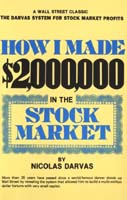
    Book cover to How I made $2 million in the Stock Market

    For the most part my investment philosophy is based on fundamental long term investing strategies. But I do also occasionally speculate with a portion of my portfolio. It is risky (and honestly most people will lose money trying so it is unwise for most, if not all, to try) but can bring great returns for the successful speculator/trader. My methods are significantly influenced by Nicolas Darvas who wrote the classic investment book – How I Made $2,000,000 in the Stock Market (which I am re-reading now). In it he provides an honest and open look at his experience from his naive start to his eventual success. He lays out, in great detail, exactly what he did and how foolish some of his actions were. Then he explains how he came to find success by focusing on the price and volume action of stocks and a pseudo fundamental component (more of a story that could presage future fundamental success than actual fundamental strength). While honing his investment strategy, in the 1950’s, he traveled the world working as a world class ballroom dancer and placed order via cable.

    Darvas’ method was a forerunner of the many technical analysis schemes used today. He is extensively referenced by William O’Neil (of Investor’s Business Daily fame) and other leading technicians. An extremely simplified overview of Darvas’ method: determine “boxes” (trading ranges) for a stock and buy on the breakout, to the upside, of the topmost box. He used a rest period of several days to set the top of the box and then determine the bottom of the box after that top was set. He used very close trailing stop loss orders to minimize losses. He sought to make large gains (let his winners run) and cut losses quickly.

    Nicholas Darvas’ ideas and books included a disdain for wall street insiders, analysts and rumors. The CAN SLIM (William O’Neil and Investor’s Business Daily) investing style owes a great deal to Darvas’ ideas on investing.

    I have created a new twitter account [removed] for to comment and follow others trading ideas. I would suggest only experience and successful investors even consider trading with a small portion of their portfolio. For most it is a losing proposition.

    More on Darvas’ investing ideas and other leading investors. Books by Nicolas Darvas: Wall Street: The Other Las VegasYou Can Still Make It in the Market (republished after a long period when it was not available) – Darvas System for Over the Counter Profits