Tag: Kiva

  • Kiva Opens to USA Entrepreneur Loans

    Kiva is one of my favorite charities, as I have mentioned several times. They provide a platform that connects those with funds to lend to entrepreneurs. This week they added the ability to lend money to entrepreneurs in the USA. And they also added short webcasts to some of the entrepreneur profiles.

    One of my goals for this blog is to increase the number of readers participating in Kiva – see current Curious Cat Kivans. I have also created a curious cat lending team on Kiva. If you lend through Kiva, add a comment with a link to your Kiva page and I will add you to our list of Curious Cat Kivans.

    Related: My 100th Entrepreneur Loan Through KivaUsing Capitalism to Make a Better World

  • 100th Entrepreneur Loan

    photo of Cesar Augusto Santamaría Escotophoto of Cesar Augusto Santamaría Escoto in his welding workshop, Chinandega, Nicaragua.

    I made my 100th contribution to a micro-loan through Kiva last week. Participating with Kiva is a great antidote to reading about the unethical “leaders” taking huge sums to run their companies into the ground (or even just taking obscene sums to maintain their company). The opportunity to give real capitalists an chance at a better life is wonderful.

    Kiva allows you to lend money to entrepreneur (in increments of $25). The most you get back is the amount you loaned, and if the entrepreneur, does not pay back the loan then you take a loss. This is something you do if you believe if giving people an opportunity to make a better life for themselves through hard work and intelligent economic choices.

    I encourage you to join me: let me know if you contribute to Kiva and I will add your Kiva page to our list of Curious Cat Kivans. Also join the Curious Cats Kiva Lending Team.

    My loans have been made to in 32 countries including: Ghana, Cambodia, Uganda, Viet Nam, Peru, Ukraine, Mongolia, Ecuador and Tajikistan. Kiva provides sector (but I think this data is a not that accurate – it depends on the Kiva partners that are not that accurate on identifying the sectors (it seems to me). A large number of the loans are in retail, clothing and food. I like making loans that will improve productivity (manufacturing, providing productivity enhancing services…) but can’t find as many of those as I would like (8% of my loans are in manufacturing, 11% agriculture, retail 18%, 23% food, 25% services (very questionable – these are normally really retail or food, it seems to me).

    Some examples of the entrepreneurs I have lent to: welding workshop (Nicaragua), expanding generator services business with computer services (Cambodia), food production (Ghana), manufacturing nylon (Nigeria), internet cafe (Lebanon), electronics repair (Benin), new engine for mill (Togo), weaving (Indonesia) and a food market (Mexico).

    Related: Financial ThanksgivingMicroFinance Currency RiskCreating a World Without PovertyProvide a Helping Hand

    21 of my loans have been paid back in full. 3 have defaulted. Those figure give a distorted picture though (I believe). There was a problem with a Kiva partner (they partner with micro-finance banks around the world) MIFEX, in Ecuador. Kiva discovered that MIFEX (i) improperly inflated the loan amounts it posted for entrepreneurs on the Kiva website and (ii) kept the excess amount of the posted loan to fund its own operational expenses. Kiva does not expect any further payments on these loans. I had 2, so I think those 2 give a fair impression. The 3rd default is from Kenya. That loan was to a business selling bicycle parts. In 2008, in Kenya, the prevailing political crisis deteriorated and businesses have either been destroyed or closed in fear of looters. Technically the loan did default, however, I was paid $71.50 out of $75 loan (so the defaulted amount was very small.
    (more…)
  • Financial Thanksgiving

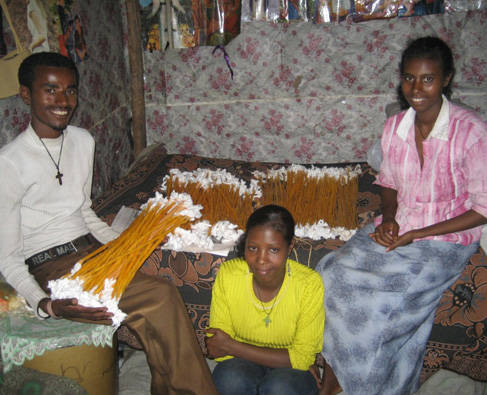
    photo of Frew Wube in Ethiopia

    For me, giving back to others is part of my personal financial plan. As I have said most people that are actually able to read this are financially much better off than billions of other people today. At least they have the potential to be if they don’t chose to live beyond their means. Here are some of the ways I give back to others.

    Kiva is a wonderful organization and particularly well suited to discuss because they do a great job of using the internet to make the experience rewarding for people looking to help – as I have mentioned before: Using Capitalism to Make a Better World. One of my goals for this blog is to increase the number of readers participating in Kiva – see current Curious Cat Kivans. I have also created a lending team on Kiva. Kiva added a feature that allows people to connect online. When you make a loan you may link you loan to a group.

    I actually give more to Trickle Up (even though I write about Kiva much more). I have been giving to them for a long time. They appeal to my same desire to help people help themselves. I believe in the power of capitalism and people to provide long term increases in standards of living. I love the idea of providing support that grows over time. I like investing and reaping the rewards myself later (with investment I make for myself). But I also like to do that with my gifts. I would like to be able to provide opportunities to many people and have many of them take advantage of that to build a better life for themselves, their families and their children.

    The photo shows Frew Wube, Haimanot and Melkan (brother and two sisters), an entrepreneur that received a grant from Trickle up. Trickle Up provides grants to entrepreneur, similar to micro loans, except the entrepreneur does not have to pay back the grant. They are able to use the full funds to invest in their business and use all the income they are able to generate to increase their standard of living and re-invest in the business.

    Haimanot and Melkan quickly learned the ropes of the job and started working with their brother in the business. Soon, the two girls managed the clothing business on their own, and Frew began to think about other income-generating opportunities.

    “I also save every month,” says Frew, who has over $40 stored in a cooperative savings fund. The capital he has saved with other people in his group is used to provide loans to group members at a low interest rate. Frew, now able to access credit thanks to his Trickle Up clothing business, has taken progressively larger loans from the group, including his latest loan of $300 to start a candle business.

    (more…)

  • MicroFinance Currency Risk

    I have been curious how Kiva deals with currency risk. Kiva is a great resource for providing micro-lending and the opportunity to engage in choosing who you will lend to. But my transactions are all in US$ and the loans in the field are in the local currency. This creates an issue of what happens when currency values fluctuate. I asked a question on the Kiva LinkedIn group (an excerpt is shown here):

    A lender takes out a loan of $100 with 10 months to repay. If the loan is in the local currency, what if the value of that currency during the 10 months declines by 20%? Then the bank has received all their money back but they owe Kiva $100 but they only have $80 worth of the local currency (again ignore that the payments are made monthly – since it doesn’t effect the issue at hand – currency rates). Hows does Kiva deal with this currency risk? Do the local partner banks take the risk…?

    I was directed to a great slideshow showing Kiva’s lending policies. It turns out Kiva does have the local banks take the currency risk. So they have to pay back $100, if the local currency value is now $80, they would have a loss, of course the local currency value could also have risen, then the local bank has a gain.

    They have a chart showing the cost of capital to local Kiva lenders at 0-1% plus currency exchange risk (which they say some banks choose to hedge and others just take the risk), which is about the lowest cost of capital around. Kiva charges no interest on the loans to the local banks. The costs come from the requirements (the cost of adding a profile – the time of staff of the bank to add the information…) of using the Kiva website.

    Updates
    1) Kiva updated their policy to put any currency loss greater than 20% on the lenders (up to 20% losses are taken by the bank, above 20% are taken by those lending through Kiva). But the banks can chose to take the currency risk, which they could do to encourage lenders to select their loans to fund.
    2) They updated it again to make it a decision by the bank, which means often the lenders bear the risk (it is stated on each loan how the risk is assigned)

    Curious Cat Kiva connections: Curious Cats Kiva lending teamCurious Cat Kivans Funding Entrepreneurs in Nicaragua, Ghana, Viet Nam, Togo and TanzaniaKiva Fellows Blog: Nepalese Entrepreneur SuccessKiva related blog posts

  • Kiva Fellows Blog: Nepalese Entrepreneur Success

    photo of Rita Bashnet

    Kiva has added a fellows blog – which is a great idea. The fellows are funded by Kiva (fellows are unpaid) to go to spend time in the countries Kiva facilitates loans for working with the local partners. This post is about Rita Bashnet (in photo) an entrepreneur from Nepal:

    Field visits are by far the best part about being a Kiva Fellow. You’re given the opportunity to hop on a motorbike, hike up a village trail, and actually see the impact of a Kiva loan firsthand.

    Five years ago, Ms. Rita took her first loan of NRs. 10,000 (USD $150) and purchased some extra seed and fertilizer in the hopes of expanding her small vegetable patch. With the profits from this initial investment and a second loan from Patan Business and Professional Women (they offer a graduated loan program), she then purchased her first dairy cow.

    After hearing about a program that subsidized the installation of methane gas storage tanks, Ms. Rita took another loan and applied for the program. With this new system, she is now able to capture the valuable gas released from her cow’s waste in a simple controlled-release storage tank. Today she no longer purchases gas from the city and can even sell some during times of shortage.

    Ms. Rita exemplifies the potential of microfinance. A combination of access to capital and strategic investment has allowed her and her family to drastically improve their economic situation in a short five years.

    Great story, and exactly my hope for using capitalism to improve the standard of living for people around the globe. I notice today, for the first time, some of those seeking loans are about to have their listings expire unfunded. Kiva gives listings 30 days to be funded. I have no problem if some loans are not funded (I want to help entrepreneurs by providing funding to build a business – some loans are for things like adding a room onto their house, which is fine but not what I want to support with interest free loans from me). But, this is a big change from when I couldn’t find anyone to loan to (they had so many people looking to lend that they didn’t have enough loans to fund). If you haven’t loaned money through Kiva (or you haven’t added to your loan portfolio recently), please consider it now. If you do, send me your Kiva lender link and I will add it to Curious Cat Kivans. My biggest wish for this blog is to get more readers listed on that page.

    Related: Using Capitalism to Make a Better WorldFunding Entrepreneurs in Nicaragua, Ghana, Viet Nam, Togo and Tanzania2006 Nobel Peace Prize to EconomistFrontline Explores Kiva in UgandaTrickle Up

  • Funding Entrepreneurs in Nicaragua, Ghana, Viet Nam, Togo and Tanzania

    photo of Cesar Augusto Santamaría Escoto

    I have made some additional loans through Kiva, $250 for 5 loans in: Nicaragua, Ghana, Viet Nam, Togo and Tanzania. I have now made 37 loans for a total of $1,775. 5 loans of $250 have been paid back (and I relent the proceeds). Kiva says 5.64% are delinquent. While they show my delinquency rate they don’t show me which loans are delinquent. Frankly I think that figure may be in error (maybe it is counting one that was delinquent but is not now – see next paragraph). In any event all loans appear to have been paid off in full on time or are being paid in full now on time.

    In any event no loans are in default. One loan in Kenya for bike repair shop (that for whatever reason I especially liked) and did connect me more to the troubles in Kenya recently. Kiva mentioned many banks were having trouble keeping in touch with clients as many people fled violence. For two months there was no activity then there was a payment for 3 full months. I was happy when a new payment came in, not for the money being repaid (which shows again that my aim with this money is not a return for me but to provide opportunities to entrepreneurs), but for confirmation he was doing well.

    Photo of Cesar Augusto Santamaría Escoto in his welding workshop, Chinandega, Nicaragua.

    If you have a Kiva page, let me know and I will add a link to it on the Curious Cat Kivans page.

    Related: Provide a Helping HandMicrofinancing EntrepreneursEntrepreneurship posts on the Curious Cat Science and Engineering blog

  • Kiva – Provide a Helping Hand

    Kiva is a great organization I have mentioned before (e.g. microfinancing for entrepreneurs). They let people to loan money directly to entrepreneurs around the world through their web site. Loan can be as small as $25. As the business produces income from the capital loaned the loan is paid back. Kiva is setup as a charity, so those making the loans do not make a profit. In actuality the capital is provided through a Kiva partner (intermediary) that often does change interest to the entrepreneur (many are non-profits themselves that use the interest to fund operating expenses – and I think some are for profit, though I may be wrong on that).

    I loaned an additional $300 to 6 entrepreneurs today and donated $50 to Kiva. The entrepreneurs I helped fund are located in: Togo, Dominican Republic, Senegal, Nicaragua, Bolivia and Uganda. One of the things Kiva does very well is take advantage of the internet to connect to these people. You can see short profiles and photos of them on my Kiva profile.

    I hope some of you readers will join and provide loans. If so I would love to add a link to your profile from the Curious Cat Kiva supporters page.

    Related: Using Capitalism to Make the World BetterKiva: Internet based MicrofinancingMake the World Better

  • Frontline Explores Kiva in Uganda

    Frontline World traveled to Uganda to explore the impact of microfinance and provide some great details on how Kiva is bringing economic opportunity to entrepreneurs. The site includes details and a nice webcast. It is great to see how people can connect directly using Kiva. And it is great to see how people can take small loans and some effort and financial literacy to make a living for themselves. The effort of these entrepreneurs to manage their finances would benefit many people in the rich world plan for retirement

    As I have mentioned before, if you loan through Kiva send me a link to your Kiva page and I can add it to the Curious Cat Kivans page.

    Related: Make the World Better Using CapitalismHelping People Help ThemselvesMake the World BetterHow Rich are You

  • Helping Capitalism Make the World Better

    I have mentioned Kiva before: Microfinancing Entrepreneurs.

    Kiva is lets you loan money directly to an entrepreneur of your choice. Kiva provides loans through partners (operating in the countries) to the entrepreneurs. Those partners do charge the entrepreneurs interest (to fund the operations of the lending partner). Kiva pays the principle back to you but does not pay interest. And if the entrepreneur defaults then you do not get your capital paid back (in other words you lose the money you loaned). I plan to just recycle repaid loans to other entrepreneurs.

    I have just placed $150 in loans to 6 business entrepreneurs (in Honduras, Indonesia[2 loans], Tajikistan, Uganda and Ukraine) – and a $100 donation to Kiva. Adding to my previous loans of $350. Since our last post the Oprah Winfrey Show, President Clinton’s newly released book Giving and others have sung the praises of Kiva and made it a challenge to find entrepreneurs of Kiva to lend to. That seems to have been partially fixed the last few weeks (though still they limit you to no more than $25 per entrepreneur – in order to allow the large numbers of people that want to lend to get through).

    If you lend through Kiva, add a comment with a link to your Kiva page and I will add you to our list of Curious Cat Kivans.

    I have mentioned previously the horrible “service” I received from Discover Card. They actually sent me a check finally for the overpayment. They still have failed to send me the cash back reward I earned. ust spun off their Discover Card subsidiary today). As I stated before if they sent me the money they owed I would loan that through Kiva and add an equal amount from me. Obviously I exceeded that with the loans mentioned above. If they send the cash back bonus they owe I will do the same thing.

    Related: Kiva: Microfinance Loans (posted on Christmas day 2006)helping people succeed economically