Tag: politics

  • Improvements to the USA Tax Policy

    The USA is currently looking to pass a tax bill. Actually the Republican party has decided to not seek bipartisan solutions so it is the Republicans that are looking to change the tax policy. They wish to call it tax reform but they are reforming nearly nothing. They are mainly moving around tax breaks to different people. The main aim seems to be to reduce taxes without reducing spending which given the huge annual deficit the USA government currently runs that means really this is a plan to shift taxes to the grandchildren of people living right now.

    And within lowering taxes for some people today while placing those payments onto their grandchildren there is a bit of shifting around who will pay what now. Mostly this amounts to lowering the taxes on the rich today – along with some lowering of many people’s taxes that are in the middle class.

    When you run a huge budget deficit (and have a huge amount of debt outstanding) “cutting taxes today” is just shifting taxes to the kids, grandkids and great-grandkids of those avoiding the taxes today. Truly cutting taxes (versus shifting them to a future generation) requires cutting the outstanding debt (which represents future tax increases) in addition to cutting current taxes.
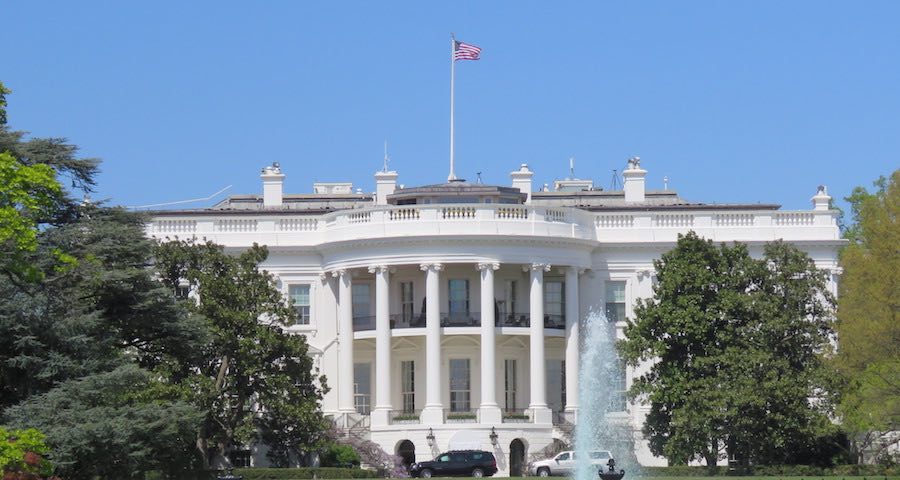
    view of the White House, Washington DC
    The White House, Washington DC by John Hunter. See more of my photos of Washington DC.

    To find reform ideas in the proposals requires using an extremely broad definition of what reform means. There are some attempts to reduce some favors in the tax code now for special interests. But these are minor compared to the goal of shifting the tax burden to grandchildren from those alive today.

    One of the other goals is to reduce the corporate tax rate. This goal doesn’t look so great politically, so they are trying to minimize any focus on this. I think likely a reduction in the corporate tax rate is wise. This is mainly due, not to some principle that 25% corporate tax rate is better than a 35% rate (with all the system-wide effects that results in). Mainly a lower rate is needed when you consider the global economic system and the tax rates of other countries with an understanding of the global economy today. What must be sacrificed to reach a 20% corporate rate seems unreasonable to me, so 25% rate seems more sensible, but at this time they are trying to stretch to a 20% rate (and leave future generations to pay for the difference).

    I support the effort to lower the corporate tax rate. In order to pay for that reducing some deductions is sensible. The plans have some of that and while each tax break has special interests benefiting from them I would support adding to the decreases in deductions. I would go along with a 20% rate if that was necessary, but think 25% or 22% or something would be better.

    The most ludicrous part of the plan is the favors for trust fund babies. Eliminating the most capitalist friendly tax (the estate tax) and providing trust fund babies not only free inheritance without limit but stepping up the cost basis of investments is indefensible (economically indefensible, politically the Republicans obviously feel favors for trust fund babies are wise).

    See my Curious Cat Tax Proposals blog post from 2016 for more of my ideas on how tax reform should be done.

    The current deficit spending is made to look much less bad than it really is due to incredibly low interest rates. Given the inevitable rise in interest rates over the next 30 years the debt we pile on future generations is going to be much greater than it appears in an extremely low interest rate environment.

    There are essentially 4 areas of significant federal spending.

    • interest on the debt – this can’t be changed, it is set by the market
    • spending on the department of defense (including spending on veterans)
    • social security
    • medicare and medicaid

    There is no political will to reduce the costs of social security. I would raise the age at which you can begining taking payments and reduce payments to the rich. But this won’t pass, so that won’t change.

    The Republicans have greatly increased spending by the department of defense so obviously this results in a tax increase (just on our descendants because they chose not to pay for the higher level of spending they voted for)

    (more…)

  • We Need to Start Electing People That Fix Problems Instead of Watching Things Burn

    The latest massive breach of USA citizen’s private information by poorly run companies once again shows how we are voting for the wrong type of people. We need to start electing people that fix problems instead of watching things burn.

    It is not impossible to improve if you elect people that care about making things better. If you elect people that are driven mainly by doing favors for those giving them cash you get the system we have now.

    I believe in designing systems that use markets to create the best solutions to desired outcomes (this is the basic idea of real capitalism – instead of the crony capitalism we have been infected with). Europe has much more respect for citizen’s privacy that the USA does. Europe has much more effect laws on protecting citizen’s privacy. For decades the 2 political parties in the USA have taken large cash donations (and more, future cushy jobs…) to allow the current system to punish citizen’s as their private information is abused and they are expected to spend their time and resources to fix the problems created by the identity theft the lack of decent systems in the USA to stop identity theft. And the design by the 2 parties to put the cost of dealing with it on voters and the benefits (of selling private consumer information and using poor security practices to create problems that voters have to clean up) to those giving the parties cash.

    We need to stop voting for such corrupt parties and such poor representatives of our interests (though they are very good representatives of those paying them cash).

    So what is a simple starting point for taking the burden of dealing with the easy identity theft our political parties and companies that don’t care about the costs of their sloppy practices on society are?

    1. Force those approving false credit to pay. Anytime you have to fix credit given falsely in your name they must pay you. Say, $1,000 minimum.
    2. Force those providing false information about you to pay. If credit bureaus report false information about you that you must correct it is $50 if it is fixed within 7 days of a simple internet form being completed. If it takes 30 days the cost is $150. If they require you to provide additional information, additional costs accrue. They must provide your the original documentation on the loans.
    3. Give consumer automatic and free control over the use of their private information.
      Obviously, credit freezes, and managing that status must be free.
    4. Any organization that collects private financial information must have liability insurance. That insurance will automatically pay per security breach. For name + SSN ($150) + Date of birth ($20) + cell phone number ($20) + current address ($100) + credit card number ($50) + email address ($10) + mother’s maiden name ($25), etc. If you do not collect SSN, credit card number, cell phone number or current address this will not apply. I haven’t given it any thought, but there should be some level of private information that pushes you into the category of the organization that must have liability coverage (what that is can be worked out).
    5. The funds for those security breaches are paid to the Consumer Financial Protection Bureau and used to
      • create better security practices for private information
      • fund enforcement of those better security practices
      • fund law enforcement investigations and criminal prosecution of those abusing private financial information

    This idea needs to be expanded beyond my 1 hour of thinking about it, but it is sad that in 1 hour I can think of much more effective ideas than our political parties have put in place in 20 years.

    The reliance on SSN as a identifier for people is something that shouldn’t have been allowed. It is one of many things that should be fixed and it should be fixed quickly.

    The organization created here needs to focus on privacy of data. They need to encourage the use of encryption. They need to be given a seat at the table to counter those seeking to promote hacking (both leaving insecure software in place and creating insecurity in the software ecosystem to exploit and be exploited by criminals and other states) to benefit state sponsored spying. That debate will result in tradeoffs. Sometimes they will decide to allow our private information to be put at risk for other benefits. But they need to accept the responsibility of doing so. It would likely be sensible to charge the departments leaving open security holes and creating security holes anytime it becomes obvious that they are responsible for the harm to us. Otherwise they pretend there are not costs to the very bad security practices that our government has been encouraging (even as crazy as it sounds building backdoors into software – which is a security disaster obviously).

    Other than the extremely sad state of affairs in health care in the USA (with the Republicans focusing on making it much worse) the biggest threat to our personal finances is likely the lack of security in our financial system (though to be fair there are other plausible candidates – very high debt level…).

    Related: Protecting Your Privacy and Security (2015)Making Credit Cards More Secure and Useful (2014)Governments Shouldn’t Prevent Citizens from Having Secure Software Solutions USA Congress Further Aids Those Giving Them Cash Risks Economic Calamity AgainSecurity, Verification of Change8 Million New Potential Victims of Identity Theft (2008)

  • Long Term Changes in Underlying Stock Market Valuation

    I have written before about one of the most important changes I believe is needed in thinking about investing over the last few decades: Historical Stock Returns.

    My belief is that there has been a fundamental change in the valuation of stocks. Long term data contains a problem in that we have generally realized that stocks are more valuable than realized 100 years ago. That means a higher based PE ratio is reasonable and it distorts at what level stocks should be seen as very overpriced.

    It also depresses expected long term returns, see my original post for details.

    Jeremy Grantham: The Rules Have Changed for Value Investors

    The market was extremely well-behaved from 1935 until 2000. It was an orderly world in which to be a value manager: there was mean reversion. If a value manager was patient, he was in heaven. The market outperformed when it was it cheap, and when it got expensive, it cracked.

    Since 2000, it’s become much more complicated. The rules have shifted. We used to say that this time is never different. I think what has happened from 2000 until today is a challenge to that. Since 1998, price-earnings ratios have averaged 60 percent higher than the prior 50 years, and profit margins have averaged 20 to 30 percent higher. That’s a powerful double whammy.

    Diehard Ben Grahamites underestimated what earnings and stock prices would do. That began to be a drag after 1998.

    I believe he is right. I believe in the value of paying attention to historical valuation and realizing markets often go to extremes. However, if you don’t account for a fundamental shift in valuation you see the market as overvalued too often.

    The price-earnings and profit margin increases. Corporations got more monopoly power and more power in government. The current market era doesn’t feel like a bubble — it’s not euphoric yet like the housing bubble of 2005. It’s more that we have been climbing the wall of worry.

    So why have prices risen so high without a hint of euphoria — at least until very recently — or a perfect economy? My answer is that the discount rate structure has dropped by two percentage points. The yield on stocks is down by that amount and bonds too. The market has adjusted, reflecting low rates, low inflation and high profit margins.

    Again I agree. Our political parties have aided big business in undermining market through monopolistic market control and that has been consistent (and increasing) for decades now. It makes stocks more valuable. They have moats due to their monopolistic position. And they extract economic rents from their customers (granted they put a large amount of those ill gotten gains into executives pockets but even so they gains are large enough to increase the value of the stocks).

    On top of these strong forces we have the incredible interest rate conditions of the last decade. This is the one that is most worrisome for stock values in my opinion. It servers to boost stock prices (due to the poor returns for interest bearing investments). And I worry at some point this will change.

    There is also likely at some point to be a political return to the value of capitalism and allowing free markets to benefit society. But for now we have strong entrenched political parties in the USA that have shown they will undermine market forces and provide monopolistic pricing power to large companies that provide cash to politicians and parties in order to have those parties undermine the capitalist market system.

    I believe the stock market in the USA today may well be overvalued. I don’t think it is quite as simple as some of the measures (CAPE – cyclical adjusted PE ratio or market value to USA GDP) make it out to be though. As I have said for several years, I believe we are currently living through one of the more challenging investment climates (for long term investors seeking to minimize long term risk and make decent returns over the long term). I still think it is best just to stick with long term portfolio diversification strategies (though I would boost cash holdings and reduce bonds). And since I am normally light on bonds and high on stocks, for someone like me reducing stock holding for cash is also reasonable I believe (but even doing this I am more in stocks than most portfolio allocations would suggest).

    Related: Monopolies and Oligopolies do not a Free Market MakeMisuse of Statistics, Mania in Financial MarketsInterview with Investing Blogger John Hunter

  • Historical Global Economic Data and Current Issues for Globalization

    The Great Convergence by Richard Baldwin makes some interesting points about “globalization.” I actually find the long term history the most interesting aspect. It is very easy for people today to forget the recently rich “West” has not always been so dominant.

    China and India/Pakistan accounted for 73% of the world manufacturing output in 1750. They continued to account for over half of global output even as later as 1830. By 1913, however, their share had dropped to 7.5%.

    That shows how quickly things changed. The industrialization of Europe and the USA was an incredibly powerful global economic force. The rapid economic gains of Japan, Korea, Singapore, China and India in the last 50 years should be understood in the context of the last 200 years not just the last 100 years.

    A central point Richard advocates for in the book is realizing that the current conditions are different from the conditions in which traditional economic theory (including comparative advantage) hold. The reasoning and argument for this claim are a bit too complex to make sensibly in this post but the book does that fairly well (not convincingly in my opinion, but enough to make the argument that we can’t assume traditional economic theory for international trade is completely valid given the current conditions).

    Freer trade does allow all nations to gain by “doing what they do best and importing the rest.” But the fact is that TPP is much more like the soccer coach training the other team. TPP will make it easier to move advance know-how to low-wage nations – an outcome that is not covered by Adam Smith’s reasoning.”

    I don’t expect this blog post to convince people. I don’t even think his book will. But he makes a case that is worth listen to. And I believe he is onto something. I have for years been seeing the strains of “comparative advantage” in our current world economy. That doesn’t mean I am not mainly a fan of freer trade. I am. I don’t think complex trade deals such as TPP are the right move. And I do think more care needs to be taken to consider current economic conditions and factor that into our trade policies.

    Richard Baldwin uses 3 costs and the economic consequences of those changing over time to show globalizations history, where we are today and where we are going.

    The cost of moving goods came down first, followed by the cost of moving ideas. The third constraint, the cost of moving people, has yet to be relaxed.

    It isn’t very easy to follow but the book provides lots of explanation for the dramatic consequences of these costs changing over time.

    Highly skilled labor presents an attractive combination of low mobility and high spillovers. This combination is one of the reasons that almost all governments believe that subsidizing technical education is one of the best ways to promote their nation’s industrial competitiveness.

    One of his themes is that mobility of labor is still fairly costly. It isn’t easy to move people from one place to another. Though he does discuss how alternatives that are similar to this (for example telepresence and remote controlled robots to allow a highly technical person to operate remotely) without actually do moving the person are going to have huge economic consequences.

    The “high spillovers” are the positive externalities that spin off of a highly knowledgable workforce.

    (more…)

  • The Aim of Modern Day Political Parties is To Scare Donors Into Giving Cash

    Monsters Inc received power from children’s screams. So the company hired monsters to go scare children to get more screams and create more power.

    The current political parties in the USA (Republicans and Democrats) seek to scare their donors into providing cash “donations.” It is even worse, in many ways, than if those parties sold favors to get things done. At least then there would be an incentive for the parties to deliver successful prizes to those paying for influence.

    But the parties have become like Monsters Inc. They only seek to increase suffering in order to get what they want (in the case of the Republican and Democrats, cash, and in the case of Monsters Inc, screams).

    The damage to the economy from decades of two political parties seeking to increase fear so they can get more cash while neither cares about the damage they do is enormous. We really need to throw out those that have been destroying the country for their own petty interests.

    Throwing out the parties that have proven they don’t care about the country won’t result in people that agree on tactics but at least we should elect people that seek to aid the country and refuse to destroy the country in order to hope in doing so they can hurt the other political party more than they are hurt. As long as we keep electing the type of people that don’t care about the damage they do we are going to keep paying a high price.

    Occasionally (and much more than occasionally at the state level, it is harder to make excuses about failing to deliver on what people paid for at the state and local level) they do give in and give those paying them lots of cash what those that paid thought they bought. But most of the time they try to avoid doing so as that slows down the flow of money.

    Related: USA Congress Further Aids Those Giving Them Cash and Risks Economic Calamity AgainAdding More Bailouts for Politicians and Bankers is Not the Correct StrategyAnti-Market Policies from Our Talking Heads and PoliticiansWe Need to be More Capitalist and Less Cronyist

    (more…)

  • USA Congress Further Aids Those Giving Them Cash – Risks Economic Calamity Again

    It is no surprise those we elect that have shown there primary concern is providing favors to those giving them lots of cash have given the wall street crowd that showers them in cash what they want yet again. As long as we keep electing these people they will keep providing benefits to those giving lots of cash that the rest of society is stuck paying for.

    Read more about this huge fiasco: Congress Sells Out To Wall Street, Again!

    Even ill-informed politicians now can’t pretend they don’t know the risks they run by providing these favors. But they figure they won’t have to be accountable – they haven’t been held accountable so far. So they are probably right that they won’t be held accountable when the taxpayers suffer huge losses and the taxpayers have to again bail out the too big to fail institutions and savers have to again bail out the too big to fail banks and…

    As bad as the economy has been since the to-big-too-fail crowd created economic calamity it is amazing it hasn’t been much worse. The extraordinary efforts of the Fed have been amazingly successful. I worry they have put us in an extraordinarily risky place but so far the results have been remarkable. Hoping such slights of hand (plus huge transfers of wealth from middle class savers to to-big-too-fail speculators – in the tune of hundreds of billions of dollars – so it isn’t like there are not huge suffering by millions of people – even those that were not thrown out of work) will allow continued reckless giveaways to those paying politicians is a very bad idea.

    But it is no surprise those we elect have chosen that course of action. It seems we are very unlikely to learn without a real depression being forced by decades of extremely foolish behavior by our elected officials in Washington DC.

    Related: Continuing to Nurture the Too-Big-To-Fail Eco-systemThe Risks of Too Big to Fail Financial Institutions Have Only Gotten WorseAdding More Banker and Politician Bailouts is not the AnswerFailure to Regulate Financial Markets Leads to Predictable Consequences (as does letting big contributors create “regulations” that are nothing more than government granted favors to huge organizations)Congress Eases Bank Laws, 1999, while risks were stated by those not willing to lie down for Wall Street Lobbyists (few though they were)

  • Continuing to Nurture the Too-Big-To-Fail Eco-system

    Fed Continues Adding to Massive Quantitative Easing

    In fact, while the Fed has pumped about $2.8 trillion into the financial system through nearly five years of asset buying.

    Bank excess reserves deposited with the New York Fed have mushroomed from less than $2 billion before the financial crisis to $2.17 trillion today. In essence, roughly two-thirds of the money the Fed pumped into the banking system never left the building.

    The Fed now pays banks for their deposits. These payment reduce the Fed’s profits (the Fed send profits to the treasury) by paying those profits to banks so they can lavish funds on extremely overpaid executives that when things go wrong explain that they really have no clue what their organization does. It seems very lame to transfer money from taxpayers to too-big-to-fail executives but that is what we are doing.

    Quantitative easing is an extraordinary measure, made necessary to bailout the too-big-to-fail institutions and the economies they threatened to destroy if they were not bailed out. It is a huge transfer payment from society to banks. It also end up benefiting anyone taking out huge amounts of new loads at massively reduced rates. And it massively penalizes those with savings that are making loans (so retirees etc. planing on living on the income from their savings). It encourages massively speculation (with super cheap money) and is creating big speculative bubbles globally.

    This massive intervention is a very bad policy. The bought and paid for executive and legislative branches that created, supported and continue to nurture the too-big-to-fail eco-system may have made the choice – ruin the economy for a decade (or who knows how long) or bail out those that caused the too-big-to-fail situation (though only massively bought and paid for executive branch could decline to prosecute those that committed such criminally economically catastrophic acts).

    The government is saving tens of billions a year (maybe even hundred of billions) due to artificially low interest rates. To the extent the government is paying artificially low rates to foreign holders of debt the USA makes out very well. To the extent they are robbing retirees of market returns it is just a transfer from savers to debtors, the too-big-to-fail banks and the federal government. It is a very bad policy that should have been eliminated as soon as the too-big-to-fail caused threat to the economy was over. Or if it was obvious the bought and paid for leadership was just going to continue to nurture the too-big-to-fail structure in order to get more cash from the too-big-to-fail donors it should have been stopped as enabling critically damaging behavior.

    It has created a wild west investing climate where those that create economic calamity type risks are likely to continue to be rewarded. And average investors have very challenging investing options to consider. I really think the best option for someone that has knowledge, risk tolerance and capital is to jump into the bubble created markets and try to build up cash reserves for the likely very bad future economic conditions. This is tricky, risky and not an option for most everyone. But those that can do it can get huge Fed created bubble returns that if there are smart and lucky enough to pull off the table at the right time can be used to survive the popping of the bubble.

    Maybe I will be proved wrong but it seems they are leaning so far into bubble inflation policies that the only way to get competitive returns is to accept the bubble nature of the economic structure and attempt to ride that wave. It is risky but the supposedly “safe” options have been turned dangerous by too-big-to-fail accommodations.

    Berkshire’s Munger Says ‘Venal’ Banks May Evade Needed Reform (2009)

    Munger said the financial companies spent $500 million on political contributions and lobbying efforts over the last decade. They have a “vested interest” in protecting the system as it exists because of the high levels of pay they were earning, he said. The five biggest U.S. securities firms, only two of which still exist as independent companies, paid their employees about $39 billion in bonuses in 2007.

    Related: The Risks of Too Big to Fail Financial Institutions Have Only Gotten WorseIs Adding More Banker and Politician Bailouts the Answer?Anti-Market Policies from Our Talking Head and Political Class

  • Too-Big-to-Fail Bank Created Great Recession Cost Average USA Households $50,000 to $120,000

    A report by the Dallas Federal Reserve Bank, Assessing the Costs and Consequences of the 2007–09 Financial Crisis and Its Aftermath, puts the costs to the average household of the great recession at $50,000 to $120,000.

    A confluence of factors produced the December 2007–June 2009 Great Recession—bad bank loans, improper credit ratings, lax regulatory policies and misguided government incentives that encouraged reckless borrowing and lending.

    The worst downturn in the United States since the 1930s was distinctive. Easy credit standards and abundant financing fueled a boom-period expansion that was followed by an epic bust with enormous negative economic spillover.

    Our bottom-line estimate of the cost of the crisis, assuming output eventually returns to its pre-crisis trend path, is an output loss of $6 trillion to $14 trillion. This amounts to $50,000 to $120,000 for every U.S. household, or the equivalent of 40 to 90 percent of one year’s economic output.

    They say “misguided government incentives” much of which are due to payments to politicians by too-big-to-fail institution to get exactly the government incentives they wanted. There is a small bit of the entire problem that is likely due to the desire to have homeownership levels above that which was realistic (beyond that driven by too-big-to-fail lobbyists).

    “Were safer” says a recent economist. Which I guess is true in that it isn’t quite as risky as when the too-big-to-fail-banks nearly brought down the entire globally economy and required mass government bailouts that were of a different quality than all other bailouts of failed organizations in the past (not just a different quantity). The changes have been minor. The CEOs and executives that took tens and hundreds of millions out of bank treasures into their own pockets then testified they didn’t understand the organization they paid themselves tens and hundreds of a millions to “run.”

    We left those organizations intact. We bailed out their executives. We allowed them to pay our politicians in order to get the politicians to allow the continued too-big-to-fail ponzie scheme to continue. The too-big-to-fail executives take the handouts from those they pay to give them the handouts and we vote in those that continue to let the too-big-to-fail executives to take millions from their companies treasuries and continue spin financial schemes that will either work out in which case they will take tens and hundreds of millions into their person bank accounts. Or they won’t in which case they will take tens of millions into their personal bank accounts while the citizens again bail out those that pay our representatives to allow this ludicrous system to continue.

    (more…)

  • Lavishing Tax Cuts on Ourselves That Our Grandkids Have to Pay For is Bad Policy

    Those that want to continue the policies of the last few decades of policies that tax our grandkids to pay for us living beyond our means seem to have won the day again. Not a surprise; very sad though.

    In my reading stories on the wonderful success of “avoiding the fiscal cliff” seems to amount to passing the George Bush tax cuts again (except this time when in a much much worse budgetary position) and modifying the extent to which the absolute richest benefit from those cuts (so the richest don’t get quite as step cuts as they had been getting but still are getting big cuts from before the Bush tax cuts were made. And the recent trend of treating trust fund babies as the absolute most favored taxpayers was continued (though a few of the absolute richest trust fund babies will have to have some taxes withheld from their windfalls).

    I haven’t read anything about them getting rid of the “hedge fund manager” tax favors. Did they? Did they even bother to change the law so retired managers don’t get the super huge tax favors too?

    On the spending beyond our means issue they seem to have just decided that having the grandkids continue to fund our spending is wonderful.

    If it were up to me I would have continued some of the Bush tax cuts (certainly not for those making more than $200,000 – unless we can cut spending way more than I would guess in which case I would be fine having taxes even for the richest few lowered). I would have continued treatment that reduced taxes owed on dividends and capital gains, though perhaps a bit less than they did. I would cap mortgage deductions (at say $50,000 a year or something).

    I certainly would not have supported such massive Bush tax cuts without large spending cuts. If this level of spending is what we intent to do, we need to pay for it and not just bury our kids and grandkids with huge bills. Without spending cuts I would not have voted again for the Bush tax cuts, which seems to be the main extent of their “solution” (taking a bit of the tax cuts for the wealthiest off the plate but pretty much just passing Bush’s tax cut again).

    (more…)

  • US Treasury Yield Fall to New Record Low

    Us treasury yield hit a incredibly low level years ago and they have continued to fall further. Granted this is mainly due to the bailout of the economy necessitated by the politicians favors to the too-big-too-fail financial institutions that have given those politicians so much cash over the years. Other factors are at play but the extent of the excessive punishment of savers is mainly due to political bailouts of bankers and bailouts of the economy caused by the bankers actions.

    This extremely low rate environment is crippling to many retirees. The small percentage that actually did what they were told to have been blindsided by years of artificially low rates (and it is likely to continue for years). This has pushed some that would have been comfortable in retirement into an uncomfortable one an has pushed some from a challenging balancing act to essentially having to eliminate every possible expense (and even that may not be enough).

    I can’t believe long term bonds are a sensible investment now. Of course I haven’t thought they were for 10 years, but they are even worse now. Bonds of “strong” governments (USA, Germany, Japan) are paying less than inflation (sometimes even less than 0 nominally – I think this has just been for short term issues so far).

    I cannot see putting more than token amounts into long term bonds at these rates. Corporate bonds are not much better. The economic damaged caused by out of control too-big-too-fail institution is huge and continuing. And the politicians that have been paid lots of cash by those too-big-too-fail institutions continue to treat the too-big-too-fail players are favored friends. The yields are corporate bonds are not good for companies that are strong.

    The alternatives are not great. But real assets, strong dividend stocks, strong company stocks, and short term bonds seem like better options to me in many cases. And hope we elect people that will put the economic interest of the country ahead of a few well paid friends at too-big-too-fail institution. They also need to eliminate the captured “regulators” that have facilitated the continued wrecking of the global economy. I don’t hold out much hope for this though. We keep re-electing those given lots of cash by the too-big-too-fail crowd and they continue giving them favors. We are getting what we deserve given this poor performance on our part but it is pretty annoying having to watch us vote ourselves into economic calamity.

    Related: Buffett Cautions Against Buying Long Term USD BondsIs Adding More Banker and Politician Bailouts the Answer?Bill Gross Warns Bond InvestorsCongress Eases Bank Laws (1999)