Tag: speculation

  • Spread Betting and Contracts for Difference

    I am largely a fundamental investor with the long term time horizon that fits such investing. I however am also a believer in using some more speculative investing for a portion of a portfolio if it fits the risk profile of an investor.

    If you are not comfortable with the risk of an investment most of the time you shouldn’t make that investment. There is a bit of a conflict, for example, where an investor is scared of any loss from say an investment in a stock market index and trying to save for retirement on a median level income. It is nearly impossible to save for retirement without investing in stocks if you are not already rich, so as with most investment advice there is a bit of difficulty at the extremes but in general investors shouldn’t take on risk they are not comfortable with.

    For experienced investors with a high level of financial literacy more speculative options can have a useful role in a portfolio. Though you should realize most people fail with speculation, so you have to be realistic about your prospects. I have used speculative investments including naked short selling, leverage (margin) and options.

    Spread betting is another speculative strategy that can play a part in an investment portfolio. Spread betting is not allowed in the USA (with our highly regulated personal investing environment but is available in most other countries). They are somewhat similar to binary options (which are allowed in the USA) and to futures contracts (they are not the same, just those are comparable to get some idea of how you would use them in a portfolio).

    Spread betting really is a bet on what will happen. You don’t buy a financial instrument. You place a bet with a company and if the prices move for you and you close the position with a gain they pay out a gain to you and if you close out the position with a loss your capital held with them is reduced by your loss amount.

    Since the price to control a position is much less than the notional position size there is a large degree of leverage which increases the affect of gains and loses. Since positions can move against you and must be settled if the loss exceed your deposit with the company you are trading with having a substantial cash cushion is the way I would use such a speculative account. If I decided I could afford to risk losing $5,000 I would deposit that amount.

    My purchases would about 10% of the capital in the account (so $500 at first). If that is leveraged at 20 to 1 (just requiring 5% down on margin), that would make my effective leverage just 2 to 1. But if I added other positions that would increase my leverage, say 2 more purchases and my leverage would be 6 to 1.

    The way I have managed the speculative portion of my portfolio is to fund it and then pull off part of the gains to my long term portfolio and retain part of the gains to build my speculative account. It isn’t really quite that clear as I have different level of speculation in my portfolio. Options are speculative but have a limit of 100% loss. Selling stocks short (naked shorting) is speculative but has theoretically unlimited losses. Using margin on regular stocks has the potential to lose more than you have invested though most of the time you should be stopped out before the losses are too much beyond your entire account value.

    So I don’t really have a clear cut speculative portfolio but I roughly follow that procedure. I have added to the speculative portion when I have had very large gains in a particular portion of my main portfolio.

    Another factor with spread betting, shorting and options is that they can actually be used to reduce the risk of your overall portfolio using certain strategies. If you believe there is a risk for a market downturn but don’t want to sell any of your stock holdings you can use spread betting to create a position that will gain if the market declines. That gain then will offset the likely loss on your stock positions thus reducing you risk in a market decline.

    Of course, if you do that and the market moves up you will create a loss on you spread betting position that offsets your gains on your stock positions. You could also bet against specific stocks that you think will decline more in a market decline and seek to increase your return of course that has risks (including the market declining along with your stocks but that stocks you bet against could move against you anyway). I have used this strategy with selling stocks short occasionally.

    An additional risk to consider with spread betting is you need to find a company you trust to be around to pay off your gains. You would want to examine the safety of your funds and that (in the UK) the account is covered by the Financial Conduct Authority (FCA) and complies with the FCA’s Client Assets provisions (and in other countries they have similar coverage). To be safe you should consider whether holding more than the covered amount is wise in your account. The last 10 years have provided examples of the riskiness of financial companies going out of business; that your funds wouldn’t be accessible is a risk that must be considered.

    Related: Shorting Using Inverse FundsBooks on Trading and Speculating in Financial MarketsSelling Covered Call Options

  • Binary Options

    Options can be used as an aggressive strategy to make money with investments. By following news events for quite a few different companies you can put yourself in the position to act when stories break, or events occur which can cause mini trends in their stock price.

    Volatile stocks with frequent news provide the opportunity to make money on large changes in price. Amazon is a company an Amazon that often makes headlines. Recently, they have been in the news quite a bit, and savvy binary options traders have been cleaning up.

    Binary options are a type of option in which the payoff can take only two possible outcomes. The cash-or-nothing binary option pays some fixed amount of cash if the option expires in-the-money while the asset-or-nothing pays the value of the underlying security.

    For example, a purchase is made of a binary cash-or-nothing call option on Amazon at $320 with a binary payoff of $1000. Then, if at the future maturity date, the stock is trading at or above $320, $1000 is received. If its stock is trading below $100, nothing is received. An investor could also sell a put where they would make a payoff if the conditions are met and have to payoff nothing if the conditions are not met.

    Examples of big news in the recent past

    Amazon Fire Cell Phone – Earlier this year, we watched as Jeff Bezos unveiled the new Amazon Fire 3-D cell phone. As happens in most cases when a company unveils a great new product, we saw this cell phone cause Amazon’s stock price to go through the roof. So, as a trader, seeing the unveiling happen first hand would indicate that the value of Amazon was going to rise, and give the trader unique opportunity to make trades on realistic expectations with this asset.

    (more…)

  • USA Congress Further Aids Those Giving Them Cash – Risks Economic Calamity Again

    It is no surprise those we elect that have shown there primary concern is providing favors to those giving them lots of cash have given the wall street crowd that showers them in cash what they want yet again. As long as we keep electing these people they will keep providing benefits to those giving lots of cash that the rest of society is stuck paying for.

    Read more about this huge fiasco: Congress Sells Out To Wall Street, Again!

    Even ill-informed politicians now can’t pretend they don’t know the risks they run by providing these favors. But they figure they won’t have to be accountable – they haven’t been held accountable so far. So they are probably right that they won’t be held accountable when the taxpayers suffer huge losses and the taxpayers have to again bail out the too big to fail institutions and savers have to again bail out the too big to fail banks and…

    As bad as the economy has been since the to-big-too-fail crowd created economic calamity it is amazing it hasn’t been much worse. The extraordinary efforts of the Fed have been amazingly successful. I worry they have put us in an extraordinarily risky place but so far the results have been remarkable. Hoping such slights of hand (plus huge transfers of wealth from middle class savers to to-big-too-fail speculators – in the tune of hundreds of billions of dollars – so it isn’t like there are not huge suffering by millions of people – even those that were not thrown out of work) will allow continued reckless giveaways to those paying politicians is a very bad idea.

    But it is no surprise those we elect have chosen that course of action. It seems we are very unlikely to learn without a real depression being forced by decades of extremely foolish behavior by our elected officials in Washington DC.

    Related: Continuing to Nurture the Too-Big-To-Fail Eco-systemThe Risks of Too Big to Fail Financial Institutions Have Only Gotten WorseAdding More Banker and Politician Bailouts is not the AnswerFailure to Regulate Financial Markets Leads to Predictable Consequences (as does letting big contributors create “regulations” that are nothing more than government granted favors to huge organizations)Congress Eases Bank Laws, 1999, while risks were stated by those not willing to lie down for Wall Street Lobbyists (few though they were)

  • Withdrawing Huge Amounts of Cash From Companies You Saddle with Debt is Despicable Behavior

    Bain Capital is a product of the Great Deformation by David Stockman

    Bain’s billions of profits were not rewards for capitalist creation; they were mainly windfalls collected from gambling in markets that were rigged to rise.

    Except Mitt Romney was not a businessman; he was a master financial speculator who bought, sold, flipped, and stripped businesses. He did not build enterprises the old-fashioned way—out of inspiration, perspiration, and a long slog in the free market fostering a new product, service, or process of production. Instead, he spent his 15 years raising debt in prodigious amounts on Wall Street so that Bain could purchase the pots and pans and castoffs of corporate America, leverage them to the hilt, gussy them up as reborn “roll-ups,” and then deliver them back to Wall Street for resale—the faster the better.

    That is the modus operandi of the leveraged-buyout business, and in an honest free-market economy, there wouldn’t be much scope for it because it creates little of economic value. But we have a rigged system—a regime of crony capitalism—where the tax code heavily favors debt and capital gains, and the central bank purposefully enables rampant speculation by propping up the price of financial assets and battering down the cost of leveraged finance.

    So the vast outpouring of LBOs in recent decades has been the consequence of bad policy, not the product of capitalist enterprise.

    I abhor the subsidies provided to those that saddle corporations (that build up value through decades of hard work by employees) with huge debt. The actions of leveraged by out firms are atrocious. They seek to pretend that business is once again the land of the amoral behavior, as the robber barron’s sought to convince society of long ago. Those that saddle corporations (that have an obligation to those that built them up) with huge debt are despicable.

    Those same despicable people then take huge amounts of cash (for themselves) from the debt they saddled the corporation with.

    Quite a few smart people have figured out how to pay congress to allow those smart people to take huge profits out of businesses. By being smart enough to have congress create laws to allow their behavior they can say it was just doing what the law allowed. When you conspire with the authorities to create a system to drain cash from legitimate businesses into your pocket you can claim you are acting legally (if you do so by having them change the law, instead of having them just ignore the existing laws). But what is being done (for decades by both parties) by those we continue to elect to allow this behavior shows just how corrupt the system is.

    It is sad we allow those politicians who payoff those that give them large amount of cash, at the expense of our society, to remain in office. But we don’t even discuss the issues in any significant sense. Those using this cronyism and corruption know they are continuing to be given the open door to continue their very destructive ways. These are smart people. They know how to use public apathy and rhetoric to keep from discussing the important issues. It is going to take us to stop the corrupting cronyism that has taken over our political parties.

    Related: Too Much Leverage Killed MervynsFailed Executives Use Leverage to Increase Their Pay, Let Others Bailouts LaterExecutives Treating Corporate Treasuries as Their Money, A Sad State of AffairsCEOs Plundering Corporate CoffersLeverage, Complex Deals and ManiaLooting: Bankruptcy for Profit

  • Famous Stock Traders: Nicolas Darvas

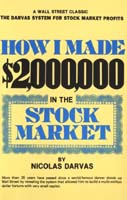
    Book cover to How I made $2 million in the Stock Market

    For the most part my investment philosophy is based on fundamental long term investing strategies. But I do also occasionally speculate with a portion of my portfolio. It is risky (and honestly most people will lose money trying so it is unwise for most, if not all, to try) but can bring great returns for the successful speculator/trader. My methods are significantly influenced by Nicolas Darvas who wrote the classic investment book – How I Made $2,000,000 in the Stock Market (which I am re-reading now). In it he provides an honest and open look at his experience from his naive start to his eventual success. He lays out, in great detail, exactly what he did and how foolish some of his actions were. Then he explains how he came to find success by focusing on the price and volume action of stocks and a pseudo fundamental component (more of a story that could presage future fundamental success than actual fundamental strength). While honing his investment strategy, in the 1950’s, he traveled the world working as a world class ballroom dancer and placed order via cable.

    Darvas’ method was a forerunner of the many technical analysis schemes used today. He is extensively referenced by William O’Neil (of Investor’s Business Daily fame) and other leading technicians. An extremely simplified overview of Darvas’ method: determine “boxes” (trading ranges) for a stock and buy on the breakout, to the upside, of the topmost box. He used a rest period of several days to set the top of the box and then determine the bottom of the box after that top was set. He used very close trailing stop loss orders to minimize losses. He sought to make large gains (let his winners run) and cut losses quickly.

    Nicholas Darvas’ ideas and books included a disdain for wall street insiders, analysts and rumors. The CAN SLIM (William O’Neil and Investor’s Business Daily) investing style owes a great deal to Darvas’ ideas on investing.

    I have created a new twitter account [removed] for to comment and follow others trading ideas. I would suggest only experience and successful investors even consider trading with a small portion of their portfolio. For most it is a losing proposition.

    More on Darvas’ investing ideas and other leading investors. Books by Nicolas Darvas: Wall Street: The Other Las VegasYou Can Still Make It in the Market (republished after a long period when it was not available) – Darvas System for Over the Counter Profits