Category: Stocks

  • Earnings and Dividends Grow, Bond Yields Sink

    Dividends Beating Bond Yields by Most in 15 Years

    More U.S. stocks are paying dividends that exceed bond yields than any time in at least 15 years as profits rise at the fastest pace in two decades.

    Kraft Foods Inc. and DuPont Co. are among 68 companies in the Standard & Poor’s 500 Index with payouts that top the 3.78 percent average rate in credit markets, based on data since 1995 compiled by Bloomberg and Bank of America Corp. While Johnson & Johnson sold 10-year debt at a record low interest rate of 2.95 percent last month, shares of the world’s largest health products maker pay 3.66 percent.

    The combination of record-low interest rates, potential profit growth of 36 percent this year and a slowing economy has forced investors into the relative value reversal. For John Carey of Pioneer Investment Management and Federated Investors Inc.’s Linda Duessel, whose firms oversee $566 billion, it means stocks are cheap after companies raised payouts by 6.8 percent in the second quarter

    S&P 500 companies’ cash probably has grown to a record for a seventh straight quarter, according to S&P. For companies that reported so far, balances increased to $824.8 billion in the period ended June 30 from the first three months of the year, based on data from the New York-based firm.

    Cash represents 10.2 percent of total assets at S&P 500 companies, excluding banks and financial firms, according to data compiled by Bloomberg. That’s higher than the 9.5 percent at the end of the second quarter last year, 8.4 percent in 2008 and 7.95 percent in 2007.

    “The economy is slowing down, but productivity has been so great in this country and companies have been able to make good profits,”

    10-year Treasury note yields were as low as 2.42% last month. The combination of continued extraordinarily low interest rates and good earnings increase this odd situation where dividends increase and interest yields fall. Extremely low yields aimed at by the Fed continue to aid banks and those that caused the credit crisis a huge deal and harm investors.

    Money markets and bonds are not attractive places to invest now. Putting money in those places is still necessary for diversification (and as a safety net – especially in cases like 401-k plans where options are often very limited). Seeking out solid companies with strong long term prospects that pay reasonable dividends is a very sensible strategy today.

    Related: Where to Invest for Yield TodayS&P 500 Dividend Yield Tops Bond Yield: First Time Since 195810 Stocks for Income InvestorsBond Yields Show Dramatic Increase in Investor Confidence (Aug 2009)
  • 401(k) Options – Seek Low Expenses

    401(k), IRAs and 403(b) retirement accounts are a very smart way to invest in your future. The tax deferral is a huge benefit. And with Roth IRAs and Roth 401(k)s you can even get tax exempt distributions when you retire – which is a huge benefit. Especially if you don’t retire before the bill for all the delayed taxes of the last 20 years starts to be paid. The supposed “tax cuts” that merely shifted taxes from those spending money the last 10 years to those that have to pay for all the stuff the government spent on them has to be paid for. And that will likely happen with higher tax rates courtesy of the last 10 years of not paying the taxes to pay for what the government was spending.

    When looking at your 401(k) and 403(b) investment options be sure to pay close attention to expenses for the funds. Some fund families try to get people to investing in high expense funds, that are nearly identical to low expense funds. The investor losses big and the fund companies take big profits. Those people serving on the boards of those funds should be fired. They obviously are not managing with the investors interests at heart (as they are obligated to do – they are suppose to represent the investors in the funds not the friends they have making money off the investors).

    Here is an example (that I ran across last week) expense differences for funds that have essentially identical investment objectives and plans in the same retirement plan options: .39% (a respectable rate, though more than it really should be) for [seeks a favorable long-term rate of return from a diversified portfolio selected to track the overall market for common stocks publicly traded in the U.S., as represented by a broad stock market index.], .86% [for “The account seeks a favorable long-term total return, mainly from capital appreciation, by investing primarily in a portfolio of equity securities selected to track the overall U.S. equity markets based on a market index.”]. Do not rely on your fund provider to have your interests at heart (and unfortunately many companies don’t seek the best investment options for their employees either).

    The .47% added expense isn’t much to miss for 1 year. However, over the life of your retirement account, this is tens of thousands of dollars you will lose just with this one mistake. Personal financial literacy is an easy way to make yourself large amounts of money over the long term. It isn’t very sexy to get .47% extra every year but it is extremely rewarding.

    $200,000 at 6% for 25 years grows to $858,000
    $200,000 at 6.47% for 25 years grows to $958,000

    So in this case, $100,000 for you, instead of just paying the fund company a bit extra every year to let them add to their McMansions. In reality it will be much more than a $100,000 mistake for you if you save enough for retirement. But if you save far too little (as most people do) one advantage is the mistake will be less costly because your low retirement account value reduces the loss you will take.

    Related: 401(k)s are a Great Way to Save for RetirementRetirement Savings Allocation for 2010Many Retirees Face Prospect of Outliving Savings
    (more…)

  • Curious Cat Investment Books

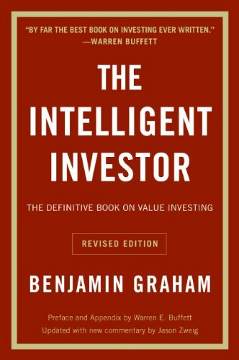
    cover image for Intelligent Investor by Ben Graham

    We have created a new and improvement Curious Cat Investment book site. Find great resources for your investing and personal finance needs. We have selected the best books by authors including: Benjamin Graham, Warren Buffett, John Bogle, Nicolas Darvas, Peter Lynch and William O’Neil.

    Try out our recommended picks.

    View the books by category including: investing, economics, retirement, real estate and personal finance.

    Related: Curious Cat investing articlesCurious Cat management booksTeaching Children About Money MattersBogle on the Retirement Crisis

  • United Online: High Dividend Yield

    A Cheap Internet Stock With High Dividend Yield

    The internet stock offers an impressive 6.8% dividend yield and yet the stock only trades at 5x consensus 2011 earnings estimates.

    Bears will point out that United Online’s dial-up internet business is declining. No argument there, other than it is dying much, much more slowly than most prognosticators had expected. Dial-up also represents only 18% of UNTD’s revenues, so its importance is often overstated.

    The vast majority of UNTD’s revenues come from FTD. The floral retailer posted a 6% growth last quarter, while competitor 1-800 Flowers saw a decline of 6%. The company also operates Classmates.com. This forgotten social network generates $200M per year

    Finally, United Online generated nearly $50 million in free cash flow last quarter which was a 28% growth over the previous year. The company’s cash balances continue to grow (currently at $121M or $1.39 per share) and Wall Street expects the internet stock to earn $1.09 per share next year.

    The company also has a fairly large debt burden, $305 million in long term debt, and the current ratio (current assets/current debt) is .88 (which is not strong). Stocks paying high dividends in this market (low interest rates) are attractive but not without risk. United Online is certainly risky but the high yield sure is attractive. I do not own stock in United Online (I will watch it though).

    Related: Where to Invest for Yield (March 2010)S&P 500 Dividend Yield Tops Bond Yield: First Time Since 1958 (Nov 2008)More Companies Cutting Dividends Than Any Year Since Before 1954 (Feb 2009)10 Stocks for Income Investors (Dec 2008)

  • 11 Stocks for 10 Years – July 2010 Update

    I created the 10 stocks for 10 years portfolio in April of 2005. The current marketocracy* calculated annualized rate or return (which excludes Tesco) is 4.2% (the S&P 500 annualized return for the period is 1.1%) – marketocracy subtracts the equivalent of 2% of assets annually to simulate management fees – as though the portfolio were a mutual fund – so without that (it is not like this portfolio takes much management), the return beats the S&P 500 annual return by about 5.1% (it would be a bit less with Tesco – maybe beating the S&P 500 by 4%).

    The current stocks, in order of return:

    Stock Current Return % of sleep well portfolio now % of the portfolio if I were buying today
    Amazon – AMZN 241% 9% 8%
    Google – GOOG 127% 16% 15%
    PetroChina – PTR 80% 9% 8%
    Templeton Dragon Fund – TDF 76% 10% 10%
    Templeton Emerging Market Fund – EMF 41% 5% 6%
    Cisco – CSCO 21% 7% 8%
    Danaher – DHR 9% 9% 10%
    Toyota – TM -3% 8% 10%
    Intel – INTC -6% 5% 8%
    Tesco – TSCDY -9%** 0%* 10%
    Pfizer – PFE -42% 4% 8%
    Dell -60% 3% 0%

    The current marketocracy results can be seen on the Sleep Well marketocracy portfolio page.

    Related: 12 Stocks for 10 Years – July 2009 UpdateRetirement Savings Allocation for 2010Investing, My Thoughts at the End of 2009posts on stocksinvesting books
    (more…)

  • Intel Reports Their Best Quarter Ever

    Intel reports their best quarter ever.

    Revenue $10.8 billion
    Gross Margin 67%
    Net Income $2.9 billion

    Intel is one of the stocks in our 12 stocks for 10 years portfolio (and has been since 2005). Intel currently pays a dividend of about 3%. Intel’s gross margins continue to be amazing. 67% is just fantastic.

    Intel is only one company, but the earnings are good new for the economy (they indicate quite a large demand for the products that include Intel’s chips). We certainly can use good news on the economy. We need more good news and the key I believe, now, is adding jobs. Earnings have been good recently and this is one sign that high tech earnings continue to do well. Google announcing earnings on Thursday.

    The effective tax rate was 31%. Which is a good thing in my opinion. I don’t think it is a good thing when companies make billions of dollars and avoiding paying the taxes that allow society to function. I am all for making changes to reduce government spending, but I am not for individuals and companies avoiding paying their fair share.

    full press release

    Related: Amazon Soars on Good Earnings and Projected Sales (Oct 2009)Looking at Microsoft as an InvestmentGreat Google Earnings (April 2007)

  • George Soros is Investing in Oil and Gas

    Where is George Soros investing? The SEC filings will tell you (as of March 31, 2010).

    The fund holds over $600 million of Petrobas (Brazil Oil and Gas) (the fund bought about 1.4 million shares of the ADR in the quarter), $300 million of Hess (sold about 900,000 shares), $280 in Suncor Engery (bought over 1.5 million shares), $220 million of Monsanto (sold almost 700,00 shares), $190 of Interoil (bought over 150,000 shares), $175 million of Direct TV (bought 1,000,000 shares), $175 million of Verizon (bought 800,000 shares), $150 million of Plains Exploration and Production (sold 1.7 million shares), $140 million of Best Buy (bought 300,00 shares), $130 million of Novagold (bought 15 million shares, bringing to the total to almost 19 million), $120 million of Emdeon (selling over 1 million), $110 million of JP Morgan Chase (nearly all bought in this quarter) and $90 million of Pfizer (sold over 600,000 shares – over half the position). The fund owns a good deal of gold shares including over $600 million in SPDR gold trust shares (all bought this quarter). The total value of the fund was $8.75 billion. The fund own numerous convertible bond issues in excess of $100 million.

    During the quarter the fund sold essentially all of Citigroup – over $300 million at the beginning of the quarter and nearly all of Ace Limited $75 million at the beginning of the quarter, and Lowes ($55 million). It sold 80% of Dana Holding ($60 million at the beginning of the quarter). It sold all of Bunge Limited – $66 million, and Terra Industries $100 million.

    I am also overweight in Oil and Gas (the last 2 years is the first time I ever have been). The fund owns $20 million of ATP Oil and Gas, a speculative pick that I also own (the fund added 150,000 shares during the quarter). It also owns over $20 million of Brigham Exploration (fund sold 550,000 shares) another small oil and gas stock that I bought this year. And it has a bit over $40 million in Apple, $60 million in Yahoo $5 million in Amazon.

    Related: Famous Stock Traders: Nicolas DarvasSoros on Financial Crisis and Markets11 Stocks for 10 Years, March 2010 UpdateTen Stocks To Avoid

  • Investing: Looking at Microsoft

    For years I have thought Microsoft was in deep trouble and yet they were continuing to generate tons of cash (which is not something to take lightly – it is a very strong signal of a successful business). But the future for them just keeps looking worse and worse, to me. The Windows and Office profit centers seemed doomed to collapse (Ubuntu is a great operating system and you have Open Office and Google doc both of which I find fine). The server business and managing corporate networks is one of the few hopes for Microsoft, I think. And things don’t look good there (though probably better than the other profit centers).

    It isn’t as though Microsoft doesn’t see the problems. They are trying to build up a gaming business and they have hopes there, I think (not to replace current profits but at least to capture some significant profits). I really am amazed how poorly they have done online. They have invested a ton and continue to lose a huge amount every quarter (over $700 million in the quarter ending March 31st of this year.

    Yet year after year Microsoft continued to have tremendous earnings. I can’t see it continuing, but I would not have predicted the earning power they have shown the last 5 years so what do I know. In April Microsoft announced record third-quarter revenue of $14.50 billion for the quarter ended March 31, 2010, a 6% increase from the same period of the prior year. Operating income, net income and diluted earnings per share for the quarter were $5.17 billion, $4.01 billion and $0.45 per share, which represented increases of 17%, 35% and 36%, respectively, when compared with the prior year period.

    There is the prayer that the huge amount they invest in research provides future earnings. I do believe their research is incredibly valuable. But I can’t see betting they will find enough earning to replace the losses I anticipate for Windows and Office revenue.

    Apple (about $245 billion) has overtaken Microsoft (about $227 billion) in market capitalization. To get the enterprise value (the value of the company excluding cash). Apple has about $38 Billion in cash (including $18 billion in treasuries with a maturity of over 1 year – so not shown as cash on the balance sheet). Microsoft has about $31 billion in cash ($37 billion – $6 billion in debt). Therefore Apple’s business is valued at $207 billion and Microsoft at $196 billion.

    Ballmer Dismisses Microsoft Value Issue (May 27, 2010)

    Since Mr. Ballmer took over from Bill Gates as CEO in January 2000, Microsoft’s market value has more than halved from $556 billion to Wednesday’s close of $219 billion. Rival Apple’s market value has surged from $15.6 billion to $221 billion over the same period.

    Related: Google Posts Good Earning But Not Good Enough for ManyTesco: Consistent Earnings Growth at Attractive PriceJubak Looks at What Stocks to Hold NowAmazon Soars on Good Earnings and Projected Sales

  • Investing in Companies You Hate

    Scott Adams (Dilbert’s creator) has some new investing advice: Betting on the Bad Guys

    I have a theory that you should invest in the companies that you hate the most. The usual reason for hating a company is that the company is so powerful it can make you balance your wallet on your nose while you beg for their product. Oil companies such as BP don’t actually make you beg for oil, but I think we all realize that they could. It’s implied in the price of gas.

    Perhaps you think it’s absurd to invest in companies just because you hate them. But let’s compare my method to all of the other ways you could decide where to invest.

    Technical Analysis
    Technical analysis involves studying graphs of stock movement over time as a way to predict future moves. It’s a widely used method on Wall Street, and it has exactly the same scientific validity as pretending you are a witch and forecasting market moves from chicken droppings.

    Investing in Well-Managed Companies
    When companies make money, we assume they are well-managed. That perception is reinforced by the CEOs of those companies who are happy to tell you all the clever things they did to make it happen. The problem with relying on this source of information is that CEOs are highly skilled in a special form of lying called leadership.

    But What About Warren Buffett?
    The argument goes that if Warren Buffett can buy quality companies at reasonable prices, hold them for the long term and become a billionaire, then so can you. Do you know who would be the first person to tell you that you aren’t smart enough or well-informed enough to pull that off? His name is Warren Buffett.

    Again, I remind you to ignore me.

    As usual he is funny, he also makes many good points. We have mentioned his financial advice previously: Financial Planning Made Easy, Scott Adams on Investing.

  • Google’s Own Trading Floor to Manage the Cash of the Company

    Google has generated a large amount of cash due to the profitability of their business. It currently has $26.5 billion 3rd only to Microsoft and Intel of short term holdings of technology companies (though Apple likely should be considered as having higher cash holdings). Google’s Latest Launch: Its Own Trading Floor:

    Google’s trading room opened in January. The plan is to keep the war chest growing safely and ready to be deployed should the right mergers-and-acquisitions opportunities arise. The investment team has grown to more than 30 people, up from six three years ago. Many of the new arrivals are former Wall Streeters who left lucrative careers at Goldman Sachs, JPMorgan Chase, and other banks. The man in charge is Brent Callinicos, Google’s 44-year-old treasurer, who joined from Microsoft in 2007, back when Google had $11 billion in cash. “This isn’t fast money, this is patient money,” he says. His crew works in a recently remodeled finance building on the company’s corporate campus in Mountain View, Calif., complete with a rock climbing wall, massage chairs, murals of tropical sunsets, and bamboo wall panels.

    After a couple years of cautious cash management at Google, Callinicos says he’s beginning to build a higher-risk, higher-return portfolio. Since last year he has pulled away from U.S. government notes and moved into corporate debt securities ($4.9 billion as of Mar. 31, up from $695 million the year before), agency residential mortgage-backed securities ($3.3 billion, up from $60 million), and foreign government bonds ($332 million, up from zero).

    The largest Google holdings are: cash 35%, corporate debt 18%, US agency debt 13%, residential mortgage backed US agency securities 13%, municipal securities 8%, US government notes 8%. For all the debt problems with government, consumers and corporations that followed advice of mortgage bankers to overly leverage themselves there are many companies that have much larger cash holding than every before. Google is one but many other companies have built up large cash positions as well.

    I have been a long term investor in Google and think it is a great buy now. I don’t see myself selling it anytime soon (maybe anytime at all). I do worry a bit about Google wasting the cash on buyouts they are tempted into due to huge amounts of cash on hand. Hopefully they will avoid such mistakes. I think they may well be better off paying a dividend but they seem apposed to that idea.

    Related: Google Posts Good Earning But Not Good Enough for ManyS&P 500 Dividend Yield Tops Bond Yield: First Time Since 1958 (Nov 2008)Too Much Leverage Killed Mervyns