Category: Stocks

  • Bogle on the Stock Market and Investing

    Bogle on Bankers, Buffett, Obama; an interview of John Bogle, from February 2010.

    Bogle: What happened over the last 10 years were two things, and one of which we have never encountered before. The 17% returns we had over the two previous consecutive decades, the ’80s and the ’90s, were born largely on ascending price-earnings multiples. If the price-to-earnings ratio goes from 8 to 16 in one decade, and then to 32 in the next decade, that accounts for 7% per year of that 17% return. So the market was driven by the revaluation of corporate America and that just can’t keep recurring at those rates. I projected in the original book that the price-earnings multiple might get down below 20, which is exactly what it’s done, so that was fairly predictable.

    But what made the decade quite so bad is that we then had a major recession or light depression at the end of 2008 to 2009 which is still with us. That coming with the market so highly valued meant that earnings growth was much less than what we might have expected. So looking out from here, I think we can look for better earnings growth. And dividend yields are back in decent territory but not great. We started this decade with a 1% dividend yield, and that’s an important part of investment returns, and now the dividend yield is around 2.25%, so a higher dividend yield contributing to future growth. So I think it’s highly likely that stocks will outpace bonds in the decade that just began.

    Are we on the right path now? Has America learned its lesson?
    Bogle: No. Unequivocally not. The long overdue reforms being discussed in Washington do not go nearly far enough, in my opinion. We need protection for consumers. Canada has a financial structure similar to ours except it has a consumer-protection board, which would prevent banks from giving people mortgages if they have no ability to pay them back. To get that done has been very difficult. Also, Senators (John) McCain and (Maria) Cantwell have proposed a return of the Glass-Steagall Act, and that’s gotten nowhere but it is long overdue. We should have banks behave as banks and not as investment banks or hedge-fund managers.

    But let’s suppose the stock market creates a 10% return. And the value of the stock market today is around $13 trillion so 10% is $1.3 trillion. By my numbers, Wall Street and the mutual fund industry take $600 billion a year out of that return. That’s half of the return. So the only way investors are going to get their fair share of the $1.3 trillion is to reduce the costs and get the casinos out.

    As usually John Bogle provides excellent analysis and vision.

    Related: Bogle on the Retirement CrisisIs Trying to Beat the Market Foolish?Lazy Portfolios Seven-year Winning StreakSneaky Fees

  • Famous Stock Traders: Nicolas Darvas

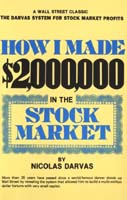
    Book cover to How I made $2 million in the Stock Market

    For the most part my investment philosophy is based on fundamental long term investing strategies. But I do also occasionally speculate with a portion of my portfolio. It is risky (and honestly most people will lose money trying so it is unwise for most, if not all, to try) but can bring great returns for the successful speculator/trader. My methods are significantly influenced by Nicolas Darvas who wrote the classic investment book – How I Made $2,000,000 in the Stock Market (which I am re-reading now). In it he provides an honest and open look at his experience from his naive start to his eventual success. He lays out, in great detail, exactly what he did and how foolish some of his actions were. Then he explains how he came to find success by focusing on the price and volume action of stocks and a pseudo fundamental component (more of a story that could presage future fundamental success than actual fundamental strength). While honing his investment strategy, in the 1950’s, he traveled the world working as a world class ballroom dancer and placed order via cable.

    Darvas’ method was a forerunner of the many technical analysis schemes used today. He is extensively referenced by William O’Neil (of Investor’s Business Daily fame) and other leading technicians. An extremely simplified overview of Darvas’ method: determine “boxes” (trading ranges) for a stock and buy on the breakout, to the upside, of the topmost box. He used a rest period of several days to set the top of the box and then determine the bottom of the box after that top was set. He used very close trailing stop loss orders to minimize losses. He sought to make large gains (let his winners run) and cut losses quickly.

    Nicholas Darvas’ ideas and books included a disdain for wall street insiders, analysts and rumors. The CAN SLIM (William O’Neil and Investor’s Business Daily) investing style owes a great deal to Darvas’ ideas on investing.

    I have created a new twitter account [removed] for to comment and follow others trading ideas. I would suggest only experience and successful investors even consider trading with a small portion of their portfolio. For most it is a losing proposition.

    More on Darvas’ investing ideas and other leading investors. Books by Nicolas Darvas: Wall Street: The Other Las VegasYou Can Still Make It in the Market (republished after a long period when it was not available) – Darvas System for Over the Counter Profits

  • Google Posts Good Earning But Not Good Enough for Many

    Google posted very good earnings yesterday but not good enough for many. The earnings, and a 5% fall in Google’s stock price, were good enough for me to add a few more shares to my long term investment in the company. Earnings per share grew from $4.49, $1.42 billion total, in the 1st quarter of 2009 to $6.06, $1.96 billion (38% increase in profits and 35% on a earnings per share basis). On a non-GAAP basis earning per share grew from $5.16 to $6.76. Revenue increased from $5.51 billion to $6.78 billion and the operating margin increased from 34.2% to 36.7%.

    Chris Bulkey has a good article on TheSteet.com, Google Tax Rate Inflates EPS, though I disagree with his conclusion.

    Google (GOOG) reported revenue of $6.78 billion and pro forma earnings of $6.76 a per share for the first quarter, but when stock-based compensation is included net income gets pulled down to $6.06 a share in GAAP terms. Elevated interest income, a lenient tax rate, and decelerating cash flow were primary points of contention.

    Recall that Google records gains from marketable securities with interest income. This gives management flexibility to boost income by timing investment sales. Normalizing this line item with the year-ago period shaves 3 cents a share from the bottom line. The effective tax rate came in below the prior year with essentially no change in revenue from international customers (53% vs. 52% in the first quarter of 2009). It is therefore likely that deliberate utilization of deferred tax assets was responsible for the easy comparison. Attempts to ascertain specific amounts deferred were unsuccessful; we’ll have to wait for the 10-Q.

    Cash flow decelerated to $2.58 billion from $2.73 billion sequentially. On a year-over-year basis, cash generated from operations increased 15% — respectable in absolute terms, but loosely correlated with net income, up 38% from last year.

    We reiterate a “sell” rating and $544 price objective; Our target multiple moves to 21 times revised 2010 EPS estimate from 23 times.

    Obviously I bought more, so I don’t agree with the conclusion, but his points are sensible and worth considering.

    Related: Great Google Earnings (April 2007)Buy Google (Feb 2008)Is Google Overpriced? (July 2007)Stop Picking Stocks?

    Google profit up 38%, helped by ads by John Letzing
    (more…)

  • 11 Stocks for 10 Years – March 2010 Update

    I created the 10 stocks for 10 years portfolio in April of 2005. In order to track performance created a marketocracy portfolio but had to make some minor adjustments (and marketocracy doesn’t allow Tesco to be purchased, though it is easily available as an ADR to anyone in the USA to buy in real life – it is based in England). The current marketocracy calculated annualized rate or return (which excludes Tesco) is 6.2% (the S&P 500 annualized return for the period is 2.5%) – marketocracy subtracts the equivalent of 2% of assets annually to simulate management fees – as though the portfolio were a mutual fund – so without that the return is about 5.7% above the S&P 500 annually).

    The current stocks, in order of return:

    Stock Current Return % of sleep well portfolio now % of the portfolio if I were buying today
    Amazon – AMZN 248% 11% 8%
    Google – GOOG 152% 16% 15%
    PetroChina – PTR 87% 9% 9%
    Templeton Dragon Fund – TDF 80% 10% 10%
    Templeton Emerging Market Fund – EMF 40% 5% 6%
    Cisco – CSCO 38% 6% 8%
    Danaher – DHR 10% 9% 10%
    Toyota – TM 10% 8% 10%
    Intel – INTC 0% 4% 7%
    Tesco – TSCDY -10%* 0%* 10%
    Pfizer – PFE -34% 4% 8%
    Dell -56% 3% 0%

    The current marketocracy results can be seen on the Sleep Well portfolio page.

    Related: 12 Stocks for 10 Years – July 2009 UpdateInvesting, My Thoughts at the End of 2009posts on stocksinvesting books
    (more…)

  • How Apple Can Grow from $200 Billion to $300 Billion In Market Cap

    Apple currently has the 4th largest market capitalization for USA stocks, behind ExxonMobil (over $300 billion), Microsoft ($250 billion) and Wal-Mart and ahead of Berkshire Hathaway, General Electric, Procter & Gamble and Google ($180 billion). Eric Bleeker has a nice article on fool.com looking at how Apple can grow to a $300 Billion market capitalization.

    what needs to go right for Apple to become the largest technology company in the world? Simply put, it needs to become the Microsoft of mobile.

    In many ways, the mobile race is similar to the PC battle of the ‘80s. In one corner we have Apple, packaging its hardware and software in a limited number of systems. In the other corner, there’s Google (replacing Microsoft), licensing out software to any number of hardware vendors.

    Apple could actually learn from Microsoft. It needs to be more than just the best smartphone on the market right now. Microsoft never controlled the operating-system market because it was the best — it won because it locked users in, and most people essentially had to use its products. Microsoft has released some real clunkers over the years, but it took few hits from them. Likewise, even though Apple’s unparalleled in its commitment to quality-unlike a certain competitor we just discussed — with a price tag that implies sustainable long-run dominance, Apple needs a margin of safety to ensure that even with a hiccup or two, it will continue to rule the mobile world.

    The $300 billion question
    So it all boils down to one question: How well can Apple lock users into its ecosystem? As developers continue building apps at rates far in excess of competing platforms and more users synch their digital lives around iTunes, you can see Apple creating a platform that’s sustainable well beyond just the next upgrade. From there, no company possesses a virtuous circle like Apple. Higher iPhone market share begets high-margin sales of apps and media, as well as increased Mac sales. Given the size of the smartphone market, the margins Apple collects from each iPhone, and the boost to other Apple products, you can see a path to $300 billion forming.

    I missed out on investing in Apple. I came close to buying in, but didn’t quite do it – that was a big mistake. And I am still not buying now, which could be another mistake. We shall see. I am very comfortable owning Google. But I think Apple could well be good also. My 12 stocks for 10 years portfolio has Cisco, Intel and Amazon which I am happy with and Dell which has been a mistake.

    Related: Apple exceeded Google for the first time since Google went public (Aug 2008)Amazon Soars on Good Earnings and Projected SalesIt is Never to Late to InvestGreat Google Earnings (April 2007)

  • Jubak Looks at What Stocks to Hold Now

    Excellent post by James Jubak, Get your portfolio ready for the profitless global economic recovery

    the world hasn’t begun to address the problems of excess capital and the excess production capacity that it creates under current economic rules, the global economic recovery is going to turn out to be extraordinarily profitless in industry after industry as producers with excess capacity cut prices in an effort to buy market share.

    To avoid the trap of excess capacity killing even modest profits I think you have to look for sectors that have barriers that prevent excess capacity from driving down all prices as companies slit each other’s throats to acquire profitless market share.

    Cisco is the IBM of the Internet—companies can buy the company’s gear and know that it will talk to the rest of the gear in their network (because Cisco probably sold them a good part of that gear and because everybody makes sure their gear works with Cisco equipment.) Plus Cisco has used recent acquisitions to continue its transformation from a simple—but globally dominant–seller of routers into a company that builds unified digital communications systems.

    A second is Google (GOOG). Yes, Google stands a good chance of getting kicked out of China with its 1.3 billion potential Internet users (How old does a baby need to be to use the Gmail?). But no company is better positioned for the long-term trend toward distributed computing over the Internet than Google.

    Both Google and Cisco have been long term investments in my 12 stocks for 10 years portfolio. Jubak’s blog is excellent: the best investing blog I know of. He does trade quite a bit more than I do but his performance has been exceptional.

    Related: Jubak Looks at 5 Technology StocksWhy Investing is Safer Overseas10 Stocks for Income InvestorsTesco: Consistent Earnings Growth at Attractive Price

  • Ten Stocks To Avoid by John Dorfman

    Ten Stocks I Wouldn’t Touch With a 10-Foot Pole by John Dorfman

    Don’t buy Cablevision Systems Corp. Stay away from Moody’s Corp. and Dish Network Corp. Avoid Qwest Communications International Inc. and Mead Johnson Nutrition Co. Be leery of Pitney Bowes Inc., Delta Air Lines Inc., Morgan Stanley, Coca-Cola Enterprises Inc., and American International Group Inc.

    My reason for giving this advice: These companies, in my judgment, have some of the worst balance sheets in the U.S. The first five companies mentioned above have negative net worth; that is, their liabilities exceed their assets. Among the 727 U.S. companies with a stock-market value of $3 billion or more, only 17 have that unfortunate distinction.

    The next five companies have positive net worth (stockholders’ equity) but their total debt is at least five times equity, a trait shared by 26 of those 727 companies.

    Here’s my take on 10 debt-laden companies to avoid.

    Cablevision, based in Bethpage, New York, has posted annual losses in four of the past seven years. Like all cable operators, it faces potential competition from satellite and wireless technologies.

    Moody’s, a bond rating and financial information firm based in New York, has come under heavy criticism for issuing bond ratings that were too uncritical. I think profits could be hurt by lawsuits alleging biased ratings. Rivals such as Standard & Poor’s, a unit of McGraw-Hill Cos., face similar issues but have stronger balance sheets. Warren Buffett’s Berkshire Hathaway Inc. has been cutting its stake in Moody’s during the past six months…

    Investing in individual stocks is not necessary for a good financial plan but can provide great benefits. However, it does require more vigilance as you must keep an closer eye on your investments and make changes as necessary. Many chose not to include individual stocks in their portfolio, using mutual funds instead. That is fine, I do like to include stocks though. My 12 stocks for 10 years portfolio continue to do well (beating the S&P 500 by 4.8% annually after a 2% annual simulated expense fee reduction). One stock I particularly like right now is Google.

    Related: Investing – My Thoughts at the End of 2009Lazy Portfolios Seven-year Winning StreakJubak Looks at 5 Technology Stocks

  • Market Inefficiencies and Efficient Market Theory

    Find below some interesting thoughts on financial markets and the efficient market theory. That theory essentially says the market prices are right given the available information. I think markets are somewhat efficient but there are plenty of opportunities to profit from inefficiencies in the market. Still it is not easy to consistently exploit these inefficiencies profitably.

    Capital Market Theory after the Efficient Market Hypothesis

    People see high returns in a particular sector, and they cannot tell whether the lower returns they are receiving are due to their fund manager’s proper avoidance of risk, or incompetent management. As they increasingly conclude that incompetence is to blame, funds shift to the new sector and this creates a self-reinforcing process where prices are driven above their fundamental values, i.e. a bubble occurs. It seems like such reallocation of investment funds could, if driven by a strong enough incentive, be enough on its own to drive a bubble even without an external source of liquidity.

    Capital market theory after the efficient market hypothesis by Dimitri Vayanos and Paul Woolley

    Capital market booms and crashes, culminating in the latest sorry and socially costly crisis, have discredited the idea that markets are efficient and that prices reflect fair value.

    Theory has ignored the real world complication that investors delegate virtually all their involvement in financial matters to professional intermediaries – banks, fund managers, brokers – who dominate the pricing process.

    Delegation creates an agency problem. Agents have more and better information than the investors who appoint them, and the interests of the two are rarely aligned.

    he new approach offers a more convincing interpretation of the way stock prices react to earnings announcements or other news. It also shows how short-term incentives, such as annual performance fees, cause fund managers to concentrate on high-turnover, trend-following strategies that add to the distortions in markets, which are then profitably exploited by long-horizon investors. At the level of national markets and entire asset classes, it will no longer be acceptable to say that competition delivers the right price or that the market exerts self-discipline.

    Related: Nicolas Darvas (investor and speculator)Beating the Market, Suckers Game?Lazy Portfolios Seven-year Winning StreakStop Picking Stocks?Don’t miss future gains just because you missed past gains

  • Retirement Savings Allocation for 2010

    I adjusted my future retirement account 401(k) allocations today. I do not have as favorable an opinion of investing in the stock market today as I did a year ago. I would likely have allocated 20% to a money market fund except my 401(k) actually has two options – 1 paying 0.0% and the other paying -.02%.

    They seem to believe they should make a significant profit while providing a horrible return (they are still taking over .5% of assets in fees – even though rates do not cover their fees). Those running funds have very little interest in providing value for 401(k) participants – they are mainly interested in raising fees (though supposedly they are suppose to be run by people with a fiduciary responsibility to the investors). Unfortunately most 401(k)s lock you away from the best options for an investor (such as Vanguard Funds).

    My current allocation for future funds is 40% to USA stocks, 40% to Global stocks and 20% to inflation adjusted bonds. My current allocation in this retirement account is 10% real estate, 35% global stocks, 55% USA stocks. For all my retirement savings it is probably about 5% real estate, 35% global stocks, 5% money market, 55% USA stocks (which is a fairly aggressive mix).

    As I have said many times I do not like bonds at this time. I don’t think the interest nearly justifies the risk of capital loss (due to inflation or interest rate risk). Inflation protected bonds are a much more acceptable option for someone that is worried about inflation (like I am over the next 10-20 years).

    A number of the stock fund (even bond fund) options in my 401(k) have expense ratios above 1%. That is unacceptable. The average fees on the options I chose were .5%.

    With my employee match I am adding over 10% of my income to my 401(k), which I think is a good aim for most everyone. Far too many people are unwilling to forgo luxuries to save appropriately for their retirement. This is a sign of financial illiteracy and an unwillingness to accept the responsibilities of modern life.

    Related: Investing – My Thoughts at the End of 2009401(k)s are a Great Way to Save for RetirementSaving for RetirementManaging Retirement Investment Risks

  • Investing – My Thoughts at the End of 2009

    In December 2008 I decided to substantially increase my investments in the stock market. This turned out to be quite successful. As I said at the time, the economy continues to struggle and the prospects for 2009 did not look good. And I even guessed the stock market (in the USA) would be lower 12 months from now. But, I also said I was far from certain, in that guess and that I had been increasing my stock investment and would continue to do so.

    At this time my retirement contributions are going 100% to stock investments (if I were close to retirement I would not do this). I am likely going to reduce the contributions going forward (maybe 75% stocks – 25% money market). Unfortunately my retirement fund does not have great alternatives – it has very good real estate options but I am not ready to start putting new funds there (though I likely will during 2010, at some point).

    I did sell reduce my equity exposure in a retirement account that I am not adding to this month. It reduced my overall equity exposure of my portfolio by a couple percentage points, at most. It is still significantly higher than a year ago, due to the incredible gains for 2009 in my stock investments.

    Last year I fully fund my Roth IRA, in January and bought Amazon (AMZN), Templeton Emerging Market Fund (EMF) and PetroChina (PTR). I will fully fund the Roth IRA in January again. I am leaning toward some combination of Templeton Emerging Market Fund (EMF), Vanguard Emerging Markets Stock (VWO), Toyota (TM) and maybe Danaher (DHR). I purchased all of those in my non-retirement account in 2009.

    Investing well is not easy. Saving money is though, sometime people get these confused. You need to save money for retirement – aim for 10% of your income and invest that conservatively if you do not wish to focus on investing. I have no question fully funding your Roth IRA is a wise move for almost everyone. How to invest once you do that is a bit trickier but funding it is not a difficult question to answer. It was not easy to increase investments into stocks last year, when so many others were selling (and the press is full of stories reinforcing the bad news, bad prospects and risks). You can get great opportunities when others are panicking, but things do not always recovery so nicely.

    What the next year holds, again for 2010, if very difficult to see. The economy looks to be in much better shape than a year ago. But it is far from strong. And the recovery in the stock market means the higher prices stocks command today leave more downside risk for stocks, if things do not go well. I am more concentrated in stocks now than I was a year ago, but I am not comfortable with that. I don’t see bonds, even short term bonds, as an acceptable alternative. The risks are not at all justified by the returns in my opinion. I am happy with my real estate investments and may even look to increase that area though I think it may be too early for commercial real estate. I think individual companies may well prosper even if the economy falters – such as Google, Amazon, Danaher, Toyota, Tesco (though Amazon’s price increases may already have more than accounted for this) – all of these are in my 12 stocks for 10 years portfolio.

    Related: Save Some of Each RaiseIt is Never to Late to InvestDoes a Declining Stock Market Worry You?Uncertain Economic Times