Tag: Stocks

  • Investing in Companies You Hate

    Scott Adams (Dilbert’s creator) has some new investing advice: Betting on the Bad Guys

    I have a theory that you should invest in the companies that you hate the most. The usual reason for hating a company is that the company is so powerful it can make you balance your wallet on your nose while you beg for their product. Oil companies such as BP don’t actually make you beg for oil, but I think we all realize that they could. It’s implied in the price of gas.

    Perhaps you think it’s absurd to invest in companies just because you hate them. But let’s compare my method to all of the other ways you could decide where to invest.

    Technical Analysis
    Technical analysis involves studying graphs of stock movement over time as a way to predict future moves. It’s a widely used method on Wall Street, and it has exactly the same scientific validity as pretending you are a witch and forecasting market moves from chicken droppings.

    Investing in Well-Managed Companies
    When companies make money, we assume they are well-managed. That perception is reinforced by the CEOs of those companies who are happy to tell you all the clever things they did to make it happen. The problem with relying on this source of information is that CEOs are highly skilled in a special form of lying called leadership.

    But What About Warren Buffett?
    The argument goes that if Warren Buffett can buy quality companies at reasonable prices, hold them for the long term and become a billionaire, then so can you. Do you know who would be the first person to tell you that you aren’t smart enough or well-informed enough to pull that off? His name is Warren Buffett.

    Again, I remind you to ignore me.

    As usual he is funny, he also makes many good points. We have mentioned his financial advice previously: Financial Planning Made Easy, Scott Adams on Investing.
  • Google’s Own Trading Floor to Manage the Cash of the Company

    Google has generated a large amount of cash due to the profitability of their business. It currently has $26.5 billion 3rd only to Microsoft and Intel of short term holdings of technology companies (though Apple likely should be considered as having higher cash holdings). Google’s Latest Launch: Its Own Trading Floor:

    Google’s trading room opened in January. The plan is to keep the war chest growing safely and ready to be deployed should the right mergers-and-acquisitions opportunities arise. The investment team has grown to more than 30 people, up from six three years ago. Many of the new arrivals are former Wall Streeters who left lucrative careers at Goldman Sachs, JPMorgan Chase, and other banks. The man in charge is Brent Callinicos, Google’s 44-year-old treasurer, who joined from Microsoft in 2007, back when Google had $11 billion in cash. “This isn’t fast money, this is patient money,” he says. His crew works in a recently remodeled finance building on the company’s corporate campus in Mountain View, Calif., complete with a rock climbing wall, massage chairs, murals of tropical sunsets, and bamboo wall panels.

    After a couple years of cautious cash management at Google, Callinicos says he’s beginning to build a higher-risk, higher-return portfolio. Since last year he has pulled away from U.S. government notes and moved into corporate debt securities ($4.9 billion as of Mar. 31, up from $695 million the year before), agency residential mortgage-backed securities ($3.3 billion, up from $60 million), and foreign government bonds ($332 million, up from zero).

    The largest Google holdings are: cash 35%, corporate debt 18%, US agency debt 13%, residential mortgage backed US agency securities 13%, municipal securities 8%, US government notes 8%. For all the debt problems with government, consumers and corporations that followed advice of mortgage bankers to overly leverage themselves there are many companies that have much larger cash holding than every before. Google is one but many other companies have built up large cash positions as well.

    I have been a long term investor in Google and think it is a great buy now. I don’t see myself selling it anytime soon (maybe anytime at all). I do worry a bit about Google wasting the cash on buyouts they are tempted into due to huge amounts of cash on hand. Hopefully they will avoid such mistakes. I think they may well be better off paying a dividend but they seem apposed to that idea.

    Related: Google Posts Good Earning But Not Good Enough for ManyS&P 500 Dividend Yield Tops Bond Yield: First Time Since 1958 (Nov 2008)Too Much Leverage Killed Mervyns

  • Famous Stock Traders: Nicolas Darvas

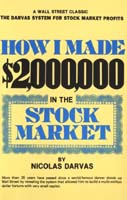
    Book cover to How I made $2 million in the Stock Market

    For the most part my investment philosophy is based on fundamental long term investing strategies. But I do also occasionally speculate with a portion of my portfolio. It is risky (and honestly most people will lose money trying so it is unwise for most, if not all, to try) but can bring great returns for the successful speculator/trader. My methods are significantly influenced by Nicolas Darvas who wrote the classic investment book – How I Made $2,000,000 in the Stock Market (which I am re-reading now). In it he provides an honest and open look at his experience from his naive start to his eventual success. He lays out, in great detail, exactly what he did and how foolish some of his actions were. Then he explains how he came to find success by focusing on the price and volume action of stocks and a pseudo fundamental component (more of a story that could presage future fundamental success than actual fundamental strength). While honing his investment strategy, in the 1950’s, he traveled the world working as a world class ballroom dancer and placed order via cable.

    Darvas’ method was a forerunner of the many technical analysis schemes used today. He is extensively referenced by William O’Neil (of Investor’s Business Daily fame) and other leading technicians. An extremely simplified overview of Darvas’ method: determine “boxes” (trading ranges) for a stock and buy on the breakout, to the upside, of the topmost box. He used a rest period of several days to set the top of the box and then determine the bottom of the box after that top was set. He used very close trailing stop loss orders to minimize losses. He sought to make large gains (let his winners run) and cut losses quickly.

    Nicholas Darvas’ ideas and books included a disdain for wall street insiders, analysts and rumors. The CAN SLIM (William O’Neil and Investor’s Business Daily) investing style owes a great deal to Darvas’ ideas on investing.

    I have created a new twitter account [removed] for to comment and follow others trading ideas. I would suggest only experience and successful investors even consider trading with a small portion of their portfolio. For most it is a losing proposition.

    More on Darvas’ investing ideas and other leading investors. Books by Nicolas Darvas: Wall Street: The Other Las VegasYou Can Still Make It in the Market (republished after a long period when it was not available) – Darvas System for Over the Counter Profits

  • Google Posts Good Earning But Not Good Enough for Many

    Google posted very good earnings yesterday but not good enough for many. The earnings, and a 5% fall in Google’s stock price, were good enough for me to add a few more shares to my long term investment in the company. Earnings per share grew from $4.49, $1.42 billion total, in the 1st quarter of 2009 to $6.06, $1.96 billion (38% increase in profits and 35% on a earnings per share basis). On a non-GAAP basis earning per share grew from $5.16 to $6.76. Revenue increased from $5.51 billion to $6.78 billion and the operating margin increased from 34.2% to 36.7%.

    Chris Bulkey has a good article on TheSteet.com, Google Tax Rate Inflates EPS, though I disagree with his conclusion.

    Google (GOOG) reported revenue of $6.78 billion and pro forma earnings of $6.76 a per share for the first quarter, but when stock-based compensation is included net income gets pulled down to $6.06 a share in GAAP terms. Elevated interest income, a lenient tax rate, and decelerating cash flow were primary points of contention.

    Recall that Google records gains from marketable securities with interest income. This gives management flexibility to boost income by timing investment sales. Normalizing this line item with the year-ago period shaves 3 cents a share from the bottom line. The effective tax rate came in below the prior year with essentially no change in revenue from international customers (53% vs. 52% in the first quarter of 2009). It is therefore likely that deliberate utilization of deferred tax assets was responsible for the easy comparison. Attempts to ascertain specific amounts deferred were unsuccessful; we’ll have to wait for the 10-Q.

    Cash flow decelerated to $2.58 billion from $2.73 billion sequentially. On a year-over-year basis, cash generated from operations increased 15% — respectable in absolute terms, but loosely correlated with net income, up 38% from last year.

    We reiterate a “sell” rating and $544 price objective; Our target multiple moves to 21 times revised 2010 EPS estimate from 23 times.

    Obviously I bought more, so I don’t agree with the conclusion, but his points are sensible and worth considering.

    Related: Great Google Earnings (April 2007)Buy Google (Feb 2008)Is Google Overpriced? (July 2007)Stop Picking Stocks?

    Google profit up 38%, helped by ads by John Letzing
    (more…)

  • Curious Cat Investing and Economics Carnival #8

    The Curious Cat Investing and Economics Carnival highlight recent interesting personal finance, investing and economics blog posts.

    • The money made by Microsoft, Apple and Google, 1985 until today – “In terms of profit Apple was ahead of Microsoft in the 1980s, but was then passed and left behind. This chart actually reveals that Apple’s upswing the last few years is the first time the company’s profits have really taken off in a big way. Another interesting observation is how closely the profits of Apple and Google match, even though Apple’s revenues are significantly higher.”
    • Real Estate and Consumer Loan Delinquency Rates 1998-2009 by John Hunter – “That last half of 2009 saw residential real estate delinquencies increased 143 basis points to 10.14% and commercial real estate delinquencies increase 98 basis points to 8.81%. Consumer loan delinquencies decreased with credit card delinquencies down 18 basis points to 6.4% and other consumer loan delinquencies down 19 basis points to 3.49%.”
    • The Principle That Can Make You Rich or Keep You Broke by David Weliver – “Unfortunately, inertia can also keep us at rest; the same principle that helps us achieve positive goals can make it increasingly difficult to escape bad habits.” (John: Very true, see my post on habits).
    • Why do we work so much? – “The countries that consistently rank as having the world’s “happiest people” also tend to work fewer hours than people in the U.S… Most corporate ladders are designed to reward employees with money instead of time. Assuming we only want money to use as a tool for happiness, this makes no sense.”
    • How Does Apple Become a $300 Billion Company? by Eric Bleeker – “The more Apple can look like the Microsoft of the mobile world, the more it will be worth. Commanding a market with even half the dominance Microsoft did with operating systems is a once-in-a-generation opportunity, but I’m not so sure the mobile world is built in a way that’ll allow that.”
    • Top Fed Official Wants To Break Up Megabanks, Stop The Fed From Guaranteeing Wall Street’s Profits by Shahien Nasiripour – “I don’t think we have any business guaranteeing Wall Street spreads,” Hoenig said. “We need to recognize that and address it by removing these guaranteed extremely low rates. I think it’s extremely important that we do that, and not create the conditions for speculative activity and a new crisis down the road.”
    • Evaluating Microfinance by Michael Frank – “I decided to use a variation on the “waiting list-control group” method regularly used in medical studies. My evaluation design requires a call for loan applicants in the most similar nearby community that does not have a similar microfinance program already present.”
    • (more…)

  • 11 Stocks for 10 Years – March 2010 Update

    I created the 10 stocks for 10 years portfolio in April of 2005. In order to track performance created a marketocracy portfolio but had to make some minor adjustments (and marketocracy doesn’t allow Tesco to be purchased, though it is easily available as an ADR to anyone in the USA to buy in real life – it is based in England). The current marketocracy calculated annualized rate or return (which excludes Tesco) is 6.2% (the S&P 500 annualized return for the period is 2.5%) – marketocracy subtracts the equivalent of 2% of assets annually to simulate management fees – as though the portfolio were a mutual fund – so without that the return is about 5.7% above the S&P 500 annually).

    The current stocks, in order of return:

    Stock Current Return % of sleep well portfolio now % of the portfolio if I were buying today
    Amazon – AMZN 248% 11% 8%
    Google – GOOG 152% 16% 15%
    PetroChina – PTR 87% 9% 9%
    Templeton Dragon Fund – TDF 80% 10% 10%
    Templeton Emerging Market Fund – EMF 40% 5% 6%
    Cisco – CSCO 38% 6% 8%
    Danaher – DHR 10% 9% 10%
    Toyota – TM 10% 8% 10%
    Intel – INTC 0% 4% 7%
    Tesco – TSCDY -10%* 0%* 10%
    Pfizer – PFE -34% 4% 8%
    Dell -56% 3% 0%

    The current marketocracy results can be seen on the Sleep Well portfolio page.

    Related: 12 Stocks for 10 Years – July 2009 UpdateInvesting, My Thoughts at the End of 2009posts on stocksinvesting books
    (more…)

  • How Apple Can Grow from $200 Billion to $300 Billion In Market Cap

    Apple currently has the 4th largest market capitalization for USA stocks, behind ExxonMobil (over $300 billion), Microsoft ($250 billion) and Wal-Mart and ahead of Berkshire Hathaway, General Electric, Procter & Gamble and Google ($180 billion). Eric Bleeker has a nice article on fool.com looking at how Apple can grow to a $300 Billion market capitalization.

    what needs to go right for Apple to become the largest technology company in the world? Simply put, it needs to become the Microsoft of mobile.

    In many ways, the mobile race is similar to the PC battle of the ‘80s. In one corner we have Apple, packaging its hardware and software in a limited number of systems. In the other corner, there’s Google (replacing Microsoft), licensing out software to any number of hardware vendors.

    Apple could actually learn from Microsoft. It needs to be more than just the best smartphone on the market right now. Microsoft never controlled the operating-system market because it was the best — it won because it locked users in, and most people essentially had to use its products. Microsoft has released some real clunkers over the years, but it took few hits from them. Likewise, even though Apple’s unparalleled in its commitment to quality-unlike a certain competitor we just discussed — with a price tag that implies sustainable long-run dominance, Apple needs a margin of safety to ensure that even with a hiccup or two, it will continue to rule the mobile world.

    The $300 billion question
    So it all boils down to one question: How well can Apple lock users into its ecosystem? As developers continue building apps at rates far in excess of competing platforms and more users synch their digital lives around iTunes, you can see Apple creating a platform that’s sustainable well beyond just the next upgrade. From there, no company possesses a virtuous circle like Apple. Higher iPhone market share begets high-margin sales of apps and media, as well as increased Mac sales. Given the size of the smartphone market, the margins Apple collects from each iPhone, and the boost to other Apple products, you can see a path to $300 billion forming.

    I missed out on investing in Apple. I came close to buying in, but didn’t quite do it – that was a big mistake. And I am still not buying now, which could be another mistake. We shall see. I am very comfortable owning Google. But I think Apple could well be good also. My 12 stocks for 10 years portfolio has Cisco, Intel and Amazon which I am happy with and Dell which has been a mistake.

    Related: Apple exceeded Google for the first time since Google went public (Aug 2008)Amazon Soars on Good Earnings and Projected SalesIt is Never to Late to InvestGreat Google Earnings (April 2007)

  • Jubak Looks at What Stocks to Hold Now

    Excellent post by James Jubak, Get your portfolio ready for the profitless global economic recovery

    the world hasn’t begun to address the problems of excess capital and the excess production capacity that it creates under current economic rules, the global economic recovery is going to turn out to be extraordinarily profitless in industry after industry as producers with excess capacity cut prices in an effort to buy market share.

    To avoid the trap of excess capacity killing even modest profits I think you have to look for sectors that have barriers that prevent excess capacity from driving down all prices as companies slit each other’s throats to acquire profitless market share.

    Cisco is the IBM of the Internet—companies can buy the company’s gear and know that it will talk to the rest of the gear in their network (because Cisco probably sold them a good part of that gear and because everybody makes sure their gear works with Cisco equipment.) Plus Cisco has used recent acquisitions to continue its transformation from a simple—but globally dominant–seller of routers into a company that builds unified digital communications systems.

    A second is Google (GOOG). Yes, Google stands a good chance of getting kicked out of China with its 1.3 billion potential Internet users (How old does a baby need to be to use the Gmail?). But no company is better positioned for the long-term trend toward distributed computing over the Internet than Google.

    Both Google and Cisco have been long term investments in my 12 stocks for 10 years portfolio. Jubak’s blog is excellent: the best investing blog I know of. He does trade quite a bit more than I do but his performance has been exceptional.

    Related: Jubak Looks at 5 Technology StocksWhy Investing is Safer Overseas10 Stocks for Income InvestorsTesco: Consistent Earnings Growth at Attractive Price

  • Ten Stocks To Avoid by John Dorfman

    Ten Stocks I Wouldn’t Touch With a 10-Foot Pole by John Dorfman

    Don’t buy Cablevision Systems Corp. Stay away from Moody’s Corp. and Dish Network Corp. Avoid Qwest Communications International Inc. and Mead Johnson Nutrition Co. Be leery of Pitney Bowes Inc., Delta Air Lines Inc., Morgan Stanley, Coca-Cola Enterprises Inc., and American International Group Inc.

    My reason for giving this advice: These companies, in my judgment, have some of the worst balance sheets in the U.S. The first five companies mentioned above have negative net worth; that is, their liabilities exceed their assets. Among the 727 U.S. companies with a stock-market value of $3 billion or more, only 17 have that unfortunate distinction.

    The next five companies have positive net worth (stockholders’ equity) but their total debt is at least five times equity, a trait shared by 26 of those 727 companies.

    Here’s my take on 10 debt-laden companies to avoid.

    Cablevision, based in Bethpage, New York, has posted annual losses in four of the past seven years. Like all cable operators, it faces potential competition from satellite and wireless technologies.

    Moody’s, a bond rating and financial information firm based in New York, has come under heavy criticism for issuing bond ratings that were too uncritical. I think profits could be hurt by lawsuits alleging biased ratings. Rivals such as Standard & Poor’s, a unit of McGraw-Hill Cos., face similar issues but have stronger balance sheets. Warren Buffett’s Berkshire Hathaway Inc. has been cutting its stake in Moody’s during the past six months…

    Investing in individual stocks is not necessary for a good financial plan but can provide great benefits. However, it does require more vigilance as you must keep an closer eye on your investments and make changes as necessary. Many chose not to include individual stocks in their portfolio, using mutual funds instead. That is fine, I do like to include stocks though. My 12 stocks for 10 years portfolio continue to do well (beating the S&P 500 by 4.8% annually after a 2% annual simulated expense fee reduction). One stock I particularly like right now is Google.

    Related: Investing – My Thoughts at the End of 2009Lazy Portfolios Seven-year Winning StreakJubak Looks at 5 Technology Stocks

  • Investments of Nobel Prize Economists

    3 Nobel prize winning economists, Robert C. Merton, Robert Solow and Paul Samuelson, took questions about the impending retirement savings crisis from PBS NewsHour correspondent Paul Solman in October 2008. Paul Solman asked them about their personal portfolios in the clip shown above.

    Robert Merton tells his portfolio portfolio is in a Global Index Fund, Treasury Inflation-Protected Securities, and one hedge fund. He said he had been invested in a TIAA commercial real estate fund until recently, but sold in early 2008 when he worried commercial real estate prices had increased too far. He also sold out his Municipal bond holdings.

    Robert Solow says he has no idea of his portfolio.

    Paul Samuelson declined to say. He did offer that timing is not something investors can successfully do. He stated that timing the selling of assets was not as difficult as timing when to get back in. And that markets move very quickly so you can miss out on big gains. 2009 provided a great example of this. Many people sold stocks in late 2008 and early 2009. And most did not get back in. In 2009 the S&P 500 was up 26%.

    Related: Retirement Savings Allocation for 2010How Much Will I Need to Save for Retirement?Gen X RetirementMany Retirees Face Prospect of Outliving Savings