Tag: Investing

  • Curious Cat Investment Books

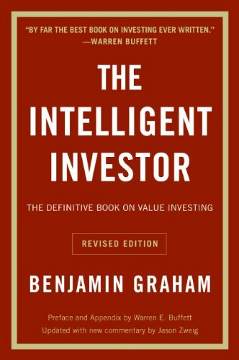
    cover image for Intelligent Investor by Ben Graham

    We have created a new and improvement Curious Cat Investment book site. Find great resources for your investing and personal finance needs. We have selected the best books by authors including: Benjamin Graham, Warren Buffett, John Bogle, Nicolas Darvas, Peter Lynch and William O’Neil.

    Try out our recommended picks.

    View the books by category including: investing, economics, retirement, real estate and personal finance.

    Related: Curious Cat investing articlesCurious Cat management booksTeaching Children About Money MattersBogle on the Retirement Crisis

  • Curious Cat Investing and Economics Carnival #9

    Welcome to the Curious Cat Investing and Economics Carnival: we highlight recent personal finance, investing and economics blog posts I found interesting.

    • “New Normal” math: How your investing plans must change – “I don’t think the implications of changing stocks’ rate of return from 10% to 5% have sunk in. We acknowledge that stock returns will be poor, and yet all of our retirement advice – save 10% of your income… withdraw 4% in retirement – stays the same.”
    • Manufacturing Output as a Percent of GDP by Country by John Hunter – “For the 14 biggest manufacturing countries in 2008, the overall manufacturing GDP percentage was 23.7% of GDP in 1980 and dropped to 17% in 2008… USA economy dropped from 21% in 1980 to 18% in 1990, 16% in 2000 and 13% in 2008.”
    • Masters of Earning More – “Ben actually loves his full-time job, but still freelances on the side. Earning more isn’t just for people who hate their job or are in severe credit-card debt. He freelances because he enjoys it.”
    • Five plays on the China Middle Class Explosion by Cody Willard – “The middle class in China now stands at nearly 25% of the population (which is 50 million new members a year!).”
    • Who Educates The Investors? by Bill Waddell – “Who would want to listen to the insights of someone concerning a manufacturing investment who knows so little about the current state of manufacturing that he thinks Toyota introduced lean to reduce working capital over a five year period?”
    • Refinance Now, If You Can by David Weliver – “If you currently owe $200,000 on your mortgage at 5.75%, refinancing could save you more than $100 a month on your payment and reduce the interest you pay over the life of the loan.” (rates are down a bit more since this example was posted – John)
    • A Cheap Internet Stock With High Dividend Yield – “stock offers an impressive 6.8% dividend yield and yet the stock only trades at 5x consensus 2011 earnings estimates.”
    • Personal Finance Basics: Avoid Debt by John Hunter – “Debt is often toxic to personal financial success. The simple step you can take to avoid the problems many face is to just not buy things until you save up for them. If you want some new shoes or new Droid Incredible or to go see a football game (American or World Cup style) that is fine. Just save up the money and then spend it.”

    Related: Curious Cat investing articlesCurious Cat Investing and Economics Custom Search EngineCurious Cat Investing and Economics Carnival #5

  • 10 million More Renters In the Next 5 Years

    Renter Nation by Gene Epstein

    From now through 2015, the long slog that will unfortunately characterize the economic expansion will bring slow growth in jobs and wages. That pace of improvement should be just strong enough to permit new households to form, but not robust enough for the members of those households to afford to own homes

    Demographics also will deal home sellers and builders a clear blow. Not surprisingly, the home-ownership rate tends to rise with age. For example, while the overall U.S. rate is 67.2%, the rate for households headed by someone under 35 is just 38.9%.

    Thus, whenever the age distribution of households tilts in favor of younger adults, the overall home-ownership rate declines.

    Largely because the echo boomers are more numerous than the baby busters, there are now more U.S. residents aged 15 to 29 than 30 to 44. So five years from now, the nation will have more 20-to-34-year-olds than 35-to-49-year-olds.

    Dallas-based Axiometrics tracks monthly price and occupancy data on apartments in 305 markets around the country. Its research chief, Jay Denton, reports that, on new leases written through this year’s first six months, effective rents—those after all concessions are taken into account—rose a robust 3.2%, after declining through 2009 and much of 2008. And occupancy growth, adds Denton, is close to the best he’s seen in the past 13 years.

    Related: articles on real estate investingReal Estate and Consumer Loan Delinquency Rates 1998-2009Apartment-vacancy Rate is 7.8%, a 23-year High (Nov 2009)

  • United Online: High Dividend Yield

    A Cheap Internet Stock With High Dividend Yield

    The internet stock offers an impressive 6.8% dividend yield and yet the stock only trades at 5x consensus 2011 earnings estimates.

    Bears will point out that United Online’s dial-up internet business is declining. No argument there, other than it is dying much, much more slowly than most prognosticators had expected. Dial-up also represents only 18% of UNTD’s revenues, so its importance is often overstated.

    The vast majority of UNTD’s revenues come from FTD. The floral retailer posted a 6% growth last quarter, while competitor 1-800 Flowers saw a decline of 6%. The company also operates Classmates.com. This forgotten social network generates $200M per year

    Finally, United Online generated nearly $50 million in free cash flow last quarter which was a 28% growth over the previous year. The company’s cash balances continue to grow (currently at $121M or $1.39 per share) and Wall Street expects the internet stock to earn $1.09 per share next year.

    The company also has a fairly large debt burden, $305 million in long term debt, and the current ratio (current assets/current debt) is .88 (which is not strong). Stocks paying high dividends in this market (low interest rates) are attractive but not without risk. United Online is certainly risky but the high yield sure is attractive. I do not own stock in United Online (I will watch it though).

    Related: Where to Invest for Yield (March 2010)S&P 500 Dividend Yield Tops Bond Yield: First Time Since 1958 (Nov 2008)More Companies Cutting Dividends Than Any Year Since Before 1954 (Feb 2009)10 Stocks for Income Investors (Dec 2008)

  • 11 Stocks for 10 Years – July 2010 Update

    I created the 10 stocks for 10 years portfolio in April of 2005. The current marketocracy* calculated annualized rate or return (which excludes Tesco) is 4.2% (the S&P 500 annualized return for the period is 1.1%) – marketocracy subtracts the equivalent of 2% of assets annually to simulate management fees – as though the portfolio were a mutual fund – so without that (it is not like this portfolio takes much management), the return beats the S&P 500 annual return by about 5.1% (it would be a bit less with Tesco – maybe beating the S&P 500 by 4%).

    The current stocks, in order of return:

    Stock Current Return % of sleep well portfolio now % of the portfolio if I were buying today
    Amazon – AMZN 241% 9% 8%
    Google – GOOG 127% 16% 15%
    PetroChina – PTR 80% 9% 8%
    Templeton Dragon Fund – TDF 76% 10% 10%
    Templeton Emerging Market Fund – EMF 41% 5% 6%
    Cisco – CSCO 21% 7% 8%
    Danaher – DHR 9% 9% 10%
    Toyota – TM -3% 8% 10%
    Intel – INTC -6% 5% 8%
    Tesco – TSCDY -9%** 0%* 10%
    Pfizer – PFE -42% 4% 8%
    Dell -60% 3% 0%

    The current marketocracy results can be seen on the Sleep Well marketocracy portfolio page.

    Related: 12 Stocks for 10 Years – July 2009 UpdateRetirement Savings Allocation for 2010Investing, My Thoughts at the End of 2009posts on stocksinvesting books
    (more…)

  • Intel Reports Their Best Quarter Ever

    Intel reports their best quarter ever.

    Revenue $10.8 billion
    Gross Margin 67%
    Net Income $2.9 billion

    Intel is one of the stocks in our 12 stocks for 10 years portfolio (and has been since 2005). Intel currently pays a dividend of about 3%. Intel’s gross margins continue to be amazing. 67% is just fantastic.

    Intel is only one company, but the earnings are good new for the economy (they indicate quite a large demand for the products that include Intel’s chips). We certainly can use good news on the economy. We need more good news and the key I believe, now, is adding jobs. Earnings have been good recently and this is one sign that high tech earnings continue to do well. Google announcing earnings on Thursday.

    The effective tax rate was 31%. Which is a good thing in my opinion. I don’t think it is a good thing when companies make billions of dollars and avoiding paying the taxes that allow society to function. I am all for making changes to reduce government spending, but I am not for individuals and companies avoiding paying their fair share.

    full press release

    Related: Amazon Soars on Good Earnings and Projected Sales (Oct 2009)Looking at Microsoft as an InvestmentGreat Google Earnings (April 2007)

  • George Soros is Investing in Oil and Gas

    Where is George Soros investing? The SEC filings will tell you (as of March 31, 2010).

    The fund holds over $600 million of Petrobas (Brazil Oil and Gas) (the fund bought about 1.4 million shares of the ADR in the quarter), $300 million of Hess (sold about 900,000 shares), $280 in Suncor Engery (bought over 1.5 million shares), $220 million of Monsanto (sold almost 700,00 shares), $190 of Interoil (bought over 150,000 shares), $175 million of Direct TV (bought 1,000,000 shares), $175 million of Verizon (bought 800,000 shares), $150 million of Plains Exploration and Production (sold 1.7 million shares), $140 million of Best Buy (bought 300,00 shares), $130 million of Novagold (bought 15 million shares, bringing to the total to almost 19 million), $120 million of Emdeon (selling over 1 million), $110 million of JP Morgan Chase (nearly all bought in this quarter) and $90 million of Pfizer (sold over 600,000 shares – over half the position). The fund owns a good deal of gold shares including over $600 million in SPDR gold trust shares (all bought this quarter). The total value of the fund was $8.75 billion. The fund own numerous convertible bond issues in excess of $100 million.

    During the quarter the fund sold essentially all of Citigroup – over $300 million at the beginning of the quarter and nearly all of Ace Limited $75 million at the beginning of the quarter, and Lowes ($55 million). It sold 80% of Dana Holding ($60 million at the beginning of the quarter). It sold all of Bunge Limited – $66 million, and Terra Industries $100 million.

    I am also overweight in Oil and Gas (the last 2 years is the first time I ever have been). The fund owns $20 million of ATP Oil and Gas, a speculative pick that I also own (the fund added 150,000 shares during the quarter). It also owns over $20 million of Brigham Exploration (fund sold 550,000 shares) another small oil and gas stock that I bought this year. And it has a bit over $40 million in Apple, $60 million in Yahoo $5 million in Amazon.

    Related: Famous Stock Traders: Nicolas DarvasSoros on Financial Crisis and Markets11 Stocks for 10 Years, March 2010 UpdateTen Stocks To Avoid

  • Investing: Looking at Microsoft

    For years I have thought Microsoft was in deep trouble and yet they were continuing to generate tons of cash (which is not something to take lightly – it is a very strong signal of a successful business). But the future for them just keeps looking worse and worse, to me. The Windows and Office profit centers seemed doomed to collapse (Ubuntu is a great operating system and you have Open Office and Google doc both of which I find fine). The server business and managing corporate networks is one of the few hopes for Microsoft, I think. And things don’t look good there (though probably better than the other profit centers).

    It isn’t as though Microsoft doesn’t see the problems. They are trying to build up a gaming business and they have hopes there, I think (not to replace current profits but at least to capture some significant profits). I really am amazed how poorly they have done online. They have invested a ton and continue to lose a huge amount every quarter (over $700 million in the quarter ending March 31st of this year.

    Yet year after year Microsoft continued to have tremendous earnings. I can’t see it continuing, but I would not have predicted the earning power they have shown the last 5 years so what do I know. In April Microsoft announced record third-quarter revenue of $14.50 billion for the quarter ended March 31, 2010, a 6% increase from the same period of the prior year. Operating income, net income and diluted earnings per share for the quarter were $5.17 billion, $4.01 billion and $0.45 per share, which represented increases of 17%, 35% and 36%, respectively, when compared with the prior year period.

    There is the prayer that the huge amount they invest in research provides future earnings. I do believe their research is incredibly valuable. But I can’t see betting they will find enough earning to replace the losses I anticipate for Windows and Office revenue.

    Apple (about $245 billion) has overtaken Microsoft (about $227 billion) in market capitalization. To get the enterprise value (the value of the company excluding cash). Apple has about $38 Billion in cash (including $18 billion in treasuries with a maturity of over 1 year – so not shown as cash on the balance sheet). Microsoft has about $31 billion in cash ($37 billion – $6 billion in debt). Therefore Apple’s business is valued at $207 billion and Microsoft at $196 billion.

    Ballmer Dismisses Microsoft Value Issue (May 27, 2010)

    Since Mr. Ballmer took over from Bill Gates as CEO in January 2000, Microsoft’s market value has more than halved from $556 billion to Wednesday’s close of $219 billion. Rival Apple’s market value has surged from $15.6 billion to $221 billion over the same period.

    Related: Google Posts Good Earning But Not Good Enough for ManyTesco: Consistent Earnings Growth at Attractive PriceJubak Looks at What Stocks to Hold NowAmazon Soars on Good Earnings and Projected Sales

  • Investing in Companies You Hate

    Scott Adams (Dilbert’s creator) has some new investing advice: Betting on the Bad Guys

    I have a theory that you should invest in the companies that you hate the most. The usual reason for hating a company is that the company is so powerful it can make you balance your wallet on your nose while you beg for their product. Oil companies such as BP don’t actually make you beg for oil, but I think we all realize that they could. It’s implied in the price of gas.

    Perhaps you think it’s absurd to invest in companies just because you hate them. But let’s compare my method to all of the other ways you could decide where to invest.

    Technical Analysis
    Technical analysis involves studying graphs of stock movement over time as a way to predict future moves. It’s a widely used method on Wall Street, and it has exactly the same scientific validity as pretending you are a witch and forecasting market moves from chicken droppings.

    Investing in Well-Managed Companies
    When companies make money, we assume they are well-managed. That perception is reinforced by the CEOs of those companies who are happy to tell you all the clever things they did to make it happen. The problem with relying on this source of information is that CEOs are highly skilled in a special form of lying called leadership.

    But What About Warren Buffett?
    The argument goes that if Warren Buffett can buy quality companies at reasonable prices, hold them for the long term and become a billionaire, then so can you. Do you know who would be the first person to tell you that you aren’t smart enough or well-informed enough to pull that off? His name is Warren Buffett.

    Again, I remind you to ignore me.

    As usual he is funny, he also makes many good points. We have mentioned his financial advice previously: Financial Planning Made Easy, Scott Adams on Investing.

  • Global Economy Prospects Look Good But Also at Risk

    Fear returns

    The MSCI index of global stocks has fallen by over 15% since mid-April. Treasury yields have tumbled as investors have fled to the relative safety of American government bonds.

    Fears are growing that the global recovery will falter as Europe’s debt crisis spreads, China’s property bubble bursts and America’s stimulus-fuelled rebound peters out.

    Fears about the fragility of the global recovery are exaggerated. Led by big emerging economies, the world’s output is probably growing at an annual rate of more than 5%, far swifter than most seers expected.

    America’s structural budget deficit will soon be bigger than that of any other OECD member, and the country badly needs a plan to deal with it. But for now, lower bond yields and a stronger dollar are the route through which American spending will rise to counter European austerity. Thanks to its population growth and the dollar’s role as a global currency, America has more fiscal room than any other big-deficit country. It has been right to use it.

    The world is nervous for good reason. Although the fundamentals are reasonably good, the judgment of politicians is often unreasonably bad. Right now that is what poses the biggest risk to the world economy.

    Some very good thoughts from the Economist. As always there are plenty of risks to focus on today. There are also plenty of reasons to be optimistic. It looks like globally we are in for a good economy in 2010-2011 but those prospects could worsen fairly easily.

    Related: India Grew GDP 8.6% in First QuarterConsumer Debt Needs to Decline Much MoreGovernment Debt as Percentage of GDP 1990-2008 – USA, Japan, Germany…