Tag: Investing

  • Buffett Expects Terrible Problem for Municipal Debt

    Buffett Expects “Terrible Problem” for Municipal Debt

    “There will be a terrible problem and then the question becomes will the federal government help,” Buffett, 79, said today at a hearing of the U.S. Financial Crisis Inquiry Commission in New York. “I don’t know how I would rate them myself. It’s a bet on how the federal government will act over time.”

    Berkshire’s investment portfolio included municipal bonds valued at less than $3.9 billion as of March 31, down from more than $4.7 billion at the end of 2008. The company had a maximum of $16 billion at risk in derivatives tied to such debt, according to the company’s annual report for 2009.

    Buffett said last month that the U.S. may feel compelled to rescue a state facing default after the government committed $700 billion to bail out financial firms and automakers. “It would be hard in the end for the federal government to turn away a state having extreme financial difficulty when they’ve gone to General Motors and other entities and saved them,”

    About $14.5 billion of municipal bonds defaulted in 2008 and 2009… Many those were securities backed by revenue from nursing homes, property developments and other projects without claim to government tax revenue.

    Defaults by local governments with the power to raise taxes are less common. Jefferson County, Alabama, defaulted on more than $3 billion of bonds backed by sewer fees after the deals grew more costly in the wake of the credit crisis in 2008. Vallejo, California, filed for bankruptcy in 2008 after its tax revenue tumbled.

    Related: USA State Governments Have $1,000,000,000,000 in Unfunded Retirement ObligationsBuffett on Need to Reduce Government DeficitsPoliticians Again Raising Taxes On Your Children
  • Google’s Own Trading Floor to Manage the Cash of the Company

    Google has generated a large amount of cash due to the profitability of their business. It currently has $26.5 billion 3rd only to Microsoft and Intel of short term holdings of technology companies (though Apple likely should be considered as having higher cash holdings). Google’s Latest Launch: Its Own Trading Floor:

    Google’s trading room opened in January. The plan is to keep the war chest growing safely and ready to be deployed should the right mergers-and-acquisitions opportunities arise. The investment team has grown to more than 30 people, up from six three years ago. Many of the new arrivals are former Wall Streeters who left lucrative careers at Goldman Sachs, JPMorgan Chase, and other banks. The man in charge is Brent Callinicos, Google’s 44-year-old treasurer, who joined from Microsoft in 2007, back when Google had $11 billion in cash. “This isn’t fast money, this is patient money,” he says. His crew works in a recently remodeled finance building on the company’s corporate campus in Mountain View, Calif., complete with a rock climbing wall, massage chairs, murals of tropical sunsets, and bamboo wall panels.

    After a couple years of cautious cash management at Google, Callinicos says he’s beginning to build a higher-risk, higher-return portfolio. Since last year he has pulled away from U.S. government notes and moved into corporate debt securities ($4.9 billion as of Mar. 31, up from $695 million the year before), agency residential mortgage-backed securities ($3.3 billion, up from $60 million), and foreign government bonds ($332 million, up from zero).

    The largest Google holdings are: cash 35%, corporate debt 18%, US agency debt 13%, residential mortgage backed US agency securities 13%, municipal securities 8%, US government notes 8%. For all the debt problems with government, consumers and corporations that followed advice of mortgage bankers to overly leverage themselves there are many companies that have much larger cash holding than every before. Google is one but many other companies have built up large cash positions as well.

    I have been a long term investor in Google and think it is a great buy now. I don’t see myself selling it anytime soon (maybe anytime at all). I do worry a bit about Google wasting the cash on buyouts they are tempted into due to huge amounts of cash on hand. Hopefully they will avoid such mistakes. I think they may well be better off paying a dividend but they seem apposed to that idea.

    Related: Google Posts Good Earning But Not Good Enough for ManyS&P 500 Dividend Yield Tops Bond Yield: First Time Since 1958 (Nov 2008)Too Much Leverage Killed Mervyns

  • Company Spotlight on Campaign Monitor by 37Signals

    Profitable and proud: Campaign Monitor

    we’ve managed to more than double our revenues and profits every year for the last six years. All without taking any outside investment.

    The idea for selling our own software really came out of frustration more than anything else. We were designing email newsletters for a lot of our clients but couldn’t find the right tool for the job. After trying everything on the market, we built a simple app that let our clients manage their own newsletters. All our clients loved it and it created a nice new revenue stream for us.

    Over the last six years we’ve gone from open plan, to all closed offices and then to a combination of both. I’ve paid close attention to the pros and cons of each layout, and I’m convinced that closed offices are the best layout for a software company.

    The reason for this is fairly simple. It’s all about removing distractions. Jobs like software development, design and copywriting often require juggling lots of different things in your head at once.

    Very interesting article on successful entrepreneurship. I also appreciate the management ideas discussed which resonate with those I discuss in my management blog.

    Related: Small Business Profit and Cash FlowY-Combinator’s Fresh Approach to Entrepreneurship

  • Charlie Munger’s Thoughts on the Credit Crisis and Risk

    Charlie Munger’s Thoughts on Just About Everything by Morgan Housel

    The academic elites failed us with their utterly asinine ideas of risk control. It was grounded on the idea that all risk took Gaussian distributions, which is just totally wrong. Very high IQ people can be completely useless. And many of them are.

    Benjamin Graham used to say, “It’s not the bad investment ideas that fail; it’s the good ideas that get pushed into excess.” And that’s a lot of what happened here.

    Some economic distortions come from the masses believing that other people are right. Others come from the need to make a living through behavior that may be less than socially desirable. I’ve always been skeptical of conventional wisdom. You have to be able to keep your head on when everyone else is losing theirs.

    Take soccer as an example. It’s a tremendously competitive sport, and often times one team tries to work mayhem on the other team’s best player. The referee’s job is to limit this mayhem and rein in extreme forms of competition.

    Regulation is similar. Most ambitious young men will be more aggressive than they should. That’s what happened with investment banking. I mean, look at Lehman Brothers. Everyone did what they damn well wanted until the whole place was pathological about its extremeness.

    A lot of this [financial collapse] can be blamed on accountants. Accountants as a whole have been trained with too much math and not enough horse sense. If some of these insane accounting practices were never allowed, huge messes could have been avoided. Bankers have become quite good at manipulating accountants

    Learning has never been work for me. It’s play. I was born innately curious. If that doesn’t work for you, figure out your own damn system.

    More good thoughts from Warren Buffett’s partner at Berkshire Hathaway.

    Related: Buffett and Munger’s 2009 Q&A With ShareholdersBerkshire Hathaway Annual Meeting 2008Misuse of Statistics, Mania in Financial MarketsLeverage, Complex Deals and Mania

  • Is the Euro Going to Survive in the Long Run?

    To me, the prospects of a Euro currency surviving over the long term were not helped this week. The markets have behaved as though some great solutions have been adopted but it seems to me the fundamental problems if anything are worse now. It is true the short term is more stable. But at what cost?

    Bailout Is ‘Nail in the Coffin’ for Euro, Rogers Says

    The 16-nation currency weakened for a second day against the dollar after rallying as much as 2.7 percent on May 10, when the governments of the 16 euro nations agreed to make loans of as much as 750 billion euros ($962 billion) available to countries under attack from speculators and the European Central Bank pledged to intervene in government securities markets.

    “I was stunned,” Rogers, chairman of Rogers Holdings, said in a Bloomberg Television interview in Singapore. “This means that they’ve given up on the euro, they don’t particularly care if they have a sound currency, you have all these countries spending money they don’t have and it’s now going to continue.”

    “It’s a political currency and nobody is minding the economics behind the necessities to have a strong currency,” Rogers said. “I’m afraid it’s going to dissolve. They’re throwing more money at the problem and it’s going to make things worse down the road.”

    This makes sense to me. The problems with the Euro also explain why the dollar hasn’t fallen more over the last few years. The only significant alternative is the Yen. The BRIC countries (Brazil, Russia, India and China) are looking to increase the profile of their currencies supposedly – or even forming their version of the Euro (I can’t see how that could happen).

    Greece’s budget deficit of 13.6 percent of gross domestic product is the second-highest in the euro zone after Ireland’s 14.3 percent. As part of the bailout plan, Spain and Portugal also pledged deeper deficit reductions than previously planned.

    [Rogers suggests] Investors should instead buy precious metals including gold or currencies of countries that have large natural resources, Rogers said. Among other asset classes, he favors agricultural commodities as the best bet for the next decade as well as silver because prices haven’t rallied.

    It is very difficult for the politicians in the USA, United Kingdom and other countries to behave fiscally responsible when their taxpayers will eventually have to pay the bill. When you can hope to have others bail you out it seems that much less likely people will behave responsibly. Then again I was skeptical the Euro would be created without first having more consolidation of European governments. There are lots of good things about having the Euro, but in the long run there are very challenging issues to deal with.

    Related: Jim Rogers on the Financial Market MessWhy the Dollar is FallingA Bull on China

  • Bogle on the Stock Market and Investing

    Bogle on Bankers, Buffett, Obama; an interview of John Bogle, from February 2010.

    Bogle: What happened over the last 10 years were two things, and one of which we have never encountered before. The 17% returns we had over the two previous consecutive decades, the ’80s and the ’90s, were born largely on ascending price-earnings multiples. If the price-to-earnings ratio goes from 8 to 16 in one decade, and then to 32 in the next decade, that accounts for 7% per year of that 17% return. So the market was driven by the revaluation of corporate America and that just can’t keep recurring at those rates. I projected in the original book that the price-earnings multiple might get down below 20, which is exactly what it’s done, so that was fairly predictable.

    But what made the decade quite so bad is that we then had a major recession or light depression at the end of 2008 to 2009 which is still with us. That coming with the market so highly valued meant that earnings growth was much less than what we might have expected. So looking out from here, I think we can look for better earnings growth. And dividend yields are back in decent territory but not great. We started this decade with a 1% dividend yield, and that’s an important part of investment returns, and now the dividend yield is around 2.25%, so a higher dividend yield contributing to future growth. So I think it’s highly likely that stocks will outpace bonds in the decade that just began.

    Are we on the right path now? Has America learned its lesson?
    Bogle: No. Unequivocally not. The long overdue reforms being discussed in Washington do not go nearly far enough, in my opinion. We need protection for consumers. Canada has a financial structure similar to ours except it has a consumer-protection board, which would prevent banks from giving people mortgages if they have no ability to pay them back. To get that done has been very difficult. Also, Senators (John) McCain and (Maria) Cantwell have proposed a return of the Glass-Steagall Act, and that’s gotten nowhere but it is long overdue. We should have banks behave as banks and not as investment banks or hedge-fund managers.

    But let’s suppose the stock market creates a 10% return. And the value of the stock market today is around $13 trillion so 10% is $1.3 trillion. By my numbers, Wall Street and the mutual fund industry take $600 billion a year out of that return. That’s half of the return. So the only way investors are going to get their fair share of the $1.3 trillion is to reduce the costs and get the casinos out.

    As usually John Bogle provides excellent analysis and vision.

    Related: Bogle on the Retirement CrisisIs Trying to Beat the Market Foolish?Lazy Portfolios Seven-year Winning StreakSneaky Fees

  • 10 Jobs That Provide a Great Return on Investment

    10 Jobs With Great Return on Investment

    For those who feel pressure to make the most of their education, here are some careers that offer major bang for the buck.

    Radiation therapist

    Most common degree: Associate’s
    Median pay: $72,910

    Employment in the occupation is expected to grow by nearly a third between 2008 and 2018

    Dental hygienist

    Most common degree: Associate’s
    Median pay: $66,570
    It’s no surprise that the healthcare field is home to several careers that offer the best pay and opportunities for the education required, given that the healthcare industry has faced steady increases in demand despite the recession.

    Petroleum engineer

    Most common degree: Bachelor’s
    Median pay: $108,020
    When it comes to jobs for which the typical degree is a bachelor’s, only airline pilots earn more than petroleum engineers. For one thing, engineers’ salaries reflect the technical skills required, says Margaret Watson of the Society of Petroleum Engineers. But the salaries are also a result of supply and demand, as there are relatively few graduates in petroleum engineering—some enter the field with degrees in other engineering disciplines, as well—and demand is expected to increase as more engineers reach retirement age.

    Nuclear power reactor operator

    Most common training: Long-term, on-the-job training
    Median pay: $73,320
    Nuclear power reactor operators might start their careers as plant equipment operators while they become familiar with the operations. In fact, reactor operators need at least three years of experience working in a power plant—including at least one year in a nuclear plant. To earn the right to control the equipment as reactor operators, they must be licensed by the Nuclear Regulatory Commission. Employment of nuclear power reactors is expected to grow by 20 percent between 2008 and 2018.

    Follow the link for more of the top 10 job paths that payoff well. I certain don’t think it makes sense to pursue a career that doesn’t interest you just because it pays well. But if you are choosing among several careers that appeal to you, one factor worth considering are the employment prospects in the careers.

    Related: Engineering Majors Hold 8 of Top 10 Highest Paid MajorsThe Declining Value of a college degreeManufacturing Jobs Data: USA and ChinaMedieval Peasants had More Vacation Time

  • Famous Stock Traders: Nicolas Darvas

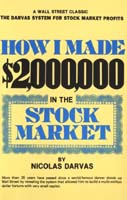
    Book cover to How I made $2 million in the Stock Market

    For the most part my investment philosophy is based on fundamental long term investing strategies. But I do also occasionally speculate with a portion of my portfolio. It is risky (and honestly most people will lose money trying so it is unwise for most, if not all, to try) but can bring great returns for the successful speculator/trader. My methods are significantly influenced by Nicolas Darvas who wrote the classic investment book – How I Made $2,000,000 in the Stock Market (which I am re-reading now). In it he provides an honest and open look at his experience from his naive start to his eventual success. He lays out, in great detail, exactly what he did and how foolish some of his actions were. Then he explains how he came to find success by focusing on the price and volume action of stocks and a pseudo fundamental component (more of a story that could presage future fundamental success than actual fundamental strength). While honing his investment strategy, in the 1950’s, he traveled the world working as a world class ballroom dancer and placed order via cable.

    Darvas’ method was a forerunner of the many technical analysis schemes used today. He is extensively referenced by William O’Neil (of Investor’s Business Daily fame) and other leading technicians. An extremely simplified overview of Darvas’ method: determine “boxes” (trading ranges) for a stock and buy on the breakout, to the upside, of the topmost box. He used a rest period of several days to set the top of the box and then determine the bottom of the box after that top was set. He used very close trailing stop loss orders to minimize losses. He sought to make large gains (let his winners run) and cut losses quickly.

    Nicholas Darvas’ ideas and books included a disdain for wall street insiders, analysts and rumors. The CAN SLIM (William O’Neil and Investor’s Business Daily) investing style owes a great deal to Darvas’ ideas on investing.

    I have created a new twitter account [removed] for to comment and follow others trading ideas. I would suggest only experience and successful investors even consider trading with a small portion of their portfolio. For most it is a losing proposition.

    More on Darvas’ investing ideas and other leading investors. Books by Nicolas Darvas: Wall Street: The Other Las VegasYou Can Still Make It in the Market (republished after a long period when it was not available) – Darvas System for Over the Counter Profits

  • Google Posts Good Earning But Not Good Enough for Many

    Google posted very good earnings yesterday but not good enough for many. The earnings, and a 5% fall in Google’s stock price, were good enough for me to add a few more shares to my long term investment in the company. Earnings per share grew from $4.49, $1.42 billion total, in the 1st quarter of 2009 to $6.06, $1.96 billion (38% increase in profits and 35% on a earnings per share basis). On a non-GAAP basis earning per share grew from $5.16 to $6.76. Revenue increased from $5.51 billion to $6.78 billion and the operating margin increased from 34.2% to 36.7%.

    Chris Bulkey has a good article on TheSteet.com, Google Tax Rate Inflates EPS, though I disagree with his conclusion.

    Google (GOOG) reported revenue of $6.78 billion and pro forma earnings of $6.76 a per share for the first quarter, but when stock-based compensation is included net income gets pulled down to $6.06 a share in GAAP terms. Elevated interest income, a lenient tax rate, and decelerating cash flow were primary points of contention.

    Recall that Google records gains from marketable securities with interest income. This gives management flexibility to boost income by timing investment sales. Normalizing this line item with the year-ago period shaves 3 cents a share from the bottom line. The effective tax rate came in below the prior year with essentially no change in revenue from international customers (53% vs. 52% in the first quarter of 2009). It is therefore likely that deliberate utilization of deferred tax assets was responsible for the easy comparison. Attempts to ascertain specific amounts deferred were unsuccessful; we’ll have to wait for the 10-Q.

    Cash flow decelerated to $2.58 billion from $2.73 billion sequentially. On a year-over-year basis, cash generated from operations increased 15% — respectable in absolute terms, but loosely correlated with net income, up 38% from last year.

    We reiterate a “sell” rating and $544 price objective; Our target multiple moves to 21 times revised 2010 EPS estimate from 23 times.

    Obviously I bought more, so I don’t agree with the conclusion, but his points are sensible and worth considering.

    Related: Great Google Earnings (April 2007)Buy Google (Feb 2008)Is Google Overpriced? (July 2007)Stop Picking Stocks?

    Google profit up 38%, helped by ads by John Letzing
    (more…)

  • Curious Cat Investing and Economics Carnival #8

    The Curious Cat Investing and Economics Carnival highlight recent interesting personal finance, investing and economics blog posts.

    • The money made by Microsoft, Apple and Google, 1985 until today – “In terms of profit Apple was ahead of Microsoft in the 1980s, but was then passed and left behind. This chart actually reveals that Apple’s upswing the last few years is the first time the company’s profits have really taken off in a big way. Another interesting observation is how closely the profits of Apple and Google match, even though Apple’s revenues are significantly higher.”
    • Real Estate and Consumer Loan Delinquency Rates 1998-2009 by John Hunter – “That last half of 2009 saw residential real estate delinquencies increased 143 basis points to 10.14% and commercial real estate delinquencies increase 98 basis points to 8.81%. Consumer loan delinquencies decreased with credit card delinquencies down 18 basis points to 6.4% and other consumer loan delinquencies down 19 basis points to 3.49%.”
    • The Principle That Can Make You Rich or Keep You Broke by David Weliver – “Unfortunately, inertia can also keep us at rest; the same principle that helps us achieve positive goals can make it increasingly difficult to escape bad habits.” (John: Very true, see my post on habits).
    • Why do we work so much? – “The countries that consistently rank as having the world’s “happiest people” also tend to work fewer hours than people in the U.S… Most corporate ladders are designed to reward employees with money instead of time. Assuming we only want money to use as a tool for happiness, this makes no sense.”
    • How Does Apple Become a $300 Billion Company? by Eric Bleeker – “The more Apple can look like the Microsoft of the mobile world, the more it will be worth. Commanding a market with even half the dominance Microsoft did with operating systems is a once-in-a-generation opportunity, but I’m not so sure the mobile world is built in a way that’ll allow that.”
    • Top Fed Official Wants To Break Up Megabanks, Stop The Fed From Guaranteeing Wall Street’s Profits by Shahien Nasiripour – “I don’t think we have any business guaranteeing Wall Street spreads,” Hoenig said. “We need to recognize that and address it by removing these guaranteed extremely low rates. I think it’s extremely important that we do that, and not create the conditions for speculative activity and a new crisis down the road.”
    • Evaluating Microfinance by Michael Frank – “I decided to use a variation on the “waiting list-control group” method regularly used in medical studies. My evaluation design requires a call for loan applicants in the most similar nearby community that does not have a similar microfinance program already present.”
    • (more…)